
ECI Announces By-Polls for 5 Assembly Seats and 1 Lok Sabha Seat; Voting on October 6…
The Election Commission of India (ECI) has officially announced the dates for by-elections to five assembly seats and one Lok Sabha seat in four states and union territories. The Election Commission (ECI) has announced the election schedule for vacant assembly seats in Tamil Nadu, Puducherry, and West Bengal, and one parliamentary seat in Assam. Voting will take place in the Madurantakam and Dharapuram assembly seats in Tamil Nadu, Thattanchavady in Puducherry, and Rejinagar and Nandigram assembly seats in West Bengal. Voting will also take place in the Nagaon Lok Sabha seat in Assam. According to a notification issued by the Election Commission, voting for all these seats will take place on October 6, 2026, with counting of votes taking place on October 9, 2026. These by-elections are being held following the resignation of MLAs and MPs. According to the official schedule released by the Commission, the formal gazette notification for the elections issued on September 9, 2026. The deadline for filing nomination papers is September 16, after which scrutiny of nominations will take place on September 17. Candidates can withdraw their nominations until September 19. Election schedule is as follows: Prior to the elections, the Election Commission also notified the schedule for the final publication of voter rolls in the respective constituencies. It should be noted that the final voter list for the Nagaon parliamentary seat in Assam was released on February 10, while for the Thattanchavady assembly seat in Puducherry, it was released on February 14. In Tamil Nadu, the final voter list for the Madurantakam (SC) and Dharapuram (SC) assembly seats was released on February 23. CM Suvendu Adhikari resigned from Nandigram in West Bengal. MP Pradyut Bordoloi resigned from the Nagaon Lok Sabha seat in Assam, necessitating a by-election. Representatives from five other assembly seats have also resigned. Chief Minister Suvendu Adhikari resigned from Nandigram in West Bengal.Humayun Kabir resigned from the Rejinagar seat in Murshidabad district. MLA Maragatham Kumaravel resigned from the Madurantakam seat in Tamil Nadu, and P. Satyabhama from Dharapuram. MLA N. Rangasamy resigned from the Thattanchavady seat in Puducherry. The Election Commission has directed the Chief Electoral Officers of the respective states to ensure free, fair, and peaceful elections. Adequate availability of Electronic Voting Machines (EVMs) and VVPATs (VVPATs) has been ensured. Orders have also been issued to ensure strict security arrangements in sensitive areas.
West Bengal Set to Introduce UCC on June 29, Following Uttarakhand, Assam, and Gujarat
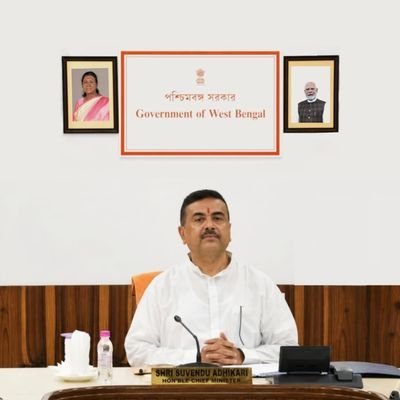
After Uttarakhand, Assam, and Gujarat, the Uniform Civil Code (UCC) is now set to be implemented in West Bengal as well. The West Bengal government is preparing to table the UCC Bill in the Legislative Assembly on June 29, 2026. Under this law, regulations concerning marriage, divorce, inheritance, and adoption will be uniform for all citizens. Key aspects of the UCC in West Bengal include the process of establishing legal timelines. Chief Minister Suvendu Adhikari announced that the UCC Bill would be introduced during the Assembly’s current budget session. Notably, the West Bengal government will follow the roadmap adopted by Uttarakhand, Assam, and Gujarat; a committee headed by a retired judge will be constituted for the UCC. It is worth noting that implementing the UCC in West Bengal was a key promise in the BJP’s election manifesto, in which the party pledged to enforce the UCC within six months of forming the state government. While this move is garnering support from Muslim women, it is also facing stiff opposition from the opposition parties, including the Trinamool Congress and the Congress. They argue that personal laws specific to certain religions are linked to cultural and religious identities, and that the UCC would effectively strip various religions of their distinct cultural identities.
China Begins Construction on World’s Largest Dam Near Indian Border, Stoking Geopolitical Tensions…
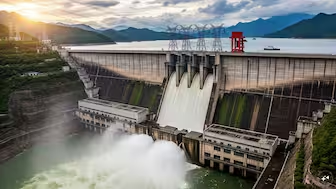
China’s decision to build the massive hydropower project on the Yarlung Tsangpo is significant because this river does not stay in China. It enters India through Arunachal Pradesh as the Siang, becomes the Brahmaputra River in Assam, and eventually flows into Bangladesh. Construction of the project officially began in 2025 and is expected to become the world’s largest hydropower development, generating roughly three times the electricity of the Three Gorges Dam. Why India is worried China sits upstream, giving it physical control over infrastructure that can influence river flows. Even if Beijing does not intend to cut off water, the ability to regulate releases gives it a strategic advantage during crises or periods of tension. Indian analysts worry that water could become another factor in the broader India-China rivalry. A major concern is not only reduced water flow but also sudden releases of water. If large volumes are discharged during heavy rainfall or emergencies, downstream regions in Arunachal Pradesh and Assam could face heightened flood risks. The Brahmaputra basin is already among the most flood-prone regions in the world. Although China says the project is primarily hydropower-oriented rather than a diversion scheme, Indian policymakers worry that dam operations could alter seasonal flows. Reduced water during dry months could affect agriculture, fisheries, river ecosystems, and local communities dependent on the river. The dam is being built in a geologically active part of the eastern Himalayas, an area prone to earthquakes, landslides, and fragile ecosystems. Environmental groups have warned that a project of this scale could affect biodiversity and sediment transport throughout the river basin. Probably not in the simplistic sense often portrayed on social media. The Brahmaputra receives enormous amounts of water from rainfall and tributaries inside India, especially in Arunachal Pradesh, Assam, and Bhutan. By the time the river reaches Assam, much of its flow comes from sources beyond Tibet. This limits China’s ability to completely control the river. Some experts therefore argue that fears of China shutting off the Brahmaputra are exaggerated. However, even partial control over timing, storage, and release of water can have important consequences for flood management, drought conditions, and regional security. That is where India’s concern is concentrated. How this could change Brahmaputra geopoliticsWater security becomes a national-security issue Traditionally, border disputes and military deployments dominated India-China tensions. The dam adds a new dimension: control of critical natural resources. Water security may increasingly be discussed alongside territorial security. India is accelerating its own dam projects India has explored large storage and hydropower projects in Arunachal Pradesh, including the proposed Upper Siang project, partly to create a buffer against any upstream manipulation and improve flood control. Bangladesh becomes an important stakeholder Because the Brahmaputra ultimately flows into Bangladesh, Dhaka also has an interest in any changes to river management. This could lead to greater regional diplomacy involving China, India, and Bangladesh over shared water resources. More pressure for data sharing and agreements Unlike some international rivers, the Brahmaputra lacks a comprehensive basin-wide water-sharing treaty among all riparian states. The mega dam may increase demands for transparency, hydrological data sharing, and formal mechanisms to manage disputes. Bottom line India’s concern is less about China literally stopping the Brahmaputra and more about China’s ability to influence the river’s timing, storage, and flow from an upstream position. The project introduces environmental, flood-management, and strategic uncertainties into an already sensitive border region. Whether it becomes a source of cooperation or tension will depend largely on transparency, data sharing, and how the dam is ultimately operated once it comes online in the 2030s.