
BJP National President Nitin Naveen Arrives in Uttarakhand for Three-Day Visit..
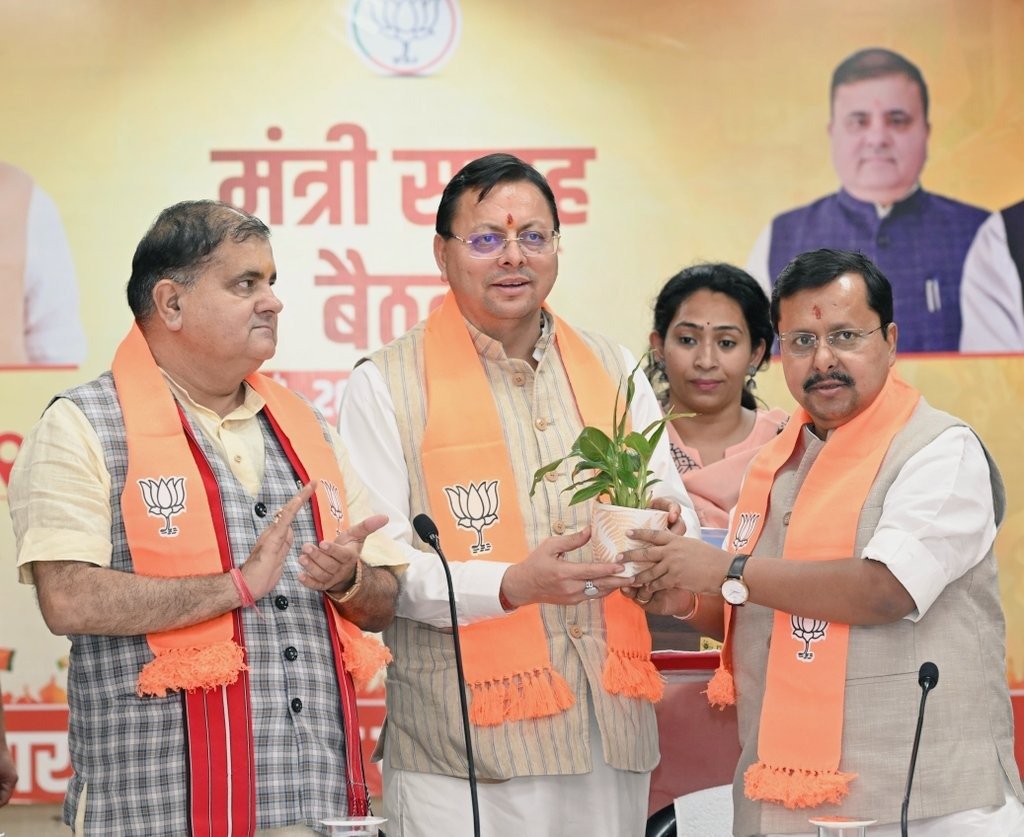
Bharatiya Janata Party National President Nitin Naveen has arrived in Uttarakhand for a three-day visit. Last Thursday, Naveen arrived at Jolly Grant Airport at 5 p.m., where he was received by Chief Minister Pushkar Singh Dhami. In anticipation of his visit, banners, flags, and hoardings were erected on the roads from Dehradun’s Jolly Grant Airport to the BJP headquarters. Workers in traditional attire welcomed him at more than 25 locations from the airport to the BJP state office. Welcome events were also held every 1 kilometer. This visit is considered significant for organizational strength. Nitin Naveen first arrived at the BJP state headquarters last Thursday and held a meeting of the National President’s Core Committee. The meeting began at 6:15 p.m. The meeting was attended by State President Mahendra Bhatt and Chief Minister Pushkar Singh Dhami, along with the entire top leadership of the party in Uttarakhand. Additionally, the core committee discussed party programs to achieve a hat-trick of victories in the 2027 elections, supporting the government’s significant achievements over the past four years. BJP President Nitin Nabin Pays Tributes to Former CM B.C. Khanduri In addition to the National President, National Organization General Secretary BL Santosh, In-charge Dushyant Gautam, and Co-In-Charge Rekha Verma were also present. In this meeting, they discussed the report card survey report of the state government’s performance ministers. Today, May 29th, on the second day of his visit, BJP National President Nitin Naveen visited the residence of former Chief Minister B.C. Khanduri to pay his respects and meet with the bereaved family. He then proceeded to a hotel on Rajpur Road, where a series of meetings began. He first held meetings with MPs and MLAs. Today, starting at 2 p.m., he will hold detailed discussions with state officials, state front presidents, general secretaries, district in-charges, co-in-charges, and district presidents. From 4 p.m., he will hold discussions with mayors, municipal council presidents, town council presidents, district panchayat presidents, vice-presidents, and block heads. In the evening, he will hold meetings with media, social media, IT, and the state spokesperson. He will then perform Ganga Aarti at Parmarth Niketan in Rishikesh and interact with saints. On May 30th, the third day of his visit, National President Nitin Naveen will focus on the workers and youth at Ground Zero. In the morning, he will visit the Tapkeshwar Mahadev Temple in Dehradun, followed by breakfast at the residence of the Booth President of Booth No. 141 in Gadi Cantt. He will also attend the meeting of Booth Committee 138 of the Durgamall Mandal. Nitin Naveen will address an enlightened seminar at Shivalik College of Engineering at 11 a.m. This will be followed by a “Youth Dialogue” program at the Chief Servant House at his Chief Minister’s residence at 2 p.m. Nitin Naveen will depart for Delhi from Jolly Grant Airport at 4:35 p.m.
Fadnavis Meets PM Modi in Delhi, Seeks Guidance on Maharashtra’s Development Projects..
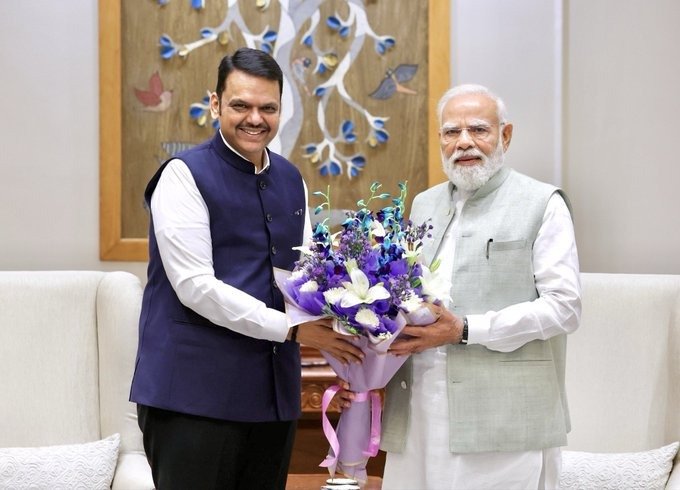
Maharashtra Chief Minister Devendra Fadnavis met with Prime Minister Narendra Modi in New Delhi on Thursday. Fadnavis shared the details on his X account, writing, “Today, we met our leader and beloved Prime Minister of the country, Shri Narendra Modi, in New Delhi and sought his guidance on various development issues in Maharashtra. He was also briefed on various projects and campaigns in Maharashtra. Meeting with the Honorable Prime Minister, Shri Narendra Modi, and receiving his guidance always provides positive energy.” He also thanked Modi. BJP governments, often referred to as “double-engine” Fadnavis also briefed Prime Minister Narendra Modi on the ongoing infrastructure and development initiatives in Maharashtra, considered an economic powerhouse of India and a significant contributor to the country’s GDP. The meeting emphasized regular coordination between the central and state governments under BJP governments, often referred to as “double-engine” coordination for rapid development. Let us tell you that Maharashtra Chief Minister Devendra Fadnavis was seen on camera with a thick file in his hands, which is being widely discussed on social media. Before the Legislative Council elections in Maharashtra, a series of meetings are going on in the Mahayuti regarding seat sharing. The meetings that went on till late night in Delhi, the presence of Amit Shah and the activeness of the BJP leadership have made this meeting more political. Maharashtra politics is going through a very sensitive phase at this time. Tensions regarding seats are clearly visible within the Mahayuti between the BJP Shiv Sena Shinde faction and the NCP Ajit Pawar faction
Mamata Banerjee Drops ‘Honorable Chief Minister’ Title but Retains CM Reference in Social Media Bio
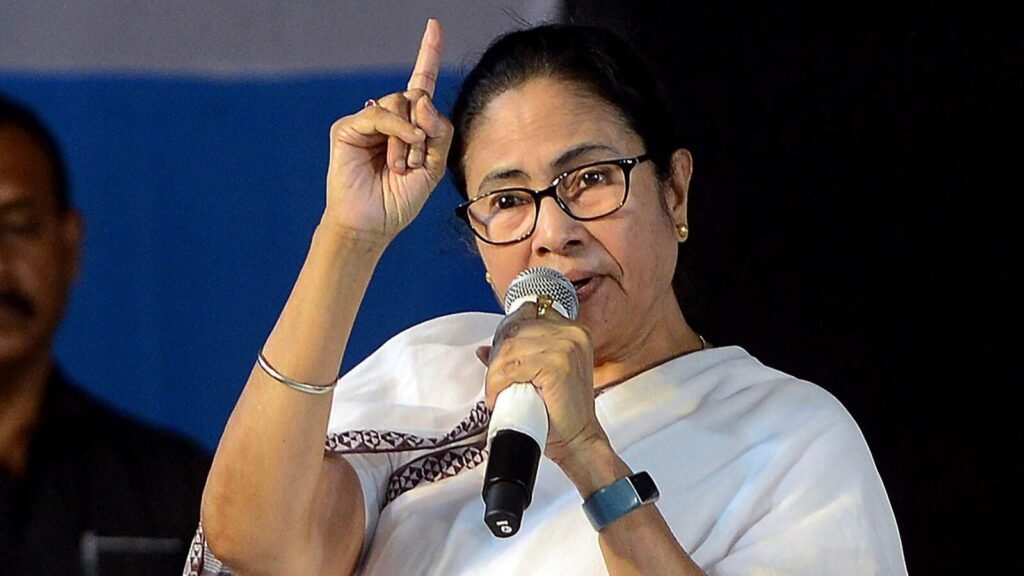
In West Bengal, Mamata Banerjee remains unwilling to concede defeat despite suffering a crushing loss to the BJP. It is worth noting that in the West Bengal Assembly elections, Mamata Banerjee was defeated by the BJP. On Saturday, May 9, while the BJP’s Suvendu Adhikari took the oath as the new Chief Minister of Bengal, Mamata Banerjee made a significant change to her social media profile. Previously, on one of her social media platforms, Mamata Banerjee’s bio read “Honorable Chief Minister, West Bengal.” However, following Suvendu Adhikari’s swearing-in as Chief Minister, Mamata Banerjee removed the title “Honorable Chief Minister” from her bio; notably, she did not replace it with the term “Former Chief Minister.” Instead, in her updated bio, Mamata Banerjee has simply addressed herself as the “Chief Minister of West Bengal.” Additionally, she has mentioned in her bio that she is the “Founding Chairperson” of the Trinamool Congress. The changes made to Mamata Banerjee’s bio on ‘X’ (formerly Twitter) have sparked a heated debate across social media platforms. Some users have tagged ‘X’ owner Elon Musk, appealing to him to alter Mamata Banerjee’s bio, while others have demanded that her account be suspended. It is pertinent to recall that, prior to this, despite her electoral defeat, Mamata Banerjee had refused to resign from the post of Chief Minister, stating that she would not go to the Raj Bhavan to tender her resignation. Subsequently, on May 7, West Bengal Governor R.N. Ravi dissolved the Legislative Assembly, thereby bringing Mamata Banerjee’s tenure to an end.
Bengal Election 2026: PR Game, Modi Factor & the Rise of the “Jhal Muri” Narrative
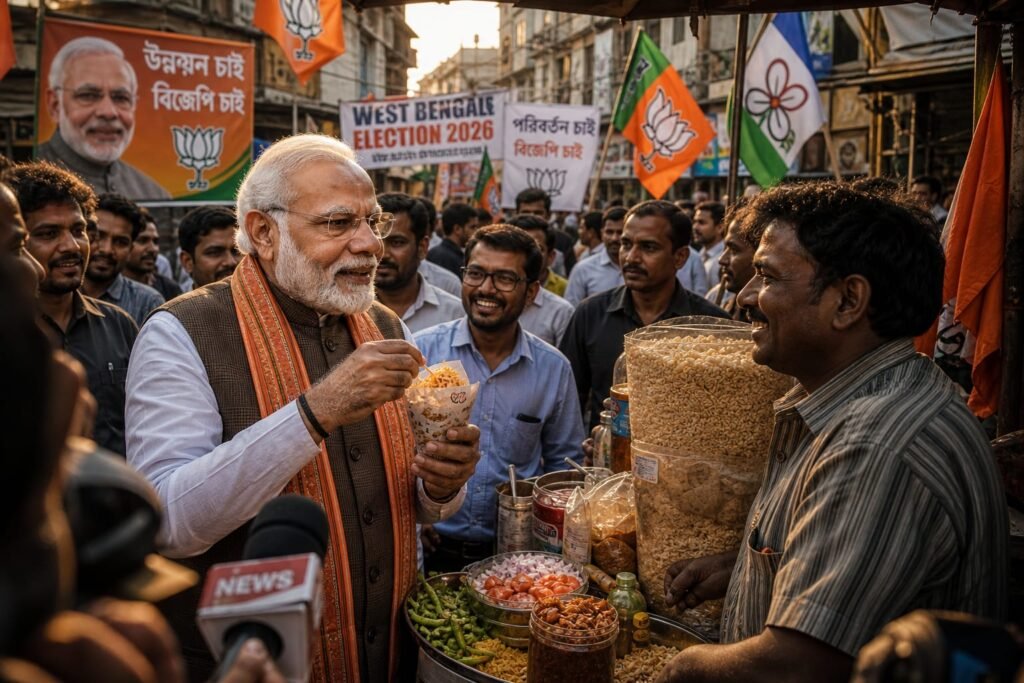
The 2026 West Bengal election marked a significant moment in Indian politics, not just because of the result but because of how the campaign was fought and won. With Narendra Modi leading the charge against Mamata Banerjee, the contest evolved into more than a traditional electoral battle. It became a powerful demonstration of how modern political communication, branding, and perception management can shape voter behavior. The outcome highlighted that in today’s digital-first environment, elections are influenced as much by narratives and emotional connect as by policies and ground-level issues. At the core of the campaign was a carefully crafted aspirational narrative. Instead of relying solely on criticism of the incumbent government, the messaging focused on what Bengal could become in the future. Development, infrastructure, governance, and opportunity were positioned as central themes, particularly targeting young voters and urban audiences. This approach allowed the campaign to shift the conversation from dissatisfaction to possibility, creating a sense of momentum and change. It is a classic public relations strategy—when you give people a vision, you give them a reason to believe. Equally important was the projection of Narendra Modi as not just a political leader but a strong and relatable brand. His image as a decisive and charismatic figure was amplified through rallies, speeches, and digital content. Each appearance was designed to build an emotional connection with voters, reinforcing trust and familiarity. In political PR, this is known as leader-centric campaigning, where the individual becomes the message itself. The Bengal campaign leaned heavily on this model, ensuring that the leader’s personality and narrative remained at the forefront of voter consciousness. One of the most talked-about moments of the campaign was surprisingly simple—Modi stopping to eat jhal muri, a popular Bengali street snack. On the surface, it appeared to be an ordinary interaction, but in reality, it was a highly effective PR moment. The act symbolized cultural acceptance and local connection, sending a subtle message that the leader understands and respects regional identity. In an era driven by visuals and short-form content, this moment quickly went viral across social media platforms. It was shared, memed, and discussed widely, transforming a small gesture into a powerful narrative tool. The “jhal muri moment” demonstrated how symbolic actions can sometimes communicate more effectively than long speeches. The role of digital media further amplified this strategy. Short videos, reels, and meme content ensured that campaign messaging reached a wide audience in an engaging format. Political communication is no longer limited to television debates or newspaper headlines; it now thrives on Instagram feeds, YouTube shorts, and WhatsApp forwards. The Bengal election showcased how digital ecosystems can be used to reinforce narratives, create relatability, and maintain constant engagement with voters. This blend of online and offline campaigning created a seamless flow of messaging that kept the campaign visible and relevant at all times. However, the strong PR push also sparked debate. Critics argued that such moments were carefully staged and focused more on image-building than on substantive issues. Questions were raised about authenticity and whether symbolic gestures overshadowed real policy discussions. Yet, this criticism itself reflects the changing nature of politics. In a media-saturated environment, perception often travels faster than facts, and repeated exposure to a consistent narrative can significantly influence public opinion. Whether one views it as strategic brilliance or calculated optics, the impact of such PR efforts cannot be ignored. Behind the scenes, the campaign was supported by robust organizational strength and grassroots outreach. Booth-level management, targeted voter engagement, and a well-structured party network ensured that the momentum generated by PR translated into actual votes. This highlights an important reality: while PR can create attention and shape perception, it must be backed by strong ground execution to deliver results. The Bengal election was not won by communication alone but by the combination of narrative-building and organizational efficiency. In conclusion, the 2026 West Bengal election stands as a defining example of how political campaigns are evolving in India. It illustrated that elections are no longer decided solely by traditional factors such as caste equations or local issues but are increasingly influenced by storytelling, symbolism, and digital engagement. From grand visions of development to a simple plate of jhal muri, every element of the campaign contributed to a larger narrative framework. The key takeaway is clear: modern politics is as much about winning minds as it is about winning votes.
Nitin Nabin’s Uttarakhand Visit: Early Signals for Mission 2027
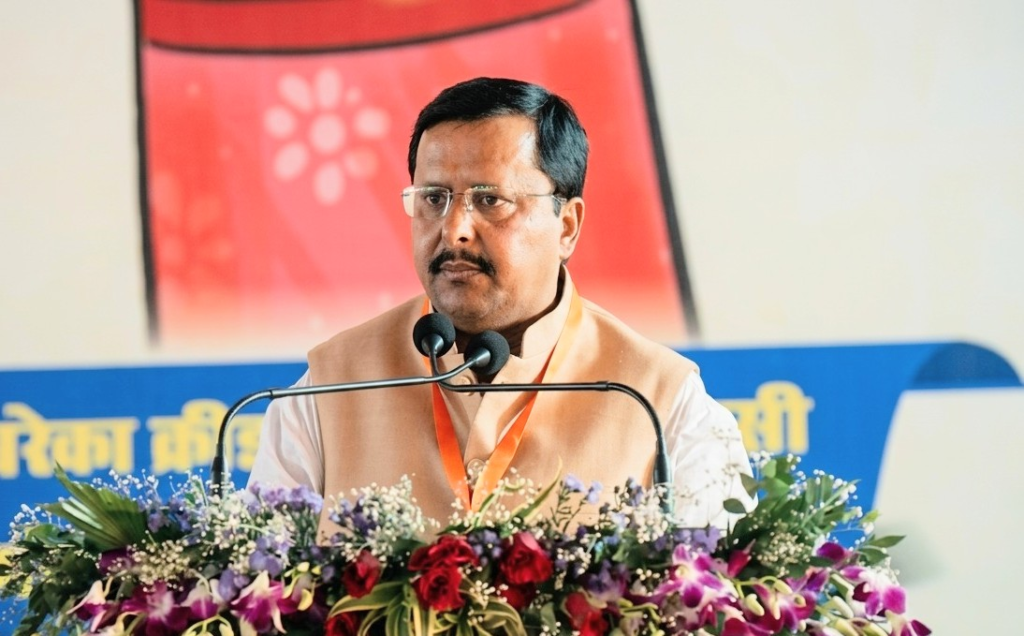
As political momentum slowly begins to build ahead of the 2027 Assembly elections, Uttarakhand has once again come into focus. The recent visit of Nitin Nabin, National President of the Bharatiya Janata Party (BJP), is being viewed as more than just a routine organizational tour — it is a strategic move aimed at shaping the party’s future roadmap in the state. A Visit Beyond Formalities At first glance, this might seem like a standard party visit — meetings, reviews, and internal discussions. However, the timing and structure of the visit suggest something deeper. Nitin Nabin is expected to engage in: This indicates a clear shift — from reactive politics to proactive election planning. Strategy: Data, Discipline & Early Planning Modern political campaigns are no longer built in the final months before elections. Instead, they rely on long-term groundwork, data insights, and narrative building. This visit reflects that transformation. The BJP leadership is reportedly focusing on: In states like Uttarakhand, where regional dynamics and local issues play a crucial role, such micro-level planning can significantly impact outcomes. Mission 2027: Starting Early The biggest takeaway from this visit is simple — the campaign has already begun. Rather than waiting for election announcements, the party appears to be: This early groundwork could give the party a strategic advantage over its competitors. Political Messaging & Control Another key aspect of the visit is central leadership involvement. The presence of Nitin Nabin signals: In today’s political ecosystem, where narrative plays a major role, maintaining consistent communication and messaging is critical. Challenges on the Ground Despite organizational strength, Uttarakhand presents its own set of challenges: Addressing these issues early is essential, and this visit seems to be a step in that direction. Ground Reality Meets Strategy One of the key highlights of the visit is the emphasis on ground-level feedback. Instead of relying only on reports, the leadership is: This approach ensures that strategies are not just theoretical but practically aligned with ground realities. What This Means for Uttarakhand Politics This visit could reshape the political narrative in the state. For voters, this could mean more engagement, more outreach, and more visible political activity in the coming months. Final Analysis Nitin Nabin’s visit to Uttarakhand is not just about reviewing the present — it’s about designing the future. It reflects a larger trend in Indian politics: 👉 Elections are now fought through years of preparation, not weeks of campaigning👉 Data, perception, and organization are as important as leadership The Bigger Question Will early strategy and strong organization be enough to secure victory in 2027? Because in modern politics —Narrative bhi zaroori hai, lekin groundwork usse bhi zyada powerful hota hai.
Beyond Elections: Indian Politicians Who Recently Went Viral for Unexpected Moments
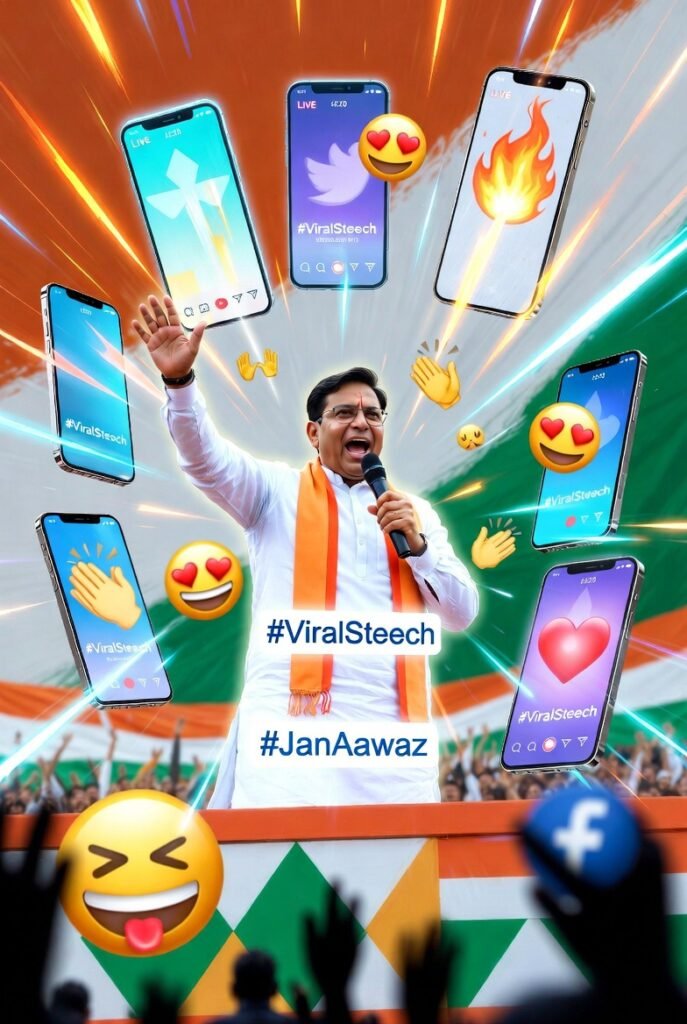
Politics is not limited merely to politicians or elections; during election campaigns or while addressing the public, certain moments occur that go viral. In the Indian political landscape, several such politicians have recently gone viral, trending across social media platforms. Today, we will share some of these viral moments involving such politicians. Actor-turned-politician Vijay embarked on his political journey in Tamil Nadu. His emotive speeches appeared to resonate directly with the masses—particularly when he referred to himself as “your brother, your son” and spoke of leaving behind the glitz and glamour of cinema to dedicate himself to public service. Viral Moment:Responding to a BJP minister, he asserted that while he may be an actor, “there is no acting in his politics.” This statement became a major talking point across social media platforms. Strategy:His party, the Tamilaga Vettri Kazhagam, carved out a distinct identity in the political landscape by employing innovative campaigning methods, such as the use of holograms, robots, and social media reels. Samrat Choudhary assumed the office of Chief Minister in Bihar in April 2026, following a major political realignment in the state and Nitish Kumar’s transition toward national politics. Viral Moment:During an interview, his response to questions regarding his educational background and his change of name appeared visibly tense; the video of this exchange went viral, sparking a debate concerning the educational qualifications of political leaders. Ajay Pal Sharma served as a Special Police Observer during the West Bengal elections. Viral Moment:A video surfaced in which he was seen reprimanding a candidate accused of allegedly intimidating voters. This incident subsequently sparked discussions regarding his tough, “Singham-like” persona. Mithun Chakraborty actively campaigned during the West Bengal elections. Viral Moment:His fiery speeches—particularly statements such as, “We will not let Bengal turn into Bangladesh”—spread rapidly across social media platforms. Priyanka Tibrewal stood as a BJP candidate in West Bengal. Viral Moment:During the polling process in Kolkata, a video emerged showing “commotion at a polling booth,” in which she was seen engaging in heated arguments with officials and alleging electoral irregularities. Saayoni Ghosh is a Member of Parliament (MP) from West Bengal. Viral Moment:At a rally, he recited both the Kalma and the Hanuman Chalisa; the video of this act went viral, sparking a debate regarding the role of religion in politics. The electoral face-off between Narendra Modi and Mamata Banerjee also remained a major topic of discussion. Viral Trend:Rallies held by both sides went viral on social media—driven by symbols and memes such as “Jhalmuri vs. Fish”—thereby making the electoral atmosphere even more engaging.
Right Man in Wrong Party : Raghav Chadha Quits AAP, Heading Towards BJP Along With Six MPs
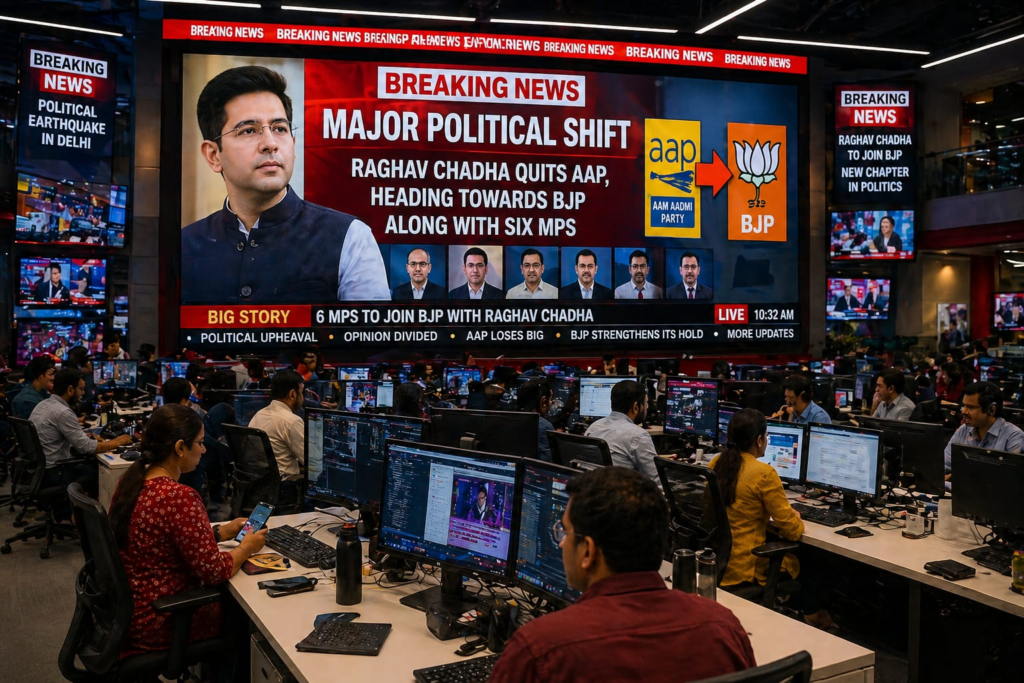
Raghav Chadha is currently in the news on social media after leaving the Aam Aadmi Party and joining the BJP along with six of the party’s MPs. Raghav Chadha described the Aam Aadmi Party as compromised and described himself as “the right man in the wrong party.” Regarding this, Chadha said, “The Aam Aadmi Party, which I nurtured with my blood and sweat and to which I dedicated 15 years of my youth, has now completely deviated from its principles, values, and basic morals. This party is no longer working for the country or national interest, but rather for personal gain.” He added, “I personally have realized that I am the right man, but in the wrong party.” Earlier this month, the Aam Aadmi Party replaced Raghav Chadha with Ashok Kumar Mittal as the party’s deputy leader in the Rajya Sabha. On Friday, during a press conference at the Constitutional Club, Chadha announced his departure from the party and announced his intention to join the BJP. During this, Chadha and his colleagues heaped praise on Prime Minister Narendra Modi. Various rumors and news are circulating regarding Raghav Chadha’s joining the BJP, with some reports suggesting that he will join the BJP. It has been said that two-thirds of the MLAs may try to merge with the BJP to circumvent the anti-defection law. Some reports suggest that claims about Raghav Chadha’s move are being widely debated on social media and require official confirmation.