
NTA Cancels UGC-NET Papers for Three Subjects After Audit Finds Factual Errors, Typos & Repeated Questions; Rahul Gandhi Questions Paper Leaks..
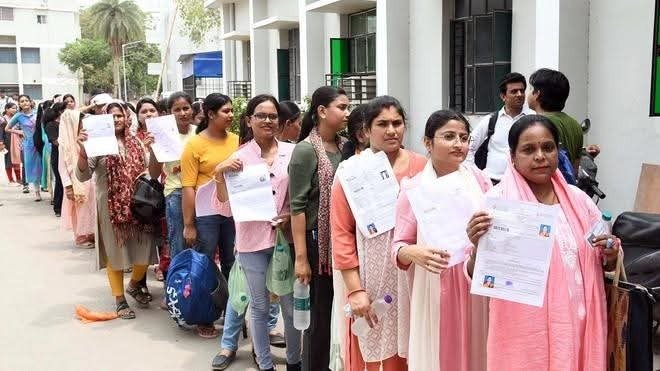
The National Testing Agency (NTA) has admitted to significant irregularities in the UGC-NET June 2026 exam question paper. Serious allegations surfaced, including numerous spelling mistakes, strange names of thinkers, and blatant copying of old questions from previous years. Following this, the NTA has cancelled the English, Commerce, and Sociology exam papers. This decision was made by the NTA based on the report of an audit committee formed after complaints from candidates and experts regarding serious irregularities in the question papers. The NTA will conduct re-exams for these three affected subjects in September 2026. The NTA has released a new exam schedule for the re-exams. Candidates will not be charged any additional examination fees for re-exams. Here is the re-exam schedule: According to a report in the Indian Express, on Sunday, August 16, the NTA released the provisional answer keys for 84 subjects for the UGC-NET June 2026. However, the answer keys for some papers were withheld. Following this, the NTA issued a separate notice in the evening. It stated that a major decision had been made regarding English, Commerce, and Sociology. According to the NTA, the committee formed to review these three papers found several errors. These included factual errors, typos, and translation errors. The committee found the names of several prominent scholars misspelled in the question paper. The names of some books were also incorrect. Furthermore, some questions contained language errors. Grammar errors were also found in several places. Gender and number mismatches were also found. There were also punctuation errors. Moreover, non-standard terms were used for concepts for which pre-established and commonly used terms exist. It was also discovered that many questions had already been asked in previous exams. Following these discrepancies, the committee recommended that the NTA re-examine the three subjects. Rahul Gandhi Targets PM Modi After NTA Cancels Three UGC-NET Papers Meanwhile, Congress MP Rahul Gandhi launched a scathing attack on PM Modi and the National Testing Agency (NTA) over the decision to re-examine the UGC-NET exam in three subjects due to errors in the question papers. Congress leader Rahul Gandhi wrote on the social media platform X, “Modi ji, look what your NTA has done again.” The UGC-NET exams for Sociology, English, and Commerce were held between June 22 and 30. After nearly two months, the NTA canceled all three exams because they had prepared incorrect question papers and re-asked old questions. Rahul Gandhi said, “Thousands of candidates who prepared diligently for years, filled out forms, paid fees, and traveled to far-flung exam centers will now have to do it all again in September. The NTA makes mistakes, but the students of the country suffer the consequences. I said this in Kota, Dehradun, and Prayagraj, and I will continue to say it. This is no longer an education system. It has become just a money-and-labor-sucking machine. It takes away your money, your years, your mental health, and your self-confidence, and gives you nothing in return, not even a job. The NTA is still not answering the real question. Were these papers leaked before the exams?”
‘Dimagi Naxal Party’ Explodes on Social Media, Crosses 1.7 Lakh Followers in 24 Hours..
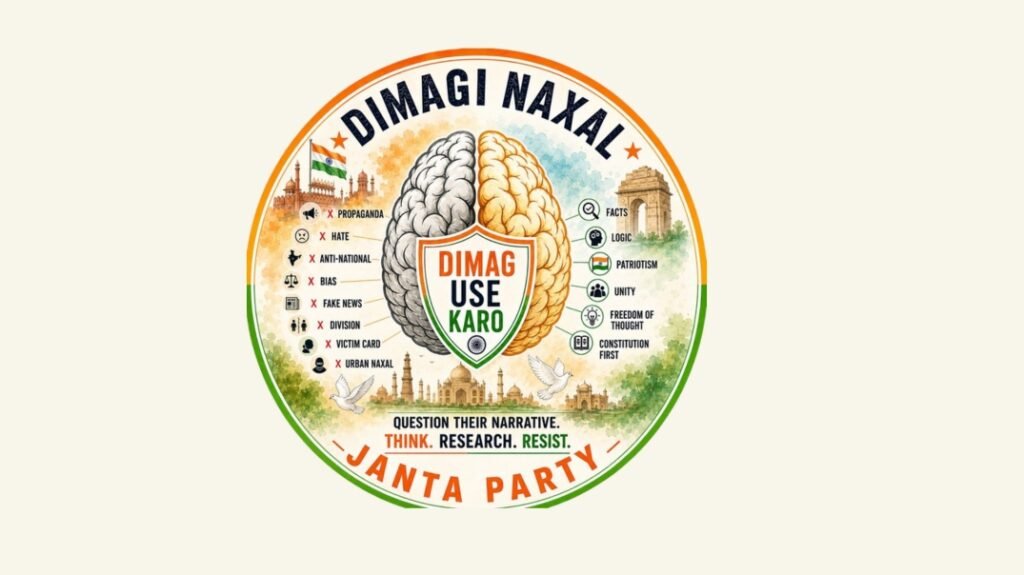
Following the Cockroach Janata Party (CJP), another new party has emerged in the headlines. The party is being called the ‘Dimagi Naxal Party’. Similar to the Cockroach Janata Party, a new social media account called the ‘Dimagi Naxal Janata Party’ has emerged. The party is gaining popularity on social media. This account has gained more than 1.7 lakh followers in just 24 hours. On the other hand, this account, named @DNJP_India, currently follows more than 15 accounts, including Congress leader Rahul Gandhi, Samajwadi Party chief Akhilesh Yadav, AAP leader Arvind Kejriwal, YouTuber Dhruv Rathee, comedian Kunal Kamra, actor Prakash Raj, and many other popular names on social media.This account emerged on social media after Prime Minister Narendra Modi’s Independence Day speech on August 15th. In that speech, he referred to the elimination of armed Naxalites and urged the nation to be vigilant against “mindful Naxalites” lurking in ambushes. In his speech, PM Modi targeted those with Naxalite ideologies who seek to spread unrest despite the weakening of armed Naxalism. Although PM Modi did not name any specific group during his speech, his comment sparked a significant political controversy. Opposition leaders retaliated. Some leaders, including Congress leader P. Chidambaram, said they were proud to be called “mindful Naxalites.” In his Independence Day speech, PM Modi said, “Even though the Naxalites who took up arms in the jungles have been eliminated, the mindless Naxalites are still looking for opportunities. They are seeking ways to resort to violence and trying to lead the country down the wrong path. Such people must be identified and isolated.” Following his speech, the “Dimagi Naxal Party” has come into the spotlight. Several accounts with this name are visible on Instagram. Pages created by the “Dimaggi Naxal Party” on various social media sites are rapidly gaining popularity. Within a day of its launch, it gained more than 50,000 followers. Currently, its Instagram page has more than 150,000 followers. The party’s slogan is “Think, Research, Protest.”
Delhi University Drops Delhi Sultanate Paper From PG History Syllabus: What’s the Reason?
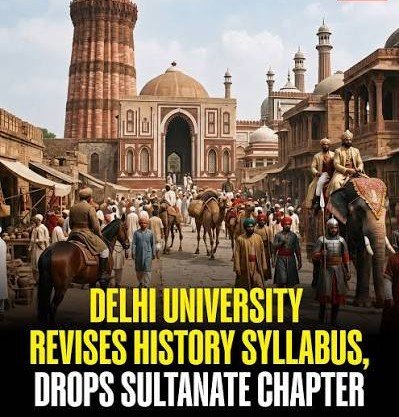
Delhi University has revised its MA History syllabus for the 2026-27 academic session, removing a paper on the Delhi Sultanate from the third semester. The decision has drawn attention because the course had focused specifically on medieval North India and the structures of political authority during the Delhi Sultanate period. The paper, titled “The Delhi Sultanate: Structures of Authority in Medieval North India (13th–14th Century)”, dealt with state formation, governance and political, religious and cultural developments during the period. Why Was the Paper Removed? According to the latest reports, the change is part of a larger restructuring of the postgraduate History curriculum. Delhi University has aligned the revised syllabus with the Postgraduate Curriculum Framework 2024 and the National Education Policy (NEP) 2020. The university notified the revised syllabus on August 7. Importantly, the Delhi Sultanate period has not been removed completely from the university’s History curriculum. The university continues to teach the subject in other courses, including at the undergraduate level. Several Other Papers Also Dropped The Delhi Sultanate paper is not the only proposed course missing from the final third-semester list. A paper titled “History of North India, c. 1400–1550” has also been left out. Several other proposed courses, including papers on gender and women in early India, political processes in ancient India, and religion and society in ancient Indian literature, were also not included in the final list. Reports indicate that only a portion of the electives initially proposed by the History Department made it into the notified curriculum. What Does This Mean for Students? For students joining the MA History programme from July 2026, the revised syllabus will determine the courses available in the third semester. The latest changes reflect Delhi University’s broader effort to restructure postgraduate programmes under the new national academic framework, with greater emphasis on revised course structures, learning outcomes and research-oriented study.
Independence Day 2026: 1,057 Police, Fire and Correctional Personnel Honoured With Gallantry and Service Medals

Independence Day 2026: Ahead of India’s 80th Independence Day, the Ministry of Home Affairs has announced Gallantry and Service Medals for 1,057 personnel from the Police, Fire Services, Home Guard and Civil Defence, and Correctional Services. The awards recognise personnel for acts of bravery, dedicated service and distinguished records during their careers. 301 Gallantry Medals Announced A total of 301 Gallantry Medals have been awarded, including 272 to police personnel and 29 to Fire Service personnel. These medals recognise exceptional acts of courage, including saving lives and property, preventing crimes and apprehending criminals. Of the 301 gallantry awards, 197 went to personnel serving in Left Wing Extremism-affected areas, while 51 were awarded to personnel from Jammu and Kashmir, 12 from the Northeast and 41 from other regions. 92 President’s Medals for Distinguished Service The government has also announced 92 President’s Medals for Distinguished Service. These include 83 awards for Police Service, four for Fire Service, three for Civil Defence and Home Guard personnel, and two for Correctional Service personnel. In addition, 664 Medals for Meritorious Service have been awarded to personnel for valuable service marked by dedication and commitment to duty. The honours highlight the contribution of personnel working across different public safety and security services and recognise their courage, professionalism and continued dedication to the nation.
India Will Become a Major Power in Space Sector Over Next 20–30 Years: Scott Morrison

Former Australian Prime Minister Scott Morrison has praised India’s rapidly growing space sector, saying the country has the potential to emerge as a major global space power over the next 20 to 30 years. Speaking about India-Australia cooperation, Morrison highlighted the growing importance of space collaboration between the two countries. He said Prime Minister Narendra Modi has placed strong emphasis on developing India’s space industry and described the sector as “burgeoning.” Praise for India’s Space Achievements Morrison recalled India’s successful Chandrayaan-3 lunar landing, saying it demonstrated the country’s advanced space capabilities. He also praised India’s astronauts and the country’s plans for future human spaceflight missions. India is also preparing for the Gaganyaan human spaceflight programme, with Australia supporting the mission. Australian Prime Minister Anthony Albanese announced plans for a temporary space-tracking terminal on the Cocos (Keeling) Islands to support Gaganyaan. India-Australia Space Cooperation Space has emerged as an important area of cooperation between India and Australia. The two countries have been working to expand collaboration in space science, technology, research and related infrastructure. The partnership also reflects broader cooperation between New Delhi and Canberra in areas including critical technologies, cybersecurity and resilient supply chains. Morrison’s remarks underline the growing international recognition of India’s ambitions in space and its potential to play a much larger role in the global space industry in the coming decades.
Lok Sabha Creates History, Opens Proceedings with Vande Mataram

For the first time, Lok Sabha began the final sitting of the Monsoon Session with Vande Mataram on Thursday, following the enactment of a new law that grants the National Song legal protection and prescribes norms for its official rendition. On the last day of the Monsoon Session, Lok Sabha proceedings opened with Vande Mataram on Thursday, marking a first in Parliament’s history. Prime Minister Narendra Modi, Congress MP Rahul Gandhi and members across party lines were present in the House. After six stanzas of the National Song were played, the Lower House was adjourned sine die, bringing the Monsoon Session to a close. The development comes days after President Droupadi Murmu gave her assent to legislation providing legal protection to Vande Mataram. The law makes intentional disruption or prevention of the singing of the National Song a punishable offence, placing it on a similar legal footing as the National Anthem. The government had earlier issued protocols governing the song’s rendition at official functions. In an order dated January 28, the Union Home Ministry prescribed that all six stanzas of Vande Mataram be sung during occasions such as the arrival of the President, the unfurling of the Tricolour and addresses by governors. The Lok Sabha was adjourned sine die after a session marked by repeated disruptions and sharp exchanges between the government and the Opposition. Since the session began on July 20, proceedings were frequently stalled over issues including the police crackdown on student protesters during the NEET paper leak agitation and the Ram Mandir donation theft case. The final day witnessed rival protests by the BJP and the INDIA bloc at Makar Dwar in the Parliament complex, highlighting the political divisions that dominated the session. The BJP staged a protest targeting Rahul Gandhi, accusing the Congress of remaining silent on the ongoing protests in Jharkhand, while Opposition parties continued to press the government on their own demands.
Deadly School Attack Triggers Stricter Gun Regulations in Thailand
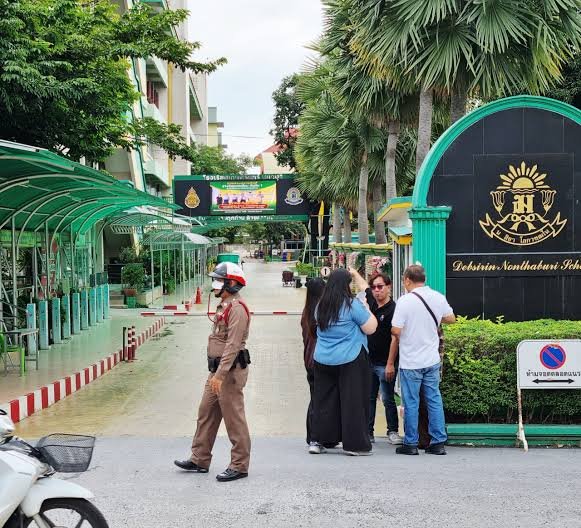
Deadly School Attack Triggers Stricter : Thailand has announced a temporary suspension of new gun purchase permits and introduced stricter firearm control measures following last week’s deadly school shooting that claimed eight lives. Prime Minister Anutin Charnvirakul on Tuesday directed government agencies to immediately strengthen firearm regulations nationwide in response to the country’s worst mass shooting since 2022. Under the new measures, authorities will halt the issuance of new gun purchase permits, review all pending firearm applications, and suspend welfare gun schemes that allow eligible public officials, including civil servants and politicians, to purchase firearms at discounted prices. The government will also conduct nationwide inspections of gun dealers to verify sales records, check ammunition inventories at shooting ranges, and intensify crackdowns on illegal firearms. Officials have been instructed to seek the maximum legal penalties against offenders. In addition to the immediate steps, Thailand plans to introduce long-term legislative reforms, including tougher penalties for firearm-related offences, stricter controls on ammunition sales, and more frequent renewal requirements for gun licences. The government has approved an initial compensation of 1 million baht (approximately USD 30,000) for the families of six of the victims. The reforms come after a 14-year-old boy allegedly killed his grandparents at their home before opening fire at a secondary school, killing six more people. The teenager later died by suicide. Police said the firearm used in the attack is believed to have belonged to his grandfather. Investigators also revealed that the suspect had previously had an air gun confiscated at school and had reportedly learned about firearms through violent online content. The tragedy has renewed concerns over Thailand’s high rate of civilian gun ownership, estimated at around 15 firearms per 100 people—the highest in Southeast Asia. The country also records one of the region’s highest firearm-related death rates. Beyond gun control, the shooting has prompted renewed attention to student mental health. Thailand’s Ministry of Education has announced plans to introduce mental health screenings, strengthen anti-bullying initiatives, improve emergency response protocols, and enhance security measures to prevent weapons from entering schools. The incident has reignited public debate over firearm regulation, with many drawing comparisons to countries such as New Zealand and Serbia, which tightened gun laws following major mass shootings.
English in India: From Colonial Legacy to Everyday Language
English in India has moved beyond its colonial past, evolving into a language shaped by Indian voices, ideas and identity. English in India: The Supreme Court’s recent observation has reignited a debate over whether English can be regarded as an Indian language. The discussion, however, does not need to be framed as a choice between English and India’s regional languages. Languages such as Hindi, Tamil, Telugu, Kannada, Marathi and Odia have their own rich histories and cultural importance. Promoting them does not require rejecting English. India’s linguistic strength, instead, lies in maintaining and encouraging multilingualism. English first came to India during British rule and was largely used for administration, trade and missionary activities. Its early role was closely linked to colonial interests. But over the past two centuries, Indians have gradually adapted the language to their own needs. Today, English is deeply embedded in India’s education, business, media, literature and public life. Indian speakers have developed their own vocabulary, expressions and ways of using the language. English may not have originated in India like Sanskrit or Tamil, but its long history in the country has given it a distinct Indian identity. Rather than viewing English and Indian languages as rivals, India’s linguistic future can be strengthened by allowing different languages to coexist and grow.
ICSE, ISC Exams: CISCE begins 2027 entry confirmation and 2028 registration for schools

Schools can register ICSE candidates without a late fee until October 31, 2026, while the deadline for ISC candidate registration is November 15, 2026. The Council for the Indian School Certificate Examinations (CISCE) has begun the registration process for students appearing in the 2028 ICSE and ISC board examinations for Classes 10 and 12. Affiliated schools can complete the registration through the CISCE CAREERS portal. Schools have until October 31, 2026 to register ICSE candidates without paying a late fee. For ISC candidates, the registration window will remain open until November 15, 2026. All CISCE-affiliated schools are required to submit the details of students who are set to appear for the 2028 board exams. Alongside the 2028 registration process, CISCE has also activated the online facility for schools to confirm student entries for the 2027 ICSE and ISC examinations. If any information needs to be corrected, schools can request changes by providing the required supporting documents. 2027 ICSE, ISC entries: How schools can verify details School authorities can access the CISCE portal to check and confirm the details of students registered for the 2027 board examinations. The portal can be accessed using the Principal, school or staff code along with the registered password. CISCE exam registration deadlines CISCE has advised all affiliated schools to complete both the candidate registration and entry-confirmation procedures within the prescribed timelines. Schools should also ensure that student details are checked carefully and any required corrections are submitted along with valid documents before the respective deadlines.
India Gifts Five Peacocks to UN Geneva, Reviving 45-Year-Old Tradition..

India has gifted five Indian peacocks to the United Nations Office at Geneva. These include four blue peacocks and a rare white-feathered male peacock. This initiative has revived a decades-old tradition of Indian peacocks at the UN premises. In a special ceremony, India’s Permanent Representative to Geneva, Arindam Bagchi, handed over the five peacocks to UNO Director-General Tatyana Valovaya. The occasion also underscored India’s commitment to protecting its rich natural heritage, biodiversity, and the environment. This is not the first time India has donated peacocks to the UN in Geneva. Previously, in 1981, then-Prime Minister Indira Gandhi sent a breeding pair of peacocks from the Delhi Zoo to Geneva. Now, the arrival of these new peacocks has revived this tradition. The Geneva Biopark Zoo will care for these peacocks. Initially, they will be kept in a secure enclosure for approximately three months. After that, they will be allowed to roam freely in the Ariana Park, attached to the UN European Headquarters. The presence of peacocks in Ariana Park is not new. Peacocks have been seen here for over a century. This tradition is believed to date back to the Swiss archaeologist and art collector Gustave Revilliod. In 1890, he bequeathed the property where the UN complex is located to the city of Geneva. According to the Indian Mission, this contribution from India will enrich the biodiversity of the UN complex. It also reflects India’s commitment to its natural and cultural heritage, its long-standing partnership with the United Nations, and its multilateral cooperation