
Fadnavis Meets PM Modi in Delhi, Seeks Guidance on Maharashtra’s Development Projects..
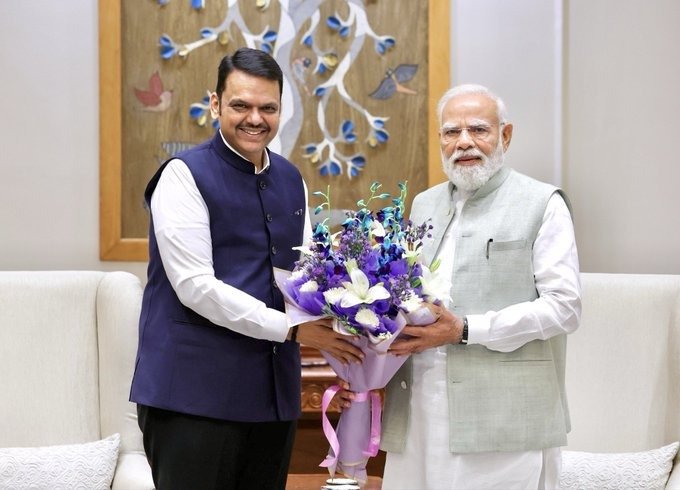
Maharashtra Chief Minister Devendra Fadnavis met with Prime Minister Narendra Modi in New Delhi on Thursday. Fadnavis shared the details on his X account, writing, “Today, we met our leader and beloved Prime Minister of the country, Shri Narendra Modi, in New Delhi and sought his guidance on various development issues in Maharashtra. He was also briefed on various projects and campaigns in Maharashtra. Meeting with the Honorable Prime Minister, Shri Narendra Modi, and receiving his guidance always provides positive energy.” He also thanked Modi. BJP governments, often referred to as “double-engine” Fadnavis also briefed Prime Minister Narendra Modi on the ongoing infrastructure and development initiatives in Maharashtra, considered an economic powerhouse of India and a significant contributor to the country’s GDP. The meeting emphasized regular coordination between the central and state governments under BJP governments, often referred to as “double-engine” coordination for rapid development. Let us tell you that Maharashtra Chief Minister Devendra Fadnavis was seen on camera with a thick file in his hands, which is being widely discussed on social media. Before the Legislative Council elections in Maharashtra, a series of meetings are going on in the Mahayuti regarding seat sharing. The meetings that went on till late night in Delhi, the presence of Amit Shah and the activeness of the BJP leadership have made this meeting more political. Maharashtra politics is going through a very sensitive phase at this time. Tensions regarding seats are clearly visible within the Mahayuti between the BJP Shiv Sena Shinde faction and the NCP Ajit Pawar faction
Assam Assembly Introduces UCC Bill 2026 with Rules on Marriage, Divorce and Live-in Relationships…
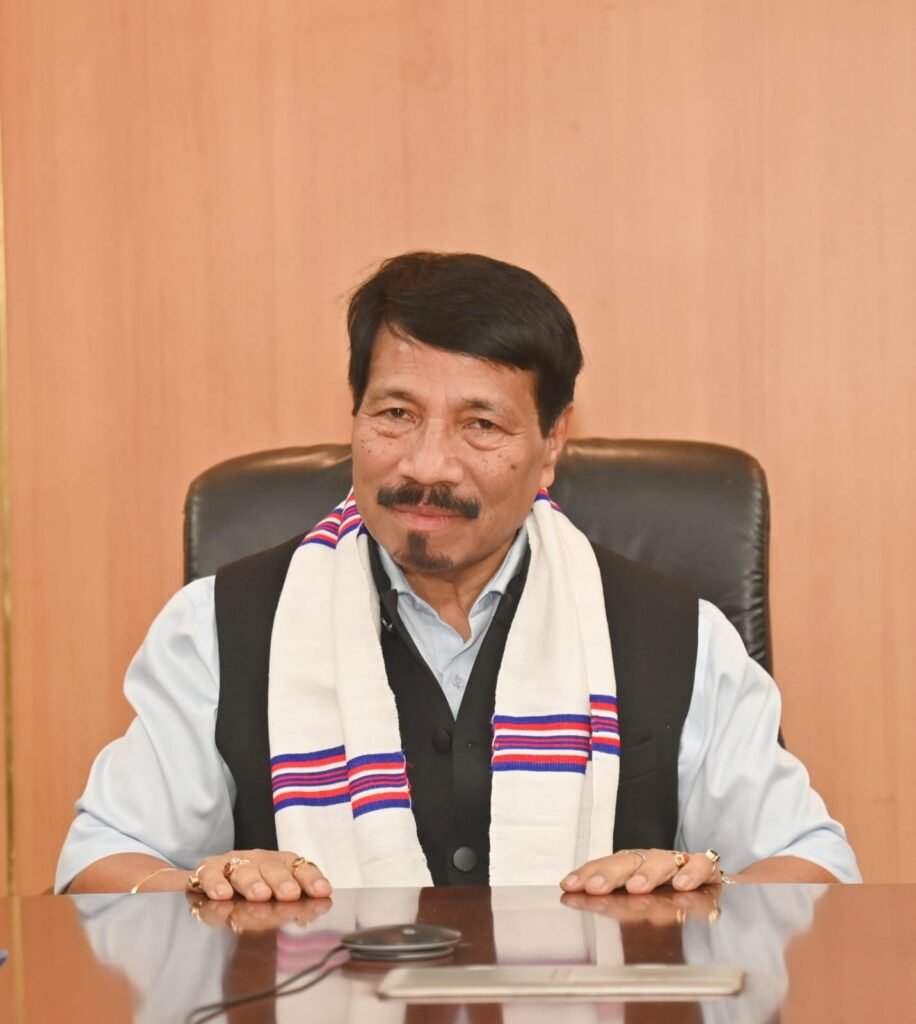
Assam’s Parliamentary Affairs Minister, Atul Bora, introduced the Uniform Civil Code (Assam) Bill, 2026, in the state assembly. The bill reportedly establishes a uniform age for marriage at 21 years for men and 18 years for women. It also prohibits polygamy and mandates registration for those in live-in relationships. Different regulatory mechanisms and penalties have been implemented across the state for this bill. Key regulations include requiring couples in live-in relationships to register their partnership within one month, and any child born to a registered live-in couple will be legally legitimate. Minors entering into such relationships will face prosecution, and if either partner is already married, the partnership will be considered valid. The bill mandates registration of all divorce cases, whether a ceremony or order, within 60 days of marriage and divorce. Scheduled Tribe communities and their traditional customs are exempt from this law. Violations of the law will be punished Anyone who does not comply with this legal proposal will be punished with imprisonment up to 3 months and a fine of ₹10,000, anyone who conceals facts after the declaration will be punished with imprisonment up to 3 months and a fine of ₹25,000, and also a fine of ₹10,000 for not registering the marriage or divorce within 7 days, and tampering with the document during registration will be punished with imprisonment up to 3 months and a fine of ₹25,000.
Siddaramaiah vs DK Shivakumar? Congress Deliberates Strategic Changes Ahead of Key Elections
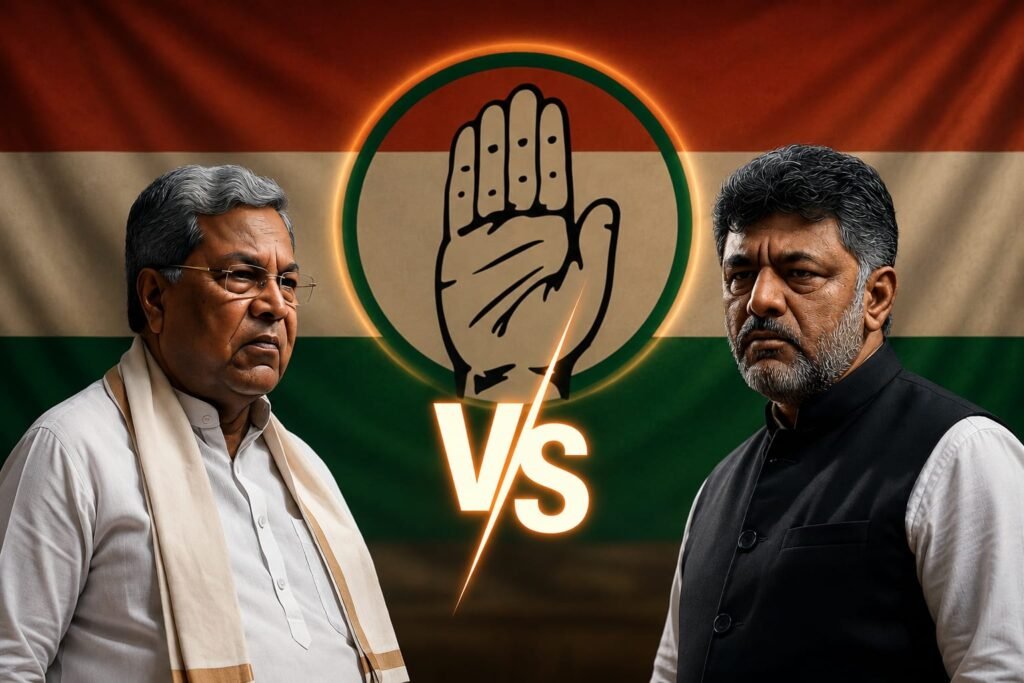
Major political developments are underway within India’s premier political party, the Congress. The party’s top leadership held several important meetings in Delhi today. This meeting took place at a time when there are fears of a possible major reshuffle in the party. It is believed that this change could change the betting equation between Karnataka Chief Minister Siddaramaiah and Deputy Chief Minister DK Shivakumar. This information has intensified political discussions in Karnataka. Major questions related to leadership balance, cabinet reshuffle and future election strategy are continuously making headlines here. According to sources, the Congress is closely assessing the structural and governance aspects of the party before the upcoming elections. The uncertainty surrounding the Karnataka leadership has intensified as the Congress high command is considering several options. These options include cabinet reshuffle, replacing Maiya with DK Shivakumar, or a surprising statement involving Mallika Arjun. The party faces the challenge of striking a crucial political balance due to factionalism within the party, governance concerns, and the presence of Prime Minister Narendra Modi as its leader. The shifting equations between DK Shivakumar and Siddharth Maiya and the meetings held within the Congress party’s high command are currently the focus of discussion in Indian political discourse. Speculation has repeatedly arisen regarding the leadership arrangement and internal discussions between the DK Shivakumar and Siddharth Maiya duo. The meeting in Delhi has sparked debate over whether the Congress party is planning a strategic shift.
Awards were distributed at Rashtrapati Bhavan, 66 personalities were honoured.
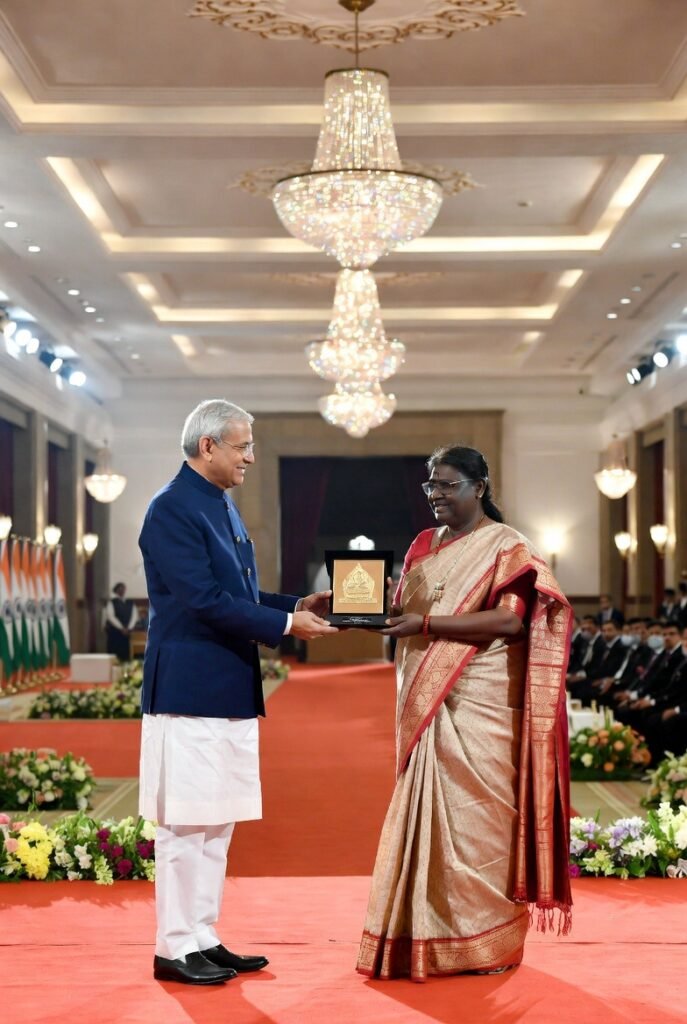
President Draupadi Murmu presented the Padma Awards for the year 2026 at Rashtrapati Bhavan on May 25. The Padma Awards are among the highest civilian honors in the country. Instituted in 1954, these awards are announced annually on Republic Day. According to the Ministry of Home Affairs, the President presented the Padma Bhushan, Padma Vibhushan, and Padma Shri awards at the first civilian investiture ceremony held at Rashtrapati Bhavan. This year, the Government of India announced a total of 113 Padma Awards. The first civilian investiture ceremony included 66 Padma Awards, including two Padma Vibhushans, six Padma Bhushans, and 58 Padma Shris. The remaining Padma Awards will be presented in the second phase of the ceremony to be held later. Vice President CP Radhakrishnan, Prime Minister Narendra Modi, and Union Home Minister Amit Shah, among other dignitaries, were present at the ceremony. List of prominent personalities and their fields: Padma Vibhushan Padma Bhushan Padma Shri Apart from this, there are 53 other personalities who were honoured with Padmashree by the President.
19th Job Fair organised in Dhanbad, PM Modi hands over appointment letters to 51 candidates
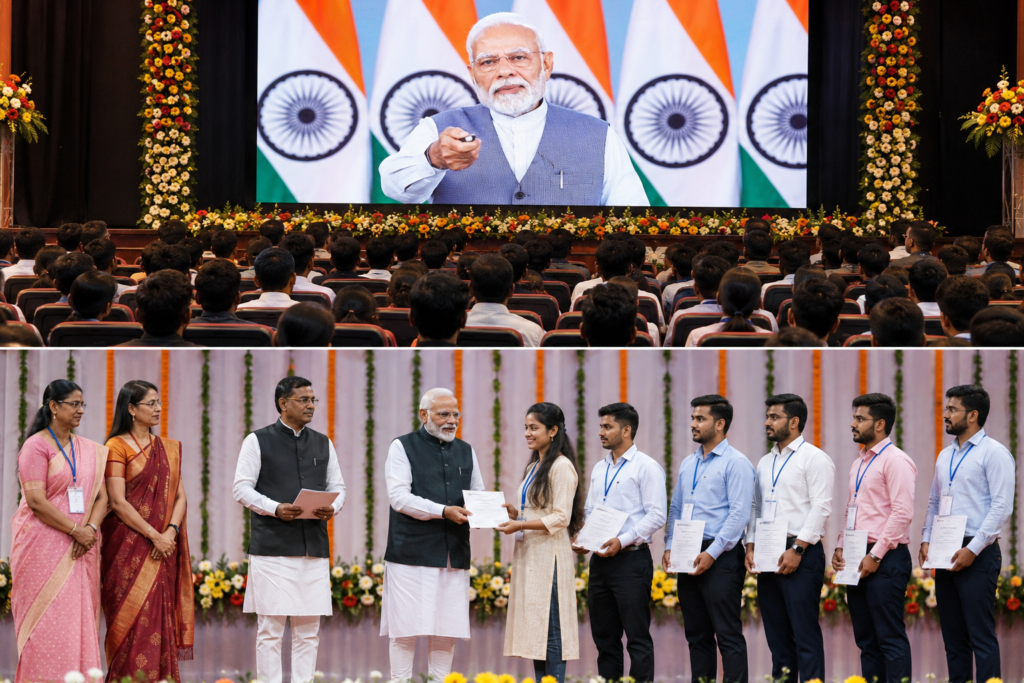
With the aim of securing a bright future for youth and fostering a spirit of national service, the 19th annual employment fair was held today, May 23rd, at the Railway Auditorium in Dhanbad, Jharkhand. Union Minister for Women and Child Development Annapurna Devi, Dhanbad MP Dhulu Mahato, and MLA Raj Sinha were the chief guests at the event. Dhanbad Railway Division DRM Akhilesh Mishra welcomed them with bouquets and mementos. Prime Minister Narendra Modi distributed appointment letters to over 51,000 candidates across the country via video conferencing. At a local function in Dhanbad, 76 successful candidates were also handed appointment letters by guests. In his address, PM Modi stated that the nation’s youth power is India’s greatest asset. Youth play a crucial role in building a developed India. He also urged the newly appointed personnel to join the national service with complete dedication, transparency, and honesty. Union Minister Annapurna Devi stated that the Modi government is continuously working to make youth self-reliant and employable. Calling the occasion historic, MP Dhulu Mahto said the central government is recognizing the talents of young people and providing them with employment. MLA Raj Sinha, praising the transparent selection process, said the job fair has become a medium to give new wings to the dreams of young people. This will strengthen the country’s administrative and technical infrastructure.
PM Modi Returns After Five-Nation Tour, Secures Key Energy, Tech and Climate Partnerships Across Europe and UAE..
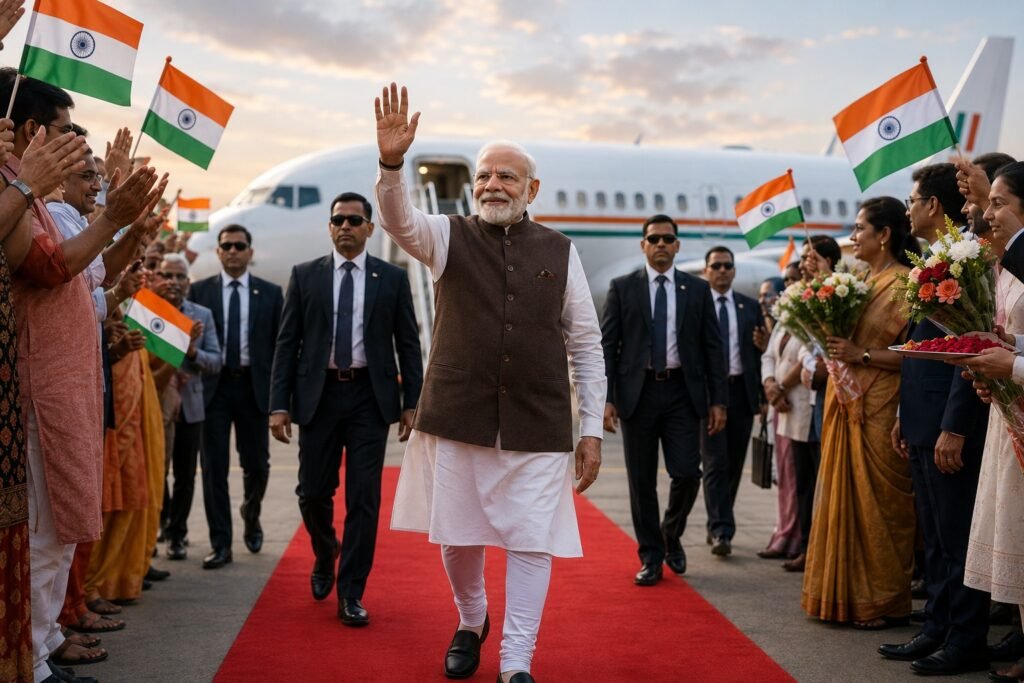
PM Narendra Modi returned to India after concluding his five-nation tour, including the UAE, the Netherlands, Sweden, Norway, and Italy. This visit focused on addressing energy security amid the Middle East crisis. The tour also focused on a strategic partnership in energy security, technology, and climate action, with agreements signed to enhance relations between the two countries. PM Modi’s first stop in the UAE was where the two countries signed agreements to secure long-term LPG supplies, expand crude oil storage facilities, and allow ADNOC to potentially increase its crude oil storage capacity in India by 30 million barrels. On his second visit, PM Modi arrived in the Netherlands, where his visit focused on technology and cultural diplomacy. During this visit, ASML and Tata Electronics signed a major deal to supply advanced lithography tools for a planned $11 billion semiconductor manufacturing fabrication plant in Dholera, Gujarat. PM Modi also visited the famous Afsluitdijk Dam to study Dutch flood control, water management, and renewable energy infrastructure. The Netherlands officially returned 11th-century Chola dynasty copper plates to India at a ceremony attended by PM Modi. In Sweden, PM Modi’s visit aimed to strengthen bilateral ties and elevate India-Sweden relations to a formal strategic partnership. The two countries adopted the India-Sweden Joint Action Plan (2026–2030), agreeing on a shared goal of doubling trade and investment over the next five years. India and Sweden also agreed to enhance their cooperation on space, innovation, emerging technologies, and the green transition. In Norway, the fourth country of his visit, PM Modi held talks with Norwegian PM Jonas Gahr Støre, where they officially elevated the relationship to a “Green Strategic Partnership,” focusing on the green energy transition, the blue economy, climate action, and Arctic cooperation. PM Modi also participated in the third India-Nordic Summit, which aimed to enhance trade, investment, and technological cooperation with northern European countries. PM Modi also met with the leaders of Denmark, Finland, Iceland, Sweden, and Norway in Oslo to forge a joint front on Arctic strategy and maritime security. In the final leg of his five-nation tour, Modi traveled to Italy, where he met with Italian Prime Minister Giorgio Meloni and President Sergio Mattarella. During PM Modi’s visit, India and Italy adopted a joint declaration to strengthen their partnership, including an annual Heads-of-Government Summit and a target of reaching $23.2 billion in bilateral trade by 2029.Agreements were also signed on maritime transport, agriculture, higher education, essential minerals, museum cooperation and the fight against economic and financial crime.
US-China Rivalry, Middle East Crisis, and Russia-China Alliance Reshape World Politics
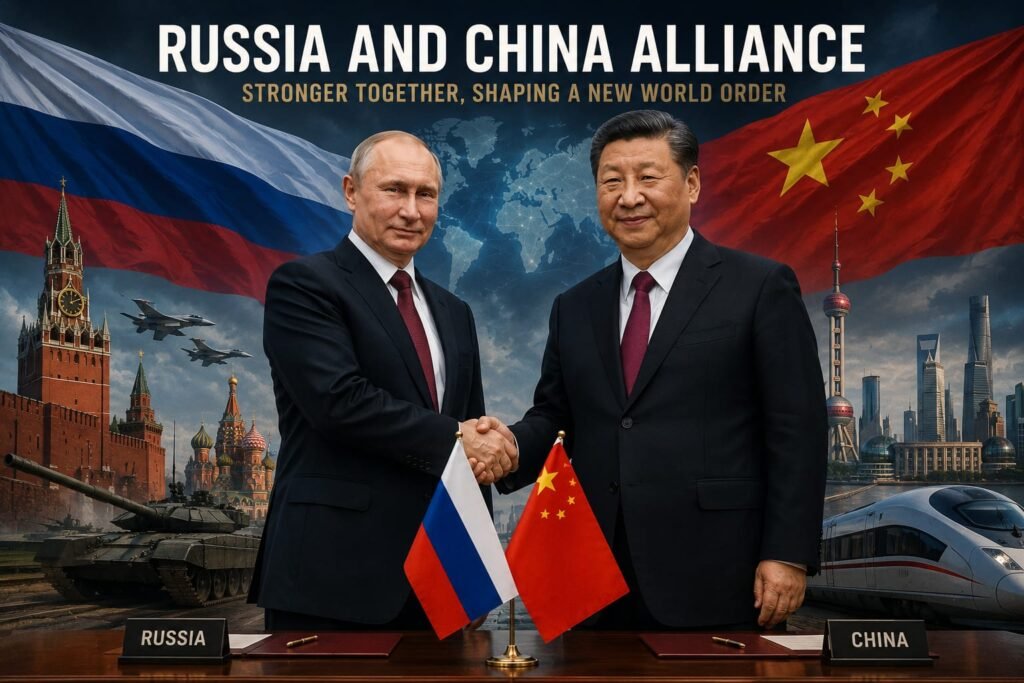
The relationship between global power and countries are changing significantly. According to Expert, the power of Western countries does not remain same as earlier they have been dealing with new challenges. key changes increase tension between US and China over Ukraine, tension between America and China increase after distruptions, deep economic associate between China and America, and large problem created by middle East crisis are also included in it. America and Cuba conflict has increased pressure. America thinking about pressurizing Cuba by its policies, and considered havana’s action a threat to national security. It also affect the flow of fuel supply. Through diplomatic influence, Washington offered economic and infrastructure help in exchange for important domestic changes. However, the situation remained tense because of severe fuel shortages and widespread power cuts in India. It talks about America’s current policies and new changes along with government discussion about relation between countries. Despite restrictions from Western countries China and Russia made decisions in the Beijing meeting to strengthen their cooperation and friendship. Bilateral relation between both the countries accelerate and crossed 200 billion dollar.This is mainly based on the demand for oil and gas, and depends on economic growth and GDP growth. To understand how these geopolitical changes are affecting markets and corporate strategies, you can look at further information. The clashes between US, Israel and Iran distrupting global energy routes especially around Strait of Hormuz.These conflicts are forcing big countries to change their plans and the Middle East is becoming more unstable because of energy problems and political changes.