
Delhi Police Denies Permission for CJP Protest at Jantar Mantar; Section 163 Imposed, Heavy Security Deployed…
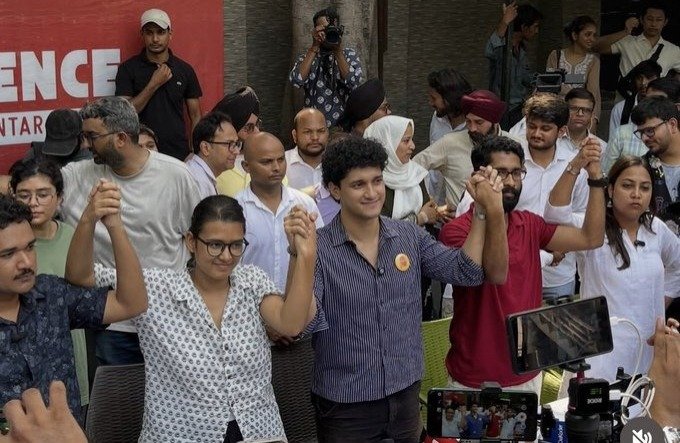
The Delhi Police has refused permission for a large demonstration planned by the Cockroach Janata Party (CJP) and opposition organizations at Jantar Mantar on October 10th. Tight security arrangements have been implemented in the New Delhi area in view of the protest, which was called to demand the resignation of Chief Election Commissioner (CEC) Gyanesh Kumar and electoral reforms. According to Joint Police Commissioner (New Delhi) Nupur Prasad, written notice is mandatory for any demonstration at least 10 days in advance, as per the established rules. CJP co-convenor Saurav Das submitted the information on October 7th, which the police considered to be too short, resulting in the denial of permission. The police stated that the party had not followed the guidelines and its own undertakings during an earlier demonstration. This decision was taken considering the law and order situation, public safety, and traffic management. Section 163 of the Indian Civil Security Code (BNSS) (which is equivalent to Section 144 of the Indian Penal Code) has been imposed in sensitive areas around New Delhi and Jantar Mantar. Under this, gatherings, unauthorized meetings, or processions without permission are strictly prohibited. Jantar Mantar and Delhi’s border areas have been turned into cantonments. In addition to the Delhi Police, thousands of paramilitary personnel from CISF, BSF, ITBP, CRPF, and RAF have been deployed for security. Multi-layer barricading has been put in place at various locations. Additionally, some trains to Delhi have been cancelled, and there are reports of special vigilance and restrictions at approximately 57 metro stations and security routes in the city.
PM Modi makes a big announcement on NEET paper leak, sets up a fast track court
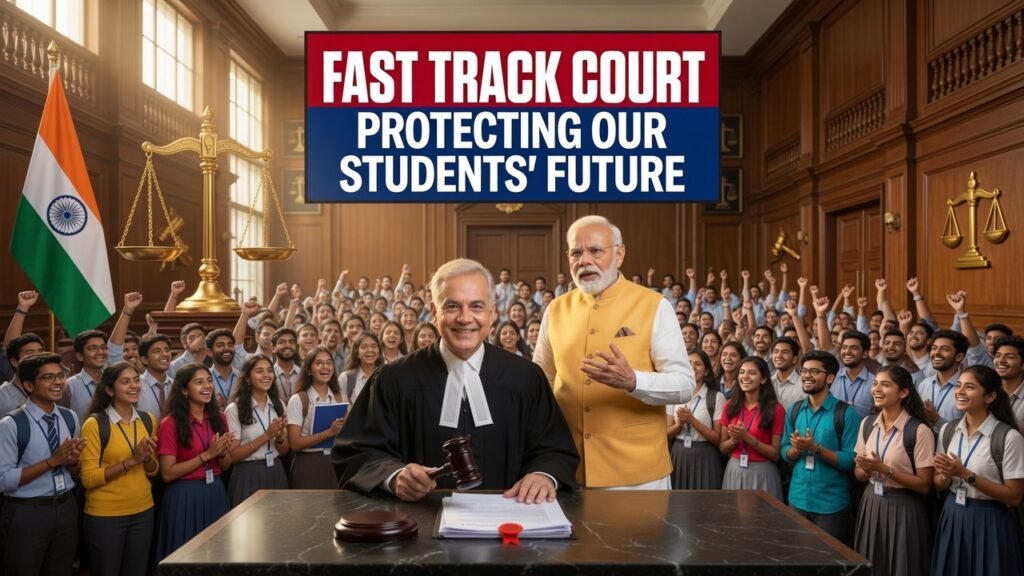
Recently, youth, in collaboration with the CJP, protested against the NEET paper leak controversy and the resignation of the Education Minister. Sonam Wangchuk has been on a hunger strike for the past 26 days. He began this hunger strike at Jantar Mantar in New Delhi on June 28th. Due to his deteriorating health, on July 18th, the Delhi Police forcibly admitted him to Medanta Hospital, which angered the youth gathered for the protest. On July 20th, the protest escalated and thousands of students marched towards Parliament. Following a confrontation with the police, the police used lathi charge and tear gas to stop the protesters, resulting in injuries and the detention of several students. After several days of protests, the central government appears to be on the back foot, with the opposition continuously pressuring the Modi government. PM Modi has taken a major decision on this issue today, Thursday, July 23rd. According to reports, PM Modi announced that the NEET paper leak case will be moved to a fast-track court, with the goal of securing swift punishment for those involved in the paper leak. He also ordered the relevant officials to begin work immediately. Prior to the launch of this facility, during the NDA’s “Mangal Milan” meeting on Tuesday, PM Narendra Modi stated that the future of the country’s youth is a priority for his government. He added that whatever decisions are required in this matter will be taken, and no student will be harmed. PM constituted FastTrack Court Posting on social media, Modi wrote, “Nothing is more important than the well-being and future of our youth. We have decided to establish a fast-track court to ensure swift and severe punishment for those involved in the paper leak. We have directed the relevant authorities and officials to take all necessary steps in this regard. This continues our ongoing efforts to protect the interests of students. Those who attempt to harm the future of our youth will not be spared.” He also warned that it is the government’s responsibility to secure the future of the country’s youth, and that he will not back down from this. He also warned that those who dared to do this will face the harshest punishment. The Prime Minister described this decision as a relief for students, as millions of students across the country take the NEET exam every year.