
Delhi University Drops Delhi Sultanate Paper From PG History Syllabus: What’s the Reason?
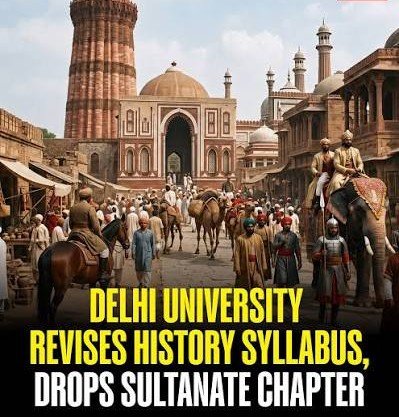
Delhi University has revised its MA History syllabus for the 2026-27 academic session, removing a paper on the Delhi Sultanate from the third semester. The decision has drawn attention because the course had focused specifically on medieval North India and the structures of political authority during the Delhi Sultanate period. The paper, titled “The Delhi Sultanate: Structures of Authority in Medieval North India (13th–14th Century)”, dealt with state formation, governance and political, religious and cultural developments during the period. Why Was the Paper Removed? According to the latest reports, the change is part of a larger restructuring of the postgraduate History curriculum. Delhi University has aligned the revised syllabus with the Postgraduate Curriculum Framework 2024 and the National Education Policy (NEP) 2020. The university notified the revised syllabus on August 7. Importantly, the Delhi Sultanate period has not been removed completely from the university’s History curriculum. The university continues to teach the subject in other courses, including at the undergraduate level. Several Other Papers Also Dropped The Delhi Sultanate paper is not the only proposed course missing from the final third-semester list. A paper titled “History of North India, c. 1400–1550” has also been left out. Several other proposed courses, including papers on gender and women in early India, political processes in ancient India, and religion and society in ancient Indian literature, were also not included in the final list. Reports indicate that only a portion of the electives initially proposed by the History Department made it into the notified curriculum. What Does This Mean for Students? For students joining the MA History programme from July 2026, the revised syllabus will determine the courses available in the third semester. The latest changes reflect Delhi University’s broader effort to restructure postgraduate programmes under the new national academic framework, with greater emphasis on revised course structures, learning outcomes and research-oriented study.
English in India: From Colonial Legacy to Everyday Language
English in India has moved beyond its colonial past, evolving into a language shaped by Indian voices, ideas and identity. English in India: The Supreme Court’s recent observation has reignited a debate over whether English can be regarded as an Indian language. The discussion, however, does not need to be framed as a choice between English and India’s regional languages. Languages such as Hindi, Tamil, Telugu, Kannada, Marathi and Odia have their own rich histories and cultural importance. Promoting them does not require rejecting English. India’s linguistic strength, instead, lies in maintaining and encouraging multilingualism. English first came to India during British rule and was largely used for administration, trade and missionary activities. Its early role was closely linked to colonial interests. But over the past two centuries, Indians have gradually adapted the language to their own needs. Today, English is deeply embedded in India’s education, business, media, literature and public life. Indian speakers have developed their own vocabulary, expressions and ways of using the language. English may not have originated in India like Sanskrit or Tamil, but its long history in the country has given it a distinct Indian identity. Rather than viewing English and Indian languages as rivals, India’s linguistic future can be strengthened by allowing different languages to coexist and grow.
PoK Protests Intensify as JAAC Long March Halts Temporarily Amid Deadly Clashes
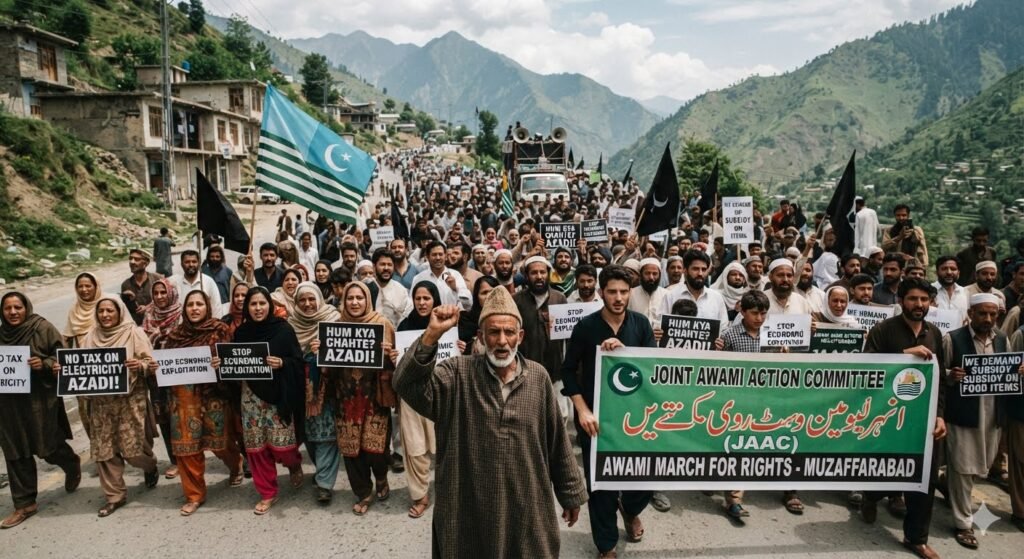
The situation in PoK has become extremely tense following security forces’ action against protesters demanding economic and political rights, a move that has drawn deep concern from organizations and political parties in Jammu and Kashmir. Clashes between supporters of the banned protest group and security forces Supporters of the Joint Awami Action Committee (JAAC) in PoK are demanding greater political representation and solutions to economic problems such as food shortages. Clashes between supporters of the banned protest group and security forces have reportedly left nine people dead and a dozen injured. Reports indicate that they had called for a march to Muzaffarabad this week, defying government warnings. However, protests that preceded the march turned violent. Human rights organizations have condemned the use of tear gas and lethal force by Pakistani security forces to combat protests in PoK. Sardar Waheed, the top civilian official in the Pakistan-occupied Poonch district, told AFP that a paramilitary soldier and a police officer were killed in Tuesday’s violence, adding that more protests were underway in Poonch district. And if protesters try to march towards the capital, authorities will stop the march. political development of communities in Jammu and Kashmir According to AFP data, in June, the local government banned the JAAC under the anti-terrorism law, which further escalated the unrest. This led to clashes between protesters and police, in which 22 people were killed.Concern is being expressed in Jammu and Kashmir over this development. Mirwaiz Amar Farooq said in an X-post that he was deeply concerned and saddened by the news of the deaths of civilians and Police A personnel. His prayers are with the families of the victims and all those affected by these tragic incidents. Mirwaiz appealed to Pakistan to prioritize dialogue and urged protesting organizations to uphold their responsibilities. “My family has a long history of supporting the social, educational, religious, and political development of communities in Jammu and Kashmir, including those on the other side of the LOC,” he said. “I urge the Government of Pakistan and the local government to prioritize restraint and engagement through dialogue, resolve differences through consultation and accommodation rather than confrontation, and prioritize respect for human rights and the sanctity of human life.” local assembly reserved for refugees The JAAC’s demand is to remove 12 seats in the local assembly reserved for refugees from outside Kashmir, which are used by Pakistani political parties to contest regional elections, thus influencing the outcome of regional elections. The BJP’s Jammu and Kashmir unit also expressed concern over reports of a growing humanitarian crisis in Pakistan-occupied Kashmir and demanded an immediate halt to the use of force against civilians and the release of those detained during peaceful protests.Most shops remained closed and public transport was also disrupted in Poonch on Wednesday as protesters blocked roads.