
ECI Announces By-Polls for 5 Assembly Seats and 1 Lok Sabha Seat; Voting on October 6…
The Election Commission of India (ECI) has officially announced the dates for by-elections to five assembly seats and one Lok Sabha seat in four states and union territories. The Election Commission (ECI) has announced the election schedule for vacant assembly seats in Tamil Nadu, Puducherry, and West Bengal, and one parliamentary seat in Assam. Voting will take place in the Madurantakam and Dharapuram assembly seats in Tamil Nadu, Thattanchavady in Puducherry, and Rejinagar and Nandigram assembly seats in West Bengal. Voting will also take place in the Nagaon Lok Sabha seat in Assam. According to a notification issued by the Election Commission, voting for all these seats will take place on October 6, 2026, with counting of votes taking place on October 9, 2026. These by-elections are being held following the resignation of MLAs and MPs. According to the official schedule released by the Commission, the formal gazette notification for the elections issued on September 9, 2026. The deadline for filing nomination papers is September 16, after which scrutiny of nominations will take place on September 17. Candidates can withdraw their nominations until September 19. Election schedule is as follows: Prior to the elections, the Election Commission also notified the schedule for the final publication of voter rolls in the respective constituencies. It should be noted that the final voter list for the Nagaon parliamentary seat in Assam was released on February 10, while for the Thattanchavady assembly seat in Puducherry, it was released on February 14. In Tamil Nadu, the final voter list for the Madurantakam (SC) and Dharapuram (SC) assembly seats was released on February 23. CM Suvendu Adhikari resigned from Nandigram in West Bengal. MP Pradyut Bordoloi resigned from the Nagaon Lok Sabha seat in Assam, necessitating a by-election. Representatives from five other assembly seats have also resigned. Chief Minister Suvendu Adhikari resigned from Nandigram in West Bengal.Humayun Kabir resigned from the Rejinagar seat in Murshidabad district. MLA Maragatham Kumaravel resigned from the Madurantakam seat in Tamil Nadu, and P. Satyabhama from Dharapuram. MLA N. Rangasamy resigned from the Thattanchavady seat in Puducherry. The Election Commission has directed the Chief Electoral Officers of the respective states to ensure free, fair, and peaceful elections. Adequate availability of Electronic Voting Machines (EVMs) and VVPATs (VVPATs) has been ensured. Orders have also been issued to ensure strict security arrangements in sensitive areas.
Political Campaigns vs PR Game: How Modern Elections Are Won Beyond Rallies
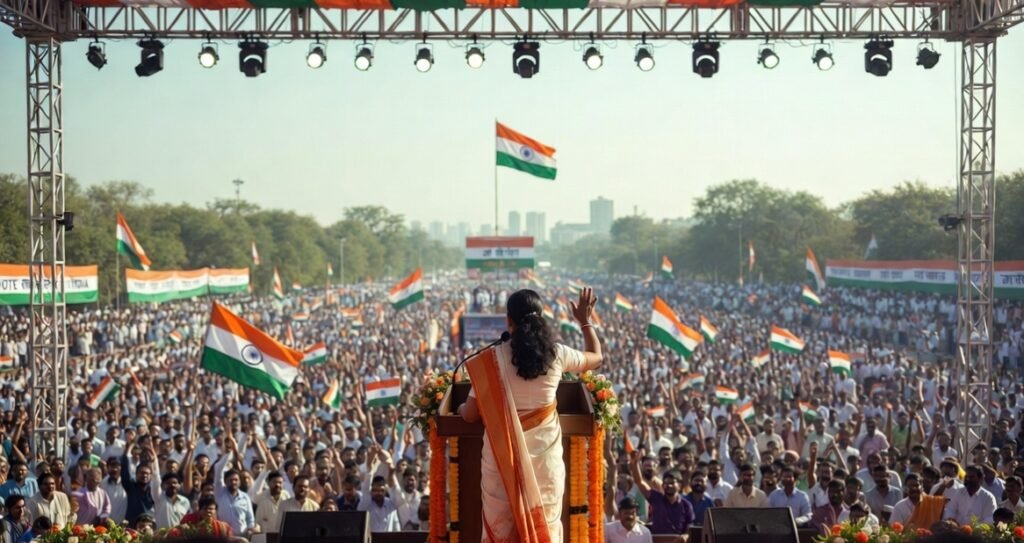
In today’s political landscape, elections are no longer fought only through rallies, speeches, and party workers on the ground. The real battle now happens in perception, narrative control, and digital influence. This is where the difference between a traditional political campaign and a modern PR game becomes important. A political campaign focuses on direct voter outreach — public meetings, manifesto promises, roadshows, booth management, and voter mobilization. Its goal is simple: convince people to vote. But political PR works differently. PR is not just about asking for votes; it is about shaping emotions, controlling conversations, and building an image powerful enough to influence public opinion before people even enter polling booths. Today, every major political party invests heavily in perception management. Viral reels, emotional storytelling, trending hashtags, influencer collaborations, media narratives, and rapid-response social media teams have become as important as public rallies. In many cases, the PR narrative decides whether a leader appears strong, relatable, emotional, aggressive, or visionary. Modern elections have shown how narrative engineering can completely shift public mood. A single viral slogan, a short emotional clip, or a carefully designed media campaign can dominate public discussion for days. Political parties now monitor social media sentiment in real time, track regional issues digitally, and design hyperlocal messaging for different communities and age groups. The rise of digital platforms has also changed how leaders connect with younger voters. Instead of long speeches, political communication is now delivered through short reels, meme culture, podcasts, reaction videos, and influencer-driven conversations. Leaders are no longer treated only as politicians — they are managed like public brands. At the same time, critics argue that the PR game sometimes overshadows real governance issues. They believe image-building can create a disconnect between online perception and ground reality. Supporters, however, say strategic communication is necessary because politics today is also a battle of visibility and attention. The line between campaigning and PR is becoming thinner with every election cycle. One focuses on votes, while the other focuses on perception — but in modern politics, both now work together. The future of elections may depend not only on who has stronger policies, but also on who controls the story people believe in the most.