
Dr. Vipin Gaur Meets Minister Dr. L. Murugan – A Warm and Useful Conversation…
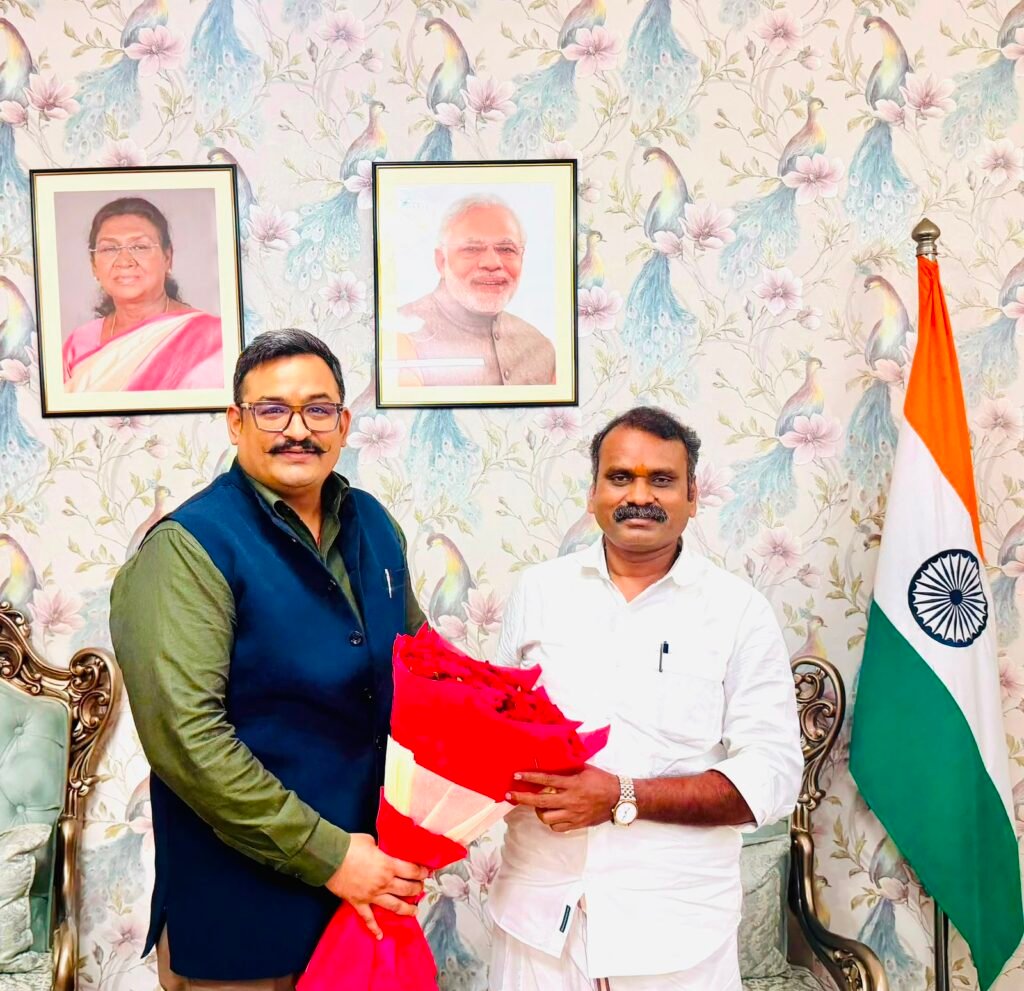
Dr. Vipin Gaur, the General Secretary of the Newspaper Association of India, sat down with Union Minister of State for Information and Broadcasting and Parliamentary Affairs, Dr. L. Murugan, for a courteous and open conversation. It wasn’t some stiff formal event. It was a proper discussion where both sides talked freely about the things that actually matter to Indian media right now. Dr. Gaur told the minister about the work his association has been doing across the country – the programmes they run, the efforts they make to stand up for newspapers and journalists, and the steps they’re taking to keep journalism ethical and responsible. He spoke about how digital media is growing so fast these days, how broadcasting needs better technology, and how the Indian film and entertainment world can become stronger on the world stage. They also talked about giving young people more chances in these fields and encouraging fresh ideas. What stood out was how Dr. Gaur appreciated the minister’s simple and humble way of working. He said Dr. Murugan’s quiet commitment to growing the information and broadcasting sector, keeping creative conversations alive, and making the media community stronger really comes through. That kind of approach makes people feel heard. They didn’t just stick to one topic. They exchanged thoughts on several important issues that are in the news these days, and the tone stayed positive throughout. At the end, Dr. Gaur shared a clear hope – that if the government, media institutions, and journalists’ organizations keep talking and working together, Indian media, journalism, and the creative industries will find a better direction. He believes this kind of steady cooperation will make responsible, trustworthy journalism even stronger. The Newspaper Association of India has been quietly doing a lot of groundwork – protecting journalists’ interests, supporting media education, helping young reporters build skills, and recognising good work at the national level. Meetings like this one give them a chance to share what’s happening on the ground and also hear the government’s side of things. It’s the kind of conversation that doesn’t make big headlines every day, but it matters. When people from the media side and the government side sit across a table and talk honestly about technology changes, digital growth, broadcasting upgrades, and how to keep public interest at the centre, something useful usually comes out of it. Dr. Gaur explained the association’s different initiatives in detail, and the minister listened. That simple exchange of information and ideas is how better understanding starts. Both sides seem to want the same basic things – a stronger, more professional media that serves people well and can hold its own internationally, especially in films and entertainment where so many young talents are looking for opportunities. In a time when everything is changing so quickly – from how news reaches us to how stories are told on screens – these calm, respectful conversations help everyone stay on the same page. No drama, no big speeches. Just two people who care about the media ecosystem sitting together and talking about what needs attention and how things can move forward. Dr. Gaur left the meeting feeling hopeful. He believes that continuous dialogue will give Indian journalism and the creative industries the fresh push they need. And honestly, that kind of quiet confidence is worth noting. The Newspaper Association of India will keep doing its work – supporting journalists, building skills, promoting ethical standards, and recognising people who do good reporting. And conversations like the one with Dr. Murugan help keep the door open so that practical issues can be discussed whenever they come up. That’s really the heart of it. A straightforward, respectful meeting in New Delhi where media and government talked about real concerns and shared a common wish for a stronger, more responsible Indian media landscape. Sources:Smart Vision Samachar, Ghaziabad edition, Thursday 30 July 2026
Punjab’s Anti-Sacrilege Law Sparks Clash Between AAP Government and Akal Takht

The backdrop of Punjab’s new anti-sacrilege law lies in the sacrilege incidents of 2015, when a Bir (copy) of the Guru Granth Sahib was stolen from Burj Jawahar Singh Wala, and its torn pages were subsequently found in Bargari. The SAD-BJP government failed to resolve this case, triggering massive public outrage that ultimately led to its defeat in the 2017 elections. Subsequently, followers of Dera Sacha Sauda chief Gurmeet Ram Rahim were arrested, but the investigation could not be brought to a conclusion. Ahead of the 2022 elections, the AAP promised to deliver justice within 24 hours and projected IPS officer Kunwar Vijay Pratap Singh as the face of this campaign; however, he was later sidelined and expelled from the party.