
India-Nepal Friendship Gets a New Bridge: PMs to Inaugurate Chharchhum Bridge…
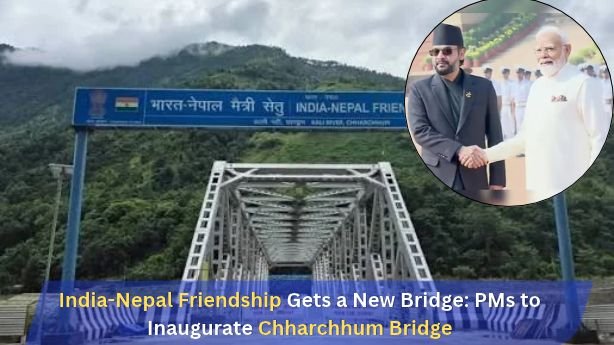
India and Nepal are set to strengthen their cross-border connectivity and bilateral ties with the inauguration of the Chharchhum Motorable Bridge over the Kali River in Uttarakhand. Prime Minister Narendra Modi and Nepal’s Prime Minister Balendra (Balen) Shah are scheduled to jointly inaugurate the bridge virtually on November 23, 2026. Located in the Dharchula tehsil of Pithoragarh district, the bridge will connect India’s Chharchhum village with Asigada in Nepal’s Darchula district. Built at an estimated cost of Rs 33 crore, the project is being seen as an important milestone in improving connectivity between the two neighbouring countries. The 110-metre-long motorable bridge has been constructed with financial assistance from the Government of India through the Public Works Department. It will provide an alternative road connection between the border regions of Uttarakhand and Nepal, reducing the difficulties faced by residents who currently depend on traditional river crossings and longer travel routes. The bridge is expected to benefit people in Dharchula and Nepal’s Darchula region, making cross-border movement easier for local communities. The new bridge is expected to facilitate cross-border trade, tourism and economic activities in the region. Local traders will benefit from easier transportation of agricultural products, herbs and other goods between the two countries. It is also likely to strengthen family, cultural and social connections among communities living on both sides of the Kali River. Improved road connectivity could further encourage tourists to explore religious and tourist destinations in Uttarakhand and Nepal. The inauguration comes during Nepal Prime Minister Balen Shah’s first official bilateral visit to India. During his meeting with PM Narendra Modi, both leaders are expected to discuss cooperation in trade, energy, hydropower, infrastructure and cross-border connectivity. The Indian government has also amended its customs notification to formally include the Chharchhum Motorable Bridge as a designated land crossing with Nepal. The inauguration of the bridge, along with the planned opening of the Banbasa dry port in Champawat, is expected to give fresh momentum to India-Nepal cooperation.
BRICS Summit 2026: PM Modi expresses concern over weaponization of technology and critical minerals…
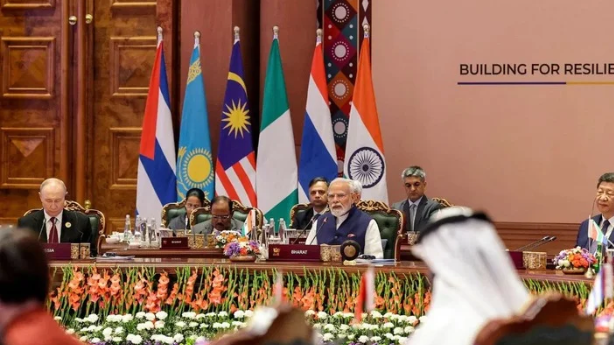
The 18th BRICS Summit, held in New Delhi, concluded on Sunday. In the concluding session, PM Narendra Modi expressed concern over rising global geopolitical tensions, supply chain disruptions, and the climate crisis. He stated that in today’s interconnected world, a crisis in one region does not remain confined to that region for long. PM Modi specifically criticized the weaponization of technology and critical minerals as a hindrance to shared global progress. The Prime Minister said that BRICS countries should focus on creating a system that ensures inclusive and equitable access to technology and a strong and reliable supply chain for critical minerals. Critical minerals are crucial for modern technology, electronics, clean energy, and several strategic industries. Therefore, using these resources or technological capabilities as a tool for geopolitical pressure could impact the global supply chain. PM Modi instead emphasized cooperation, resilient supply chains, and shared development. Technology, innovation, supply chain resilience, and sustainable development were among India’s priorities at the BRICS Summit. PM Modi also mentioned initiatives such as the BRICS Startup Innovation Fund, the Logistics Supply Chain Collaboration Framework, and the Digital Agriculture Network. Digital agriculture emphasized developing solutions tailored to farmers’ needs through the use of artificial intelligence, geospatial technology, and digital infrastructure. Furthermore, consensus was reached on a BRICS Integrated Early Warning System to combat infectious diseases and guidelines for disaster management. In his closing address, PM Modi stated that BRICS cooperation should not be limited to meetings and declarations, but should ensure that its real benefits reach the common people. He emphasized the need to make technological and development solutions accessible to the needs of the Global South. During the Summit, member countries also emphasized increased cooperation in areas such as improving global governance, strengthening supply chains, food and energy security, and artificial intelligence. After India’s presidency, the next BRICS presidency was handed over to China.