
CJI Highlights Public Trust as the Foundation of a Strong Judiciary…
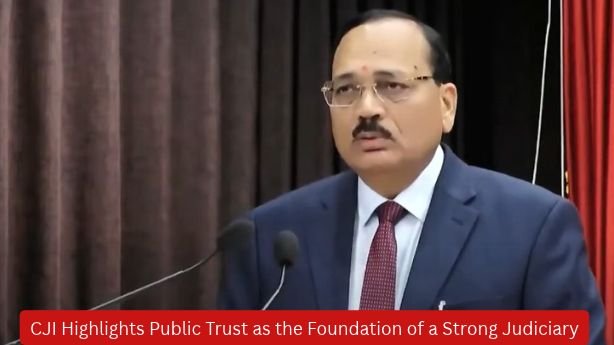
Chief Justice of India Surya Kant has said that public trust is the real strength of the judiciary and that courts cannot build confidence simply by delivering judgments that people like. Speaking at the 6th Ram Jethmalani Memorial Lecture in New Delhi on Monday, the CJI said trust comes from ensuring a fair and transparent judicial process, even when a decision goes against the expectations of those involved. Justice Kant made a clear distinction between public trust and public approval. He said a court does not earn people’s confidence by giving them the outcome they want, but by making sure that even those who lose a case feel that the process was fair. He also stressed that transparency goes beyond holding open hearings. According to him, people should be able to understand and examine the reasoning behind a court’s decision, not just its final outcome. The CJI also spoke about the need for the judiciary to remain open to scrutiny, questions and constructive criticism. Referring to the recent debate surrounding an NCERT textbook and references to judicial corruption, he said institutions do not remain credible by shielding themselves from criticism, but by facing scrutiny and demonstrating their integrity. He described public trust as something that has to be earned and renewed continuously through the everyday functioning of the justice system. Addressing concerns about judicial accountability and administrative reforms, Justice Kant said reform should be a continuing process and no institution can afford to remain static. He said the Supreme Court and High Courts already have mechanisms to deal with complaints against judges, describing them as robust and responsive, while also acknowledging that such systems can be improved. He cautioned, however, that putting every complaint against a judge into the public domain could itself raise concerns and argued for a strong internal mechanism capable of examining complaints objectively and responsibly.