
PM Modi Inaugurates NGT’s International Conference on Future of Environment and Climate Dynamics…
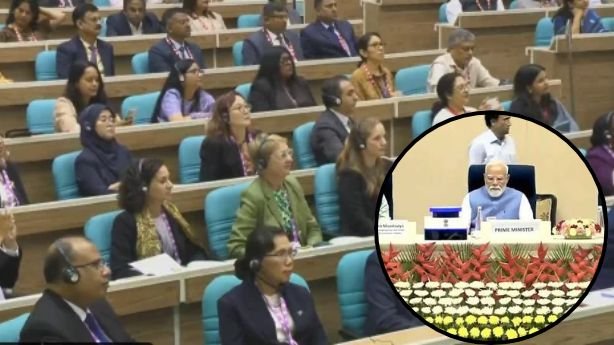
Prime Minister Narendra Modi inaugurated a two-day international conference on “The Future of Environment and Climate Dynamics,” organized by the National Green Tribunal (NGT) at Vigyan Bhawan in New Delhi on September 19, 2026. Chief Justice of India (CJI) Justice Surya Kant, Union Environment Minister Bhupendra Yadav, Attorney General R. Venkataramani, and NGT Chairperson Justice Prakash Srivastava also attended the inaugural session.Eminent judges and judicial representatives from 17 countries are participating in this conference. Its main objective is to discuss global environmental and climate challenges, identify shortcomings in policy formulation and implementation, and strengthen environmental governance. The two-day event (September 19 and 20) is also preparing a strategic roadmap on four specific themes: The main focus is on… Addressing the event, PM Modi said that for centuries, India has guided the world on matters related to nature and the environment. Drawing on this ideological commitment and cultural experiences, India is now offering solutions to modern climate challenges and calling for collective global action. I am pleased that this NGT conference is furthering that mission. The Prime Minister said that we have presented our traditions and their true strengths to the world. With this vision, we launched the book “Convenient Action: Continuity for Change” during the COP21 Summit in Paris. We are bringing the world together and setting new standards for environmental protection. Whether it’s the concept of “One Sun, One World, One Grid” or the International Solar Alliance, CDRI, Initiatives like the Global Biofuel Alliance, the International Big Cat Alliance, and Mission LiFE (Lifestyle for the Environment) all demonstrate India’s dedicated commitment to climate and the environment. PM Modi said that in the last 12 years, India has made extraordinary progress in every area related to the environment. We have placed great emphasis on renewable energy, which has played a vital role in environmental protection. India is the only G20 country that has fulfilled all the commitments made at the COP21 Summit in Paris ahead of time. This reflects India’s strength.
PM Modi inaugurates SEMICON India 2026, says India’s chip story has moved from files to factories…
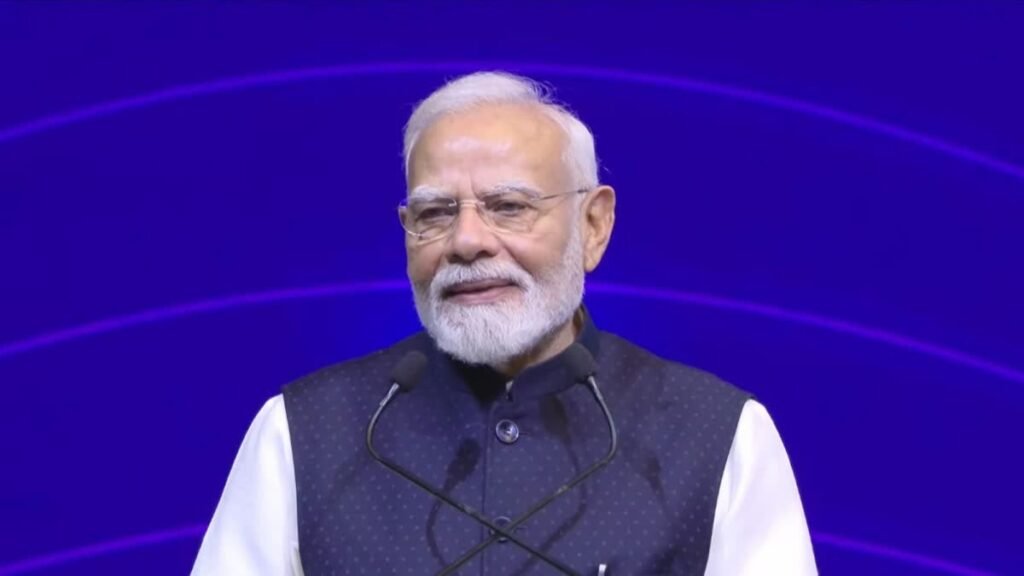
Prime Minister Narendra Modi inaugurated the fifth edition of the global semiconductor summit “SEMICON India 2026” on September 17th at the Yashobhoomi Convention Center in Dwarka, New Delhi. This three-day event, held from September 17th to 19th in the capital, New Delhi, focuses on industry participation, policy direction, and international partnerships. This mega-event brings together leading tech leaders, scientists, and investors from around the world to strengthen India’s semiconductor ecosystem. The theme of this year’s summit is “Silicon to Systems: Building the Ecosystem.” According to the Ministry of Electronics and Information Technology (MeitY), the conference is being jointly organized by the India Semiconductor Mission (ISM), MeitY, and the global industry body SEMI under the theme “Silicon to Systems: Building the Ecosystem.” Addressing the inaugural session, Prime Minister Modi said, “India’s chip story is no longer confined to files, but has reached the ground in factories. India will soon become an integral and reliable part of the global semiconductor supply chain.” Highlighting the progress made in the country’s electronics and chip manufacturing sector, the Prime Minister said that India is now fully prepared for the next phase of the semiconductor sector, ‘Semicon 2.0.’ The Indian government aims to not only meet the country’s domestic chip needs but also export chips globally for the mobile, automobile, and AI sectors. Prime Minister Narendra Modi said that amid these achievements, the Semicon India event has become even more important. The first edition was held in 2022, and since then, we have been meeting every year, but the topics of our discussions have changed each year. In the first edition, we discussed policy. The discussions progressed in subsequent editions. We began discussions on projects, including signing files and laying foundation stones. Last year, we began discussions on pilot lines and test chips, and talked about the first samples coming out of Indian units. This year, we are talking about commercial production. Our chips are now reaching customers across the country and the world from Indian plants. Two more plants are also starting commercial production. I congratulate them as well. The event will also feature an official review of key manufacturing achievements. Under the ‘Semicon India Program,’ the central government has approved 12 semiconductor projects, of which commercial production has already begun at three units approved under ‘Semicon 1.0.’ Furthermore, the Union Cabinet has approved the next phase, called ‘Semicon 2.0,’ which is based on six key pillars. Electronic design automation tools have been delivered to over 400 academic institutions and 105 startups, while 24 startups have received approval under the ‘Design Linked Incentive’ scheme. In this regard, the ministry said that SEMICON India 2026 will adopt a comprehensive value-chain approach, showcasing the journey from semiconductor materials and manufacturing to advanced packaging, design, electronics and systems.
BRICS Summit 2026: PM Modi expresses concern over weaponization of technology and critical minerals…
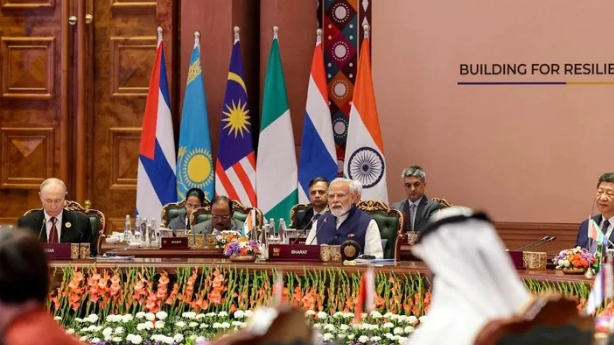
The 18th BRICS Summit, held in New Delhi, concluded on Sunday. In the concluding session, PM Narendra Modi expressed concern over rising global geopolitical tensions, supply chain disruptions, and the climate crisis. He stated that in today’s interconnected world, a crisis in one region does not remain confined to that region for long. PM Modi specifically criticized the weaponization of technology and critical minerals as a hindrance to shared global progress. The Prime Minister said that BRICS countries should focus on creating a system that ensures inclusive and equitable access to technology and a strong and reliable supply chain for critical minerals. Critical minerals are crucial for modern technology, electronics, clean energy, and several strategic industries. Therefore, using these resources or technological capabilities as a tool for geopolitical pressure could impact the global supply chain. PM Modi instead emphasized cooperation, resilient supply chains, and shared development. Technology, innovation, supply chain resilience, and sustainable development were among India’s priorities at the BRICS Summit. PM Modi also mentioned initiatives such as the BRICS Startup Innovation Fund, the Logistics Supply Chain Collaboration Framework, and the Digital Agriculture Network. Digital agriculture emphasized developing solutions tailored to farmers’ needs through the use of artificial intelligence, geospatial technology, and digital infrastructure. Furthermore, consensus was reached on a BRICS Integrated Early Warning System to combat infectious diseases and guidelines for disaster management. In his closing address, PM Modi stated that BRICS cooperation should not be limited to meetings and declarations, but should ensure that its real benefits reach the common people. He emphasized the need to make technological and development solutions accessible to the needs of the Global South. During the Summit, member countries also emphasized increased cooperation in areas such as improving global governance, strengthening supply chains, food and energy security, and artificial intelligence. After India’s presidency, the next BRICS presidency was handed over to China.
PM Modi in Vadodara: Inaugurates ₹35,000 Crore Projects, Flags Off New Trains Under ‘Namo for Vikasit Bharat’…
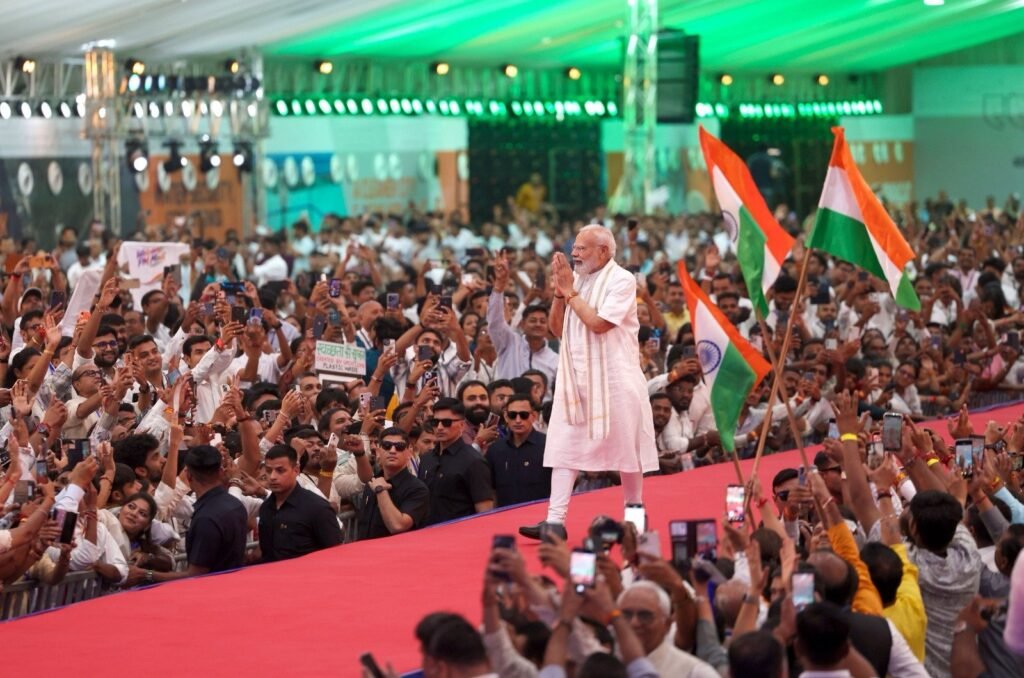
Prime Minister Narendra Modi arrived in Vadodara, Gujarat, on Tuesday, September 8th, to participate in the Namo for Vikasit Bharat program. Upon his arrival at the program, the youth present there warmly welcomed the Prime Minister. Following the welcome ceremony, Prime Minister Narendra Modi laid the foundation stone and inaugurated development projects worth Rs. 35,000 crore. Addressing the “Namo for Vikasit Bharat” program, Prime Minister Narendra Modi said, “Today, I have come among you to further accelerate the journey towards a developed India. Recently, the foundation stone and inauguration of projects worth thousands of crores of rupees related to the country’s development have been laid. I extend my heartfelt congratulations to the people of the country. On this Vikas Parv, I heartily congratulate every citizen of Vadodara and commend them for the spirit of service and service with which you have launched a cleanliness campaign throughout the city of Vadodara.” Prime Minister Narendra Modi flagged off the new MEMU passenger train service and other train services between Pratapnagar (Vadodara) and Tanda Road (Dhar) during the “Namo for Vikasit Bharat” program. At the “Namo for Vikasit Bharat” program, Prime Minister Narendra Modi said, “For a developed India, we need connectivity that is not only convenient but also fast enough to keep pace with the times.” Vadodara is home to the Gati Shakti University. Today, the final links of the Dedicated Freight Corridor have also been connected here. The more than 2,800-kilometer-long Dedicated Freight Corridor project has been completed today. This is truly a historic achievement for 21st-century India. This Dedicated Freight Corridor is a testament to the profound transformation that has taken place in the country’s work culture over the past 12 years.” This dedicated freight corridor was first conceived in 2004… A special company was formed in 2006 to complete the project. But until 2014, files were simply shuffled from one table to another. And ironically, even these files did not benefit from the dedicated corridor.”
PM Modi at 26th SCO Summit in Bishkek: Calls for Dismantling Terror Ecosystem, Stresses Dialogue & Connectivity…
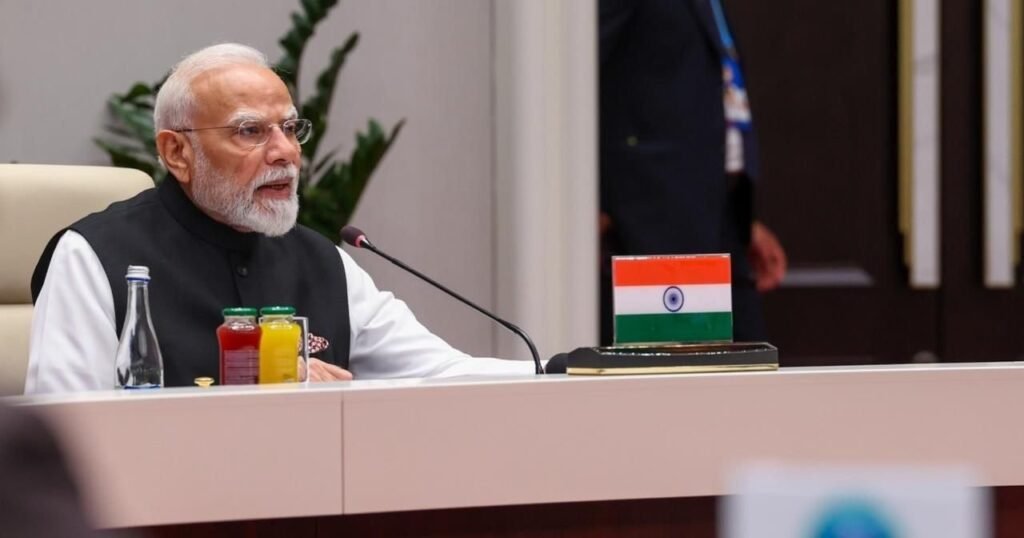
The 26th Shanghai Cooperation Organization (SCO) Summit was held in Bishkek, the capital of Kyrgyzstan, from August 31 to September 1, 2026. Prime Minister Narendra Modi arrived in Bishkek, the capital of Kyrgyzstan, on September 1 to participate in the 26th SCO Summit. Several leaders of the organization, including Chinese President Xi Jinping, Russian President Vladimir Putin, and Pakistani Prime Minister Shahbaz Sharif, attended the summit. On the sidelines of the summit, PM Modi held important bilateral meetings and discussions with Russian President Vladimir Putin, Chinese President Xi Jinping, and Iranian President Masoud Pezeshkian. During the meeting, PM Modi reiterated that India has always been a supporter of peace and that all issues and problems should be resolved through dialogue and diplomacy. The summit discussed key global issues such as regional security, counter-terrorism, enhancing trade, economic cooperation, and connectivity. India is enhancing cooperation with major Eurasian powers while maintaining its national priorities and strategic autonomy amid external pressures. During the summit, Prime Minister Narendra Modi stated that India supports all efforts that connect markets, facilitate trade, and open new avenues for development. However, it is also essential that such efforts respect the sovereignty and territorial integrity of all countries, which is the core spirit of the SCO Charter. He stated that connectivity will expand in the future, with emphasis on roads, railways, and air corridors, simplifying customs procedures, promoting digital documentation, and making logistics networks more efficient. Cracking down on terrorism, PM Modi appealed to member countries to dismantle the entire ecosystem of terrorism. He stated that terrorist funding, recruitment, radicalization, and their safe havens must be completely eliminated. Without naming Pakistan at the summit, PM Modi delivered a strong message regarding terrorism. He stated that there should be no room for double standards on this serious issue. The Prime Minister said that countries that use terrorism as a tool of their policy and provide shelter and support to terrorists should be given a clear message that terrorism cannot become a strategic weapon for anyone. Referring to Ukraine and other global crises, the Prime Minister said that wars and conflicts can never be resolved on the battlefield. The only way to resolve any dispute is through dialogue and diplomacy. He also appealed to the SCO countries to use their shared geography to transform it into shared opportunities instead of getting entangled in border disputes, thereby strengthening global trade, maritime trade and supply chains.
From Moscow to Beijing, Washington to Tokyo: India’s Top Officials on Coordinated Diplomatic Push…
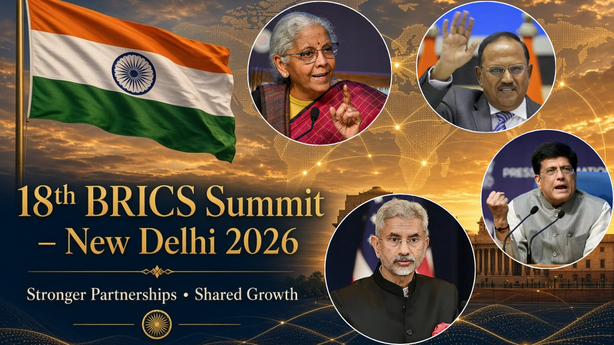
India has intensified diplomatic engagements and bilateral meetings with major global powers to strengthen its position on the global stage ahead of the BRICS Summit. The primary objective is to safeguard its national interests in multilateral forums and maintain balance in the global order. Ahead of the 18th BRICS Summit, scheduled to be held in New Delhi in September 2026, the Indian government has launched a major diplomatic push. Four of India’s most prominent officials and ministers are visiting five key countries to strengthen India’s national interests ahead of the summit. Prime Minister Narendra Modi, along with his three ministers—Nirmala Sitharaman, S. Jaishankar, Piyush Goyal, and National Security Advisor (NSA) Ajit Doval—is leading a major diplomatic campaign. These diplomatic meetings will last for three weeks, concluding in the second week of September, immediately following the BRICS Summit in New Delhi. Finance Minister Nirmala Sitharaman is on a highly important official visit to Canada and the United States from August 25 to September 2, 2026. This visit, taking place just before the BRICS Summit, is considered strategically important for India’s economic diplomacy. Finance Minister Nirmala Sitharaman’s visit to Canada and the United States prioritizes four key agendas: investor meetings, interactions with corporate leaders, strengthening economic ties, and G20 financial discussions. As part of this diplomatic mission, External Affairs Minister Dr. S. Jaishankar recently held a crucial meeting with Russian President Vladimir Putin and Foreign Minister Sergey Lavrov in Moscow. Key areas of economic cooperation, energy and fertilizers, technology and defense were discussed amid preparations for the upcoming Modi-Putin meeting. Commerce Minister Piyush Goyal is also visiting Japan with a large delegation of 200 Indian business leaders and veterans. The main objective of this visit is to enhance India-Japan bilateral trade and attract significant Japanese investment in India’s infrastructure, high-tech manufacturing, semiconductor, and next-generation industries. National Security Advisor Ajit Doval is in Beijing, the capital of China, for the 25th round of India-China Special Representatives’ Dialogue. The main objective of this high-level strategic meeting is to find a lasting solution to the long-standing border issues between the two countries and effectively manage the current tensions along the Line of Actual Control (LAC).
NTA Cancels UGC-NET Papers for Three Subjects After Audit Finds Factual Errors, Typos & Repeated Questions; Rahul Gandhi Questions Paper Leaks..
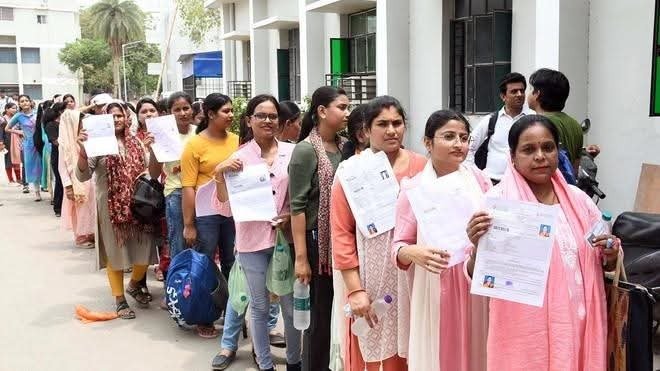
The National Testing Agency (NTA) has admitted to significant irregularities in the UGC-NET June 2026 exam question paper. Serious allegations surfaced, including numerous spelling mistakes, strange names of thinkers, and blatant copying of old questions from previous years. Following this, the NTA has cancelled the English, Commerce, and Sociology exam papers. This decision was made by the NTA based on the report of an audit committee formed after complaints from candidates and experts regarding serious irregularities in the question papers. The NTA will conduct re-exams for these three affected subjects in September 2026. The NTA has released a new exam schedule for the re-exams. Candidates will not be charged any additional examination fees for re-exams. Here is the re-exam schedule: According to a report in the Indian Express, on Sunday, August 16, the NTA released the provisional answer keys for 84 subjects for the UGC-NET June 2026. However, the answer keys for some papers were withheld. Following this, the NTA issued a separate notice in the evening. It stated that a major decision had been made regarding English, Commerce, and Sociology. According to the NTA, the committee formed to review these three papers found several errors. These included factual errors, typos, and translation errors. The committee found the names of several prominent scholars misspelled in the question paper. The names of some books were also incorrect. Furthermore, some questions contained language errors. Grammar errors were also found in several places. Gender and number mismatches were also found. There were also punctuation errors. Moreover, non-standard terms were used for concepts for which pre-established and commonly used terms exist. It was also discovered that many questions had already been asked in previous exams. Following these discrepancies, the committee recommended that the NTA re-examine the three subjects. Rahul Gandhi Targets PM Modi After NTA Cancels Three UGC-NET Papers Meanwhile, Congress MP Rahul Gandhi launched a scathing attack on PM Modi and the National Testing Agency (NTA) over the decision to re-examine the UGC-NET exam in three subjects due to errors in the question papers. Congress leader Rahul Gandhi wrote on the social media platform X, “Modi ji, look what your NTA has done again.” The UGC-NET exams for Sociology, English, and Commerce were held between June 22 and 30. After nearly two months, the NTA canceled all three exams because they had prepared incorrect question papers and re-asked old questions. Rahul Gandhi said, “Thousands of candidates who prepared diligently for years, filled out forms, paid fees, and traveled to far-flung exam centers will now have to do it all again in September. The NTA makes mistakes, but the students of the country suffer the consequences. I said this in Kota, Dehradun, and Prayagraj, and I will continue to say it. This is no longer an education system. It has become just a money-and-labor-sucking machine. It takes away your money, your years, your mental health, and your self-confidence, and gives you nothing in return, not even a job. The NTA is still not answering the real question. Were these papers leaked before the exams?”
‘Dimagi Naxal Party’ Explodes on Social Media, Crosses 1.7 Lakh Followers in 24 Hours..
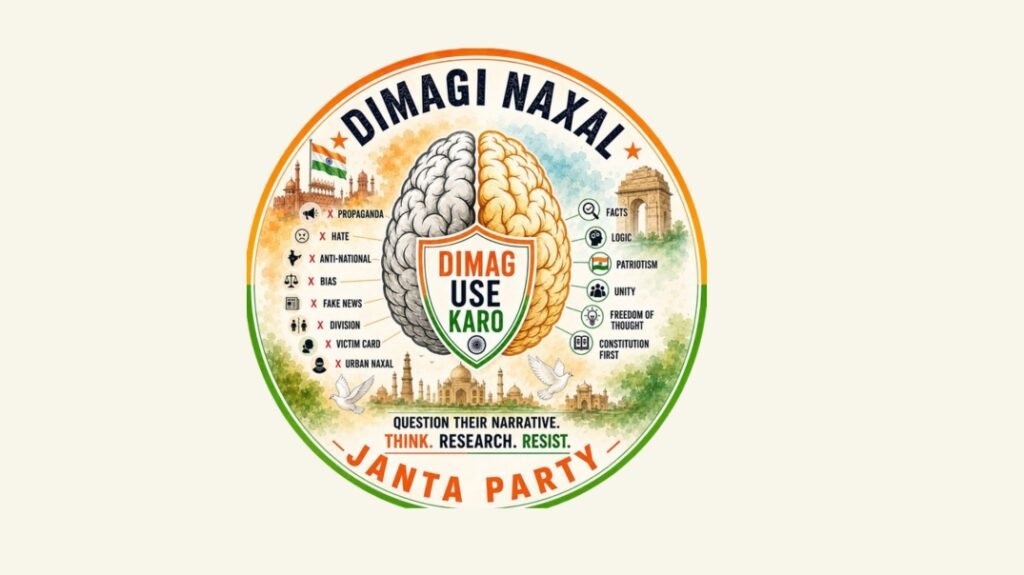
Following the Cockroach Janata Party (CJP), another new party has emerged in the headlines. The party is being called the ‘Dimagi Naxal Party’. Similar to the Cockroach Janata Party, a new social media account called the ‘Dimagi Naxal Janata Party’ has emerged. The party is gaining popularity on social media. This account has gained more than 1.7 lakh followers in just 24 hours. On the other hand, this account, named @DNJP_India, currently follows more than 15 accounts, including Congress leader Rahul Gandhi, Samajwadi Party chief Akhilesh Yadav, AAP leader Arvind Kejriwal, YouTuber Dhruv Rathee, comedian Kunal Kamra, actor Prakash Raj, and many other popular names on social media.This account emerged on social media after Prime Minister Narendra Modi’s Independence Day speech on August 15th. In that speech, he referred to the elimination of armed Naxalites and urged the nation to be vigilant against “mindful Naxalites” lurking in ambushes. In his speech, PM Modi targeted those with Naxalite ideologies who seek to spread unrest despite the weakening of armed Naxalism. Although PM Modi did not name any specific group during his speech, his comment sparked a significant political controversy. Opposition leaders retaliated. Some leaders, including Congress leader P. Chidambaram, said they were proud to be called “mindful Naxalites.” In his Independence Day speech, PM Modi said, “Even though the Naxalites who took up arms in the jungles have been eliminated, the mindless Naxalites are still looking for opportunities. They are seeking ways to resort to violence and trying to lead the country down the wrong path. Such people must be identified and isolated.” Following his speech, the “Dimagi Naxal Party” has come into the spotlight. Several accounts with this name are visible on Instagram. Pages created by the “Dimaggi Naxal Party” on various social media sites are rapidly gaining popularity. Within a day of its launch, it gained more than 50,000 followers. Currently, its Instagram page has more than 150,000 followers. The party’s slogan is “Think, Research, Protest.”
Article 370 Abrogation Completes 7 Years: Key Changes in Jammu and Kashmir
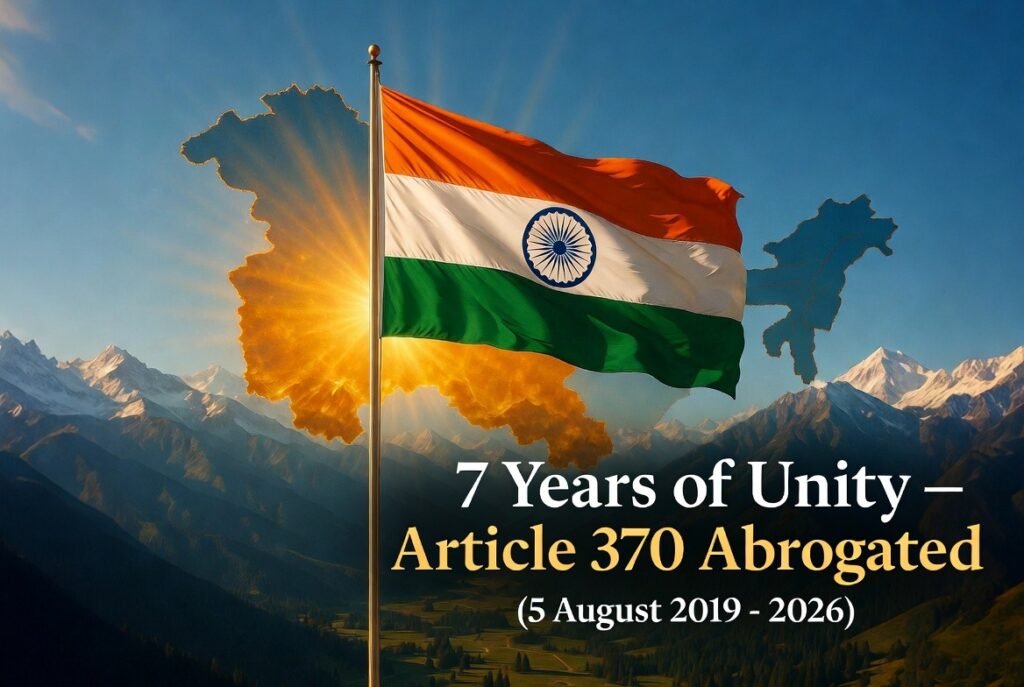
It has been seven years since the destiny of Jammu and Kashmir was transformed. It was on this very day in 2019 that Article 370 and Article 35A were abrogated in Jammu and Kashmir. This is considered the most significant achievement of the BJP government’s tenure. Just months after the NDA government began its second term under the leadership of Prime Minister Narendra Modi, Article 370 and Article 35A—which granted special status to Jammu and Kashmir—were revoked. This is regarded as one of the most secretive strategic missions in the history of Indian politics. Knowledge of the entire operation was confined to a select few—including PM Modi, Home Minister Amit Shah, and National Security Advisor Ajit Doval—and no one else got wind of it. What is Article 370? Article 370 was a temporary provision of the Constitution that granted Jammu and Kashmir a special autonomous status compared to other Indian states. This provision came into effect on October 26, 1947—shortly after India gained independence—and remained in force until August 5, 2019. Under this article, Jammu and Kashmir had its own separate constitution and flag. Except for matters concerning defense, foreign affairs, finance, and communications, the approval of the Jammu and Kashmir State Assembly was mandatory for the implementation of central laws. Furthermore, non-residents of Jammu and Kashmir could not purchase movable property, land, or houses in the region, nor were they eligible for state government jobs. Certain provisions of the Indian Constitution—such as the Right to Education (RTE) and the Right to Property—were not applicable in Jammu and Kashmir under this article. Changes after the abrogation of Article 370 With the abrogation of Article 370, the special status granted to Jammu and Kashmir came to an end. Post-2019, the Indian Constitution became fully applicable in the region. The provisions for a separate constitution and flag for Jammu and Kashmir were also abolished. Non-residents can now purchase land in Jammu and Kashmir, subject to certain conditions. Additionally, citizens of Jammu and Kashmir became eligible to apply for jobs in other states. Jammu and Kashmir was bifurcated into two Union Territories: Jammu and Kashmir, with a legislative assembly, and Ladakh, as a Union Territory without one. While incidents of stone-pelting were previously common in the region, the youth of Jammu and Kashmir began joining the Indian Army following the abrogation of Article 370. Terrorist incidents in the region also declined.
PM Modi forgives minor student who abused him during CJP protest..
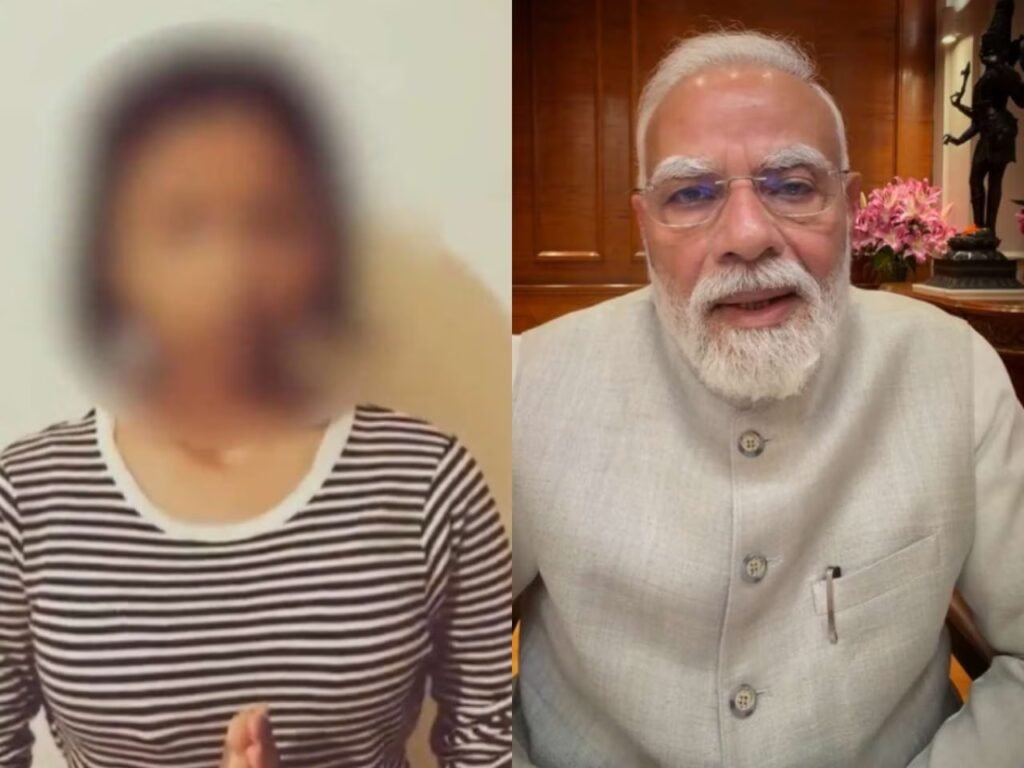
During the paper leak protest at Jantar Mantar in Delhi, abusive language was used against Prime Minister Narendra Modi. PM Modi released a video on social media on Saturday, August 1st. He expressed his forgiveness for the student who used abusive language during the protest. PM Modi stated that he and his late mother were abused during the protest. A video of the accused student has also surfaced in this matter. According to reports, the viral video shows the student claiming to be 15 years old, now pleading for forgiveness with folded hands. She claims she came to Connaught Place with friends to visit and joined the protest. She uttered abusive language under the influence of the crowd and in her excitement. The student also stated in the video that what she said was unpardonable and unforgivable. She stated that this was her first and last mistake, and that she apologizes to the nation and is deeply ashamed of her actions. She has realized the impact of her words and wants to apologize not only to the Prime Minister but to everyone across the country who was offended by them. The FIR reportedly lists her as 25 years old, but in the apology clip, she claims she’s only 15. She apologizes, saying she never intended to create such a controversy. Noida police registered a zero FIR The controversy began when a complaint was filed against the girl at a Noida police station on Wednesday for her comments about the Prime Minister. The Noida police registered a zero FIR and then transferred the complaint to the Parliament Street police station in New Delhi. The complainant stated that her comments had hurt the Prime Minister’s dignity and could vitiate the atmosphere and disrupt public peace. The student’s apology video surfaced just hours after Prime Minister Modi’s latest Instagram video, in which he appealed for restraint and forgiveness after abusive slogans were chanted against him during a student protest. In the message, he mentioned the recent events at Jantar Mantar, where some mischievous young men used language inappropriate for any civilized society and hurled filthy abuses. Responding to this, Prime Minister Modi stated that not only was he targeted, but his deceased mother was also treated very badly. Reflecting on the strong public reaction, Prime Minister Modi attributed this to childhood mistakes, noting that childhood offers the opportunity to correct those mistakes. Seeing the anger and resentment in society, he understood how deeply shocked people were by this student’s use of abusive language. He stated that the need of the hour is to embrace them and show them the right path. It is our duty to guide them; punishing them, dragging them to court, or harassing them in society will not change the situation. The Prime Minister clarified that he wishes to forgive them and hopes that society will accept their sentiments, stating that he has only one feeling in his heart.