
CJP Issues 10-Day Ultimatum to Dhami Govt Over Closure of 826 Schools, Threatens Protest Seeking Education Minister’s Resignation..
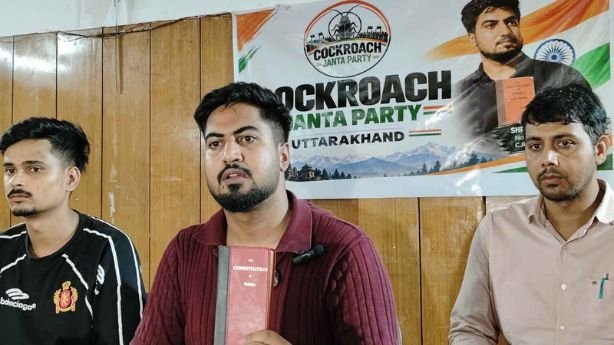
he Cockroach Janata Party (CJP) has entered Uttarakhand under its “Fix the Schools Campaign.” Following this, the CJP has launched a campaign against the Dhami government regarding the government education system in Uttarakhand. The CJP has demanded answers from the government regarding the closure of 826 government schools in the state. Regarding the shortage of teachers, dilapidated buildings, and lack of basic facilities in government schools, the CJP has issued a 10-day ultimatum to the government. It has also warned of a peaceful protest after October 2nd if clarification is not received. The protest will demand the resignation of Education Minister Dr. Dhan Singh Rawat. The party’s North Zone convenor, Shrestha Singh, and other officials have raised several serious questions against the Dhami government in Dehradun. In a press conference held in Dehradun on Sunday, Shrestha Singh Kheda, North Zone convenor of the Cockroach Janata Party, stated that the party’s Save the Schools campaign will be widely implemented in Uttarakhand as well. Seeks Transport Facilities for Students in Hilly Areas Following the protest at Jantar Mantar in Delhi, the CJP is now preparing to corner the Uttarakhand government over issues related to the state of government schools and the education system. Kheda questioned why 826 primary schools were closed in Uttarakhand, the reasons behind these closures, and what arrangements have been made for the education of the children studying there. The CJP North Zone convener claimed that many government schools in the state lack teachers for crucial subjects like mathematics and physics. He also claimed that 270 schools lack drinking water. He stated that 826 primary schools have been closed in Uttarakhand in the last five years, while teacher vacancies remain unfilled. He said that instead of simply presenting statistics, the government should publicly release a clear report detailing the state of the closed schools, their causes, and the impact on children. CJP Demands Answers on Closure of 826 Government Schools Shrestha Singh announced that if the government does not provide an explanation for the closed schools, Education Minister Dhan Singh Rawat’s resignation may be demanded within 10 days. He said a complete report should be released on the 826 closed government schools. He demanded that school-wise enrollment, teacher numbers, facilities, reasons for closure, population surrounding the school, and distance to the nearest alternative school be made public. Furthermore, the CJP demanded the release of the Uttarakhand Education Road Map within 10 days, detailing district-wise deadlines for providing teachers, drinking water, toilets, safe buildings, electricity, and other basic amenities. The CJP also demanded that students in government schools be provided with basic transportation facilities, especially in hilly and inaccessible areas, such as safe school buses, minibuses, or other regular transportation arrangements. The Cockroach Janata Party has made it clear that if a response is not received within 10 days, they will resort to peaceful protests.
J&K Assembly Session Opens Amid Uproar: Opposition Storms House Over Jobs, Reservation Policy & Power Tariffs…
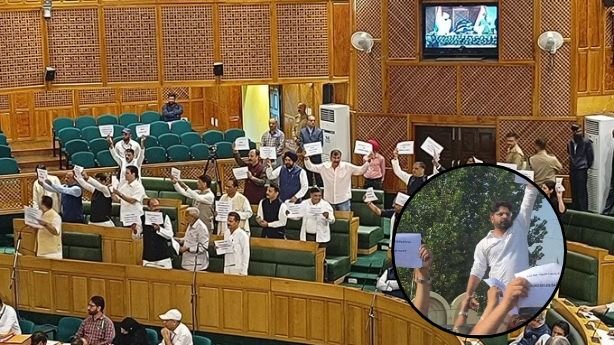
The autumn session of the Jammu and Kashmir Assembly began in Srinagar on Monday 21st September with amid widespread uproar and protests. The seven-day session, scheduled to run from September 21st to September 30th, 2026, is scheduled to consist of seven sittings. Opposition and local parties have launched a campaign against the Omar Abdullah government over issues such as the state’s reservation policy, job shortages, rising electricity bills, and the regularization of daily wage workers. As soon as the assembly session began, BJP MLAs stormed the well of the House and shouted slogans against the government, protesting against job outsourcing, the safety of National Health Mission (NHM) employees, and the increase in electricity tariffs, forcing Speaker Abdul Rahim Rather to adjourn the House. People’s Democratic Party organized a large march on the Srinagar streets Meanwhile, the People’s Democratic Party (PDP) also organized a large march on the streets of Srinagar. Led by PDP leader Iltija Mufti, youth and protesters denounced the current reservation policy as “unjust.” Protesters allege that due to the current quota, only 30% of seats are reserved for students from the general category (Open Merit), while 70% have been allocated to reserved categories. The PDP has demanded that the confidential report of the Cabinet sub-committee formed to review the reservation policy be immediately made public. Furthermore, the decision to reduce the age limit for government examinations from 38 to 32 years has also sparked widespread anger among the youth. People’s Conference chief Sajad Lone has also sharply criticized the current recruitment process. He accused the government of deliberately excluding youth from the Kashmir Valley from jobs, calling it “recruitment apartheid.” Opposition parties say the government is reneging on its election promises to provide employment to youth. They pointed out that the recent recruitments have seen very few selections compared to the Kashmir region, which constitutes 56% of the population, and they are raising this issue in the House. Meanwhile, amid widespread attacks, the Omar Abdullah government has issued its clarification. Government spokespersons and ministers say that the government has been in power for only a month. Chief Minister Omar Abdullah has issued strict instructions to all ministers to address unemployment. Additionally, the process of submitting vacant positions in various departments to the Public Service Commission (PSC) and Service Selection Board (SSB) has been expedited. The government has assured that significant changes and jobs will be seen on the ground within the next two months.
TMC and Its Election Symbol Put on Hold: Mamata Banerjee Faces a Major Hurdle..
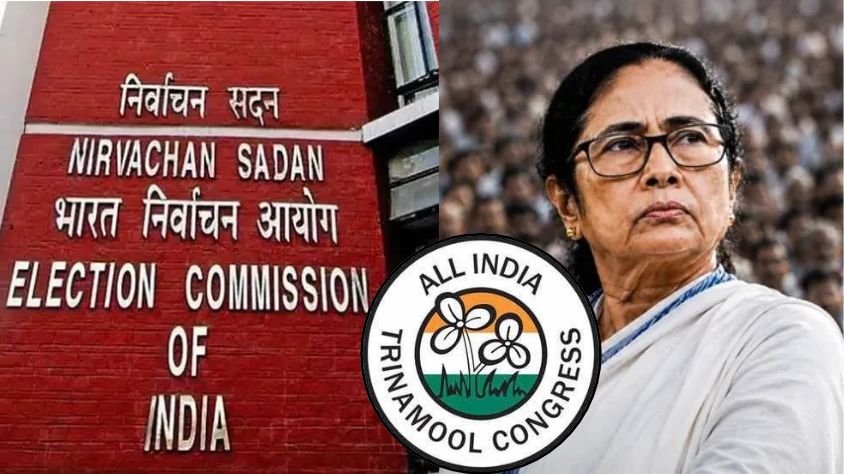
The Election Commission of India has put on hold the two-name All India Trinamool Congress (TMC) and its poll icon, “Flowers and Grass,” till the legal battle over the rival factions’ claim on the party’s name and poll symbol is fought out. In its interim order, the poll panel said it could not accept the claim of either Mamata Banerjee or the other faction over the name and symbol of the party for the forthcoming West Bengal Assembly by-elections. The Election Commission order comes ahead of the by-elections scheduled on October 6 in Nandigram and Rejinagar where candidates of both the rival factions are in the fray. The Election Commission has directed the Mamata Banerjee and Rejinagar camp to give three different names for the party and come up with three alternate election symbols from the free-symbol list for the by-elections. In the meantime, the two factions are barred from contesting the poll under the current party name and symbol. The poll panel has asked both the groups to come out with at least three names and symbols for the to decide upon one for the by-polls. The Election Commission has said the order will be deemed to be in force till the final award is given to either of the two camps. The Commission has said in its order that the issue of the dispute is “requiring an elaborate determination” under Para 15 of the Election Symbols (Reservation and Allotment) Order, 1968.
CM Dhami Celebrates Birthday with Special Children at Dehradun Institute..
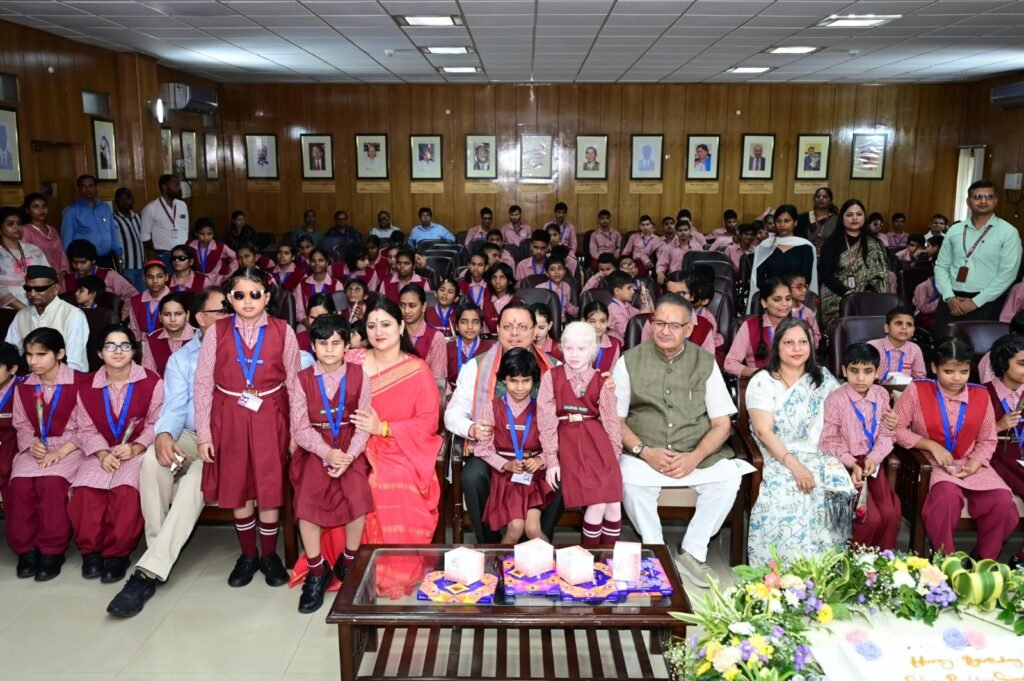
Chief Minister Pushkar Singh Dhami celebrated his birthday on Wednesday, September 16th, by visiting the National Institute for the Empowerment of Persons with Disabilities in Dehradun. During the ceremony, CM Dhami cut a cake with the children and spent time with them. The children sang a birthday song for CM Dhami, which CM Dhami appeared emotional. Afterward, CM Dhami interacted with the children and spent time with them. The children were also excited and happy to have the Chief Minister among them. On this occasion, Chief Minister Dhami said that spending time with children gives life new energy and inspiration. Every child has immense talent and potential. They should be given the opportunity, encouragement, and confidence to thrive. He emphasized that empowering persons with disabilities is not limited to government efforts alone, but is also a collective responsibility of society. With strong willpower, self-confidence, and persistent efforts, every challenge in life can be overcome. The Chief Minister encouraged the children to move forward towards their goals with full confidence and enthusiasm and wished them a bright future. CM Dhami said that every morning when a person wakes up after sleeping, it is like being born again because they enter a new day. Therefore, on this birth anniversary, he strives to visit the children and spend some time with them and interact with them. He also said that Prime Minister Narendra Modi has done a lot of work and made plans to advance the children of NIBH. He also said that efforts are being made to empower all these disabled children in every way.
BRICS Summit 2026: PM Modi expresses concern over weaponization of technology and critical minerals…
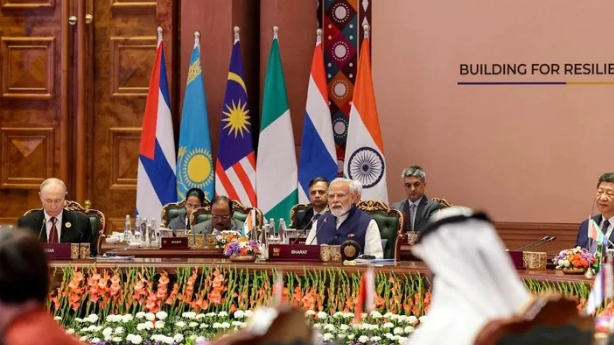
The 18th BRICS Summit, held in New Delhi, concluded on Sunday. In the concluding session, PM Narendra Modi expressed concern over rising global geopolitical tensions, supply chain disruptions, and the climate crisis. He stated that in today’s interconnected world, a crisis in one region does not remain confined to that region for long. PM Modi specifically criticized the weaponization of technology and critical minerals as a hindrance to shared global progress. The Prime Minister said that BRICS countries should focus on creating a system that ensures inclusive and equitable access to technology and a strong and reliable supply chain for critical minerals. Critical minerals are crucial for modern technology, electronics, clean energy, and several strategic industries. Therefore, using these resources or technological capabilities as a tool for geopolitical pressure could impact the global supply chain. PM Modi instead emphasized cooperation, resilient supply chains, and shared development. Technology, innovation, supply chain resilience, and sustainable development were among India’s priorities at the BRICS Summit. PM Modi also mentioned initiatives such as the BRICS Startup Innovation Fund, the Logistics Supply Chain Collaboration Framework, and the Digital Agriculture Network. Digital agriculture emphasized developing solutions tailored to farmers’ needs through the use of artificial intelligence, geospatial technology, and digital infrastructure. Furthermore, consensus was reached on a BRICS Integrated Early Warning System to combat infectious diseases and guidelines for disaster management. In his closing address, PM Modi stated that BRICS cooperation should not be limited to meetings and declarations, but should ensure that its real benefits reach the common people. He emphasized the need to make technological and development solutions accessible to the needs of the Global South. During the Summit, member countries also emphasized increased cooperation in areas such as improving global governance, strengthening supply chains, food and energy security, and artificial intelligence. After India’s presidency, the next BRICS presidency was handed over to China.
ECI Announces By-Polls for 5 Assembly Seats and 1 Lok Sabha Seat; Voting on October 6…
The Election Commission of India (ECI) has officially announced the dates for by-elections to five assembly seats and one Lok Sabha seat in four states and union territories. The Election Commission (ECI) has announced the election schedule for vacant assembly seats in Tamil Nadu, Puducherry, and West Bengal, and one parliamentary seat in Assam. Voting will take place in the Madurantakam and Dharapuram assembly seats in Tamil Nadu, Thattanchavady in Puducherry, and Rejinagar and Nandigram assembly seats in West Bengal. Voting will also take place in the Nagaon Lok Sabha seat in Assam. According to a notification issued by the Election Commission, voting for all these seats will take place on October 6, 2026, with counting of votes taking place on October 9, 2026. These by-elections are being held following the resignation of MLAs and MPs. According to the official schedule released by the Commission, the formal gazette notification for the elections issued on September 9, 2026. The deadline for filing nomination papers is September 16, after which scrutiny of nominations will take place on September 17. Candidates can withdraw their nominations until September 19. Election schedule is as follows: Prior to the elections, the Election Commission also notified the schedule for the final publication of voter rolls in the respective constituencies. It should be noted that the final voter list for the Nagaon parliamentary seat in Assam was released on February 10, while for the Thattanchavady assembly seat in Puducherry, it was released on February 14. In Tamil Nadu, the final voter list for the Madurantakam (SC) and Dharapuram (SC) assembly seats was released on February 23. CM Suvendu Adhikari resigned from Nandigram in West Bengal. MP Pradyut Bordoloi resigned from the Nagaon Lok Sabha seat in Assam, necessitating a by-election. Representatives from five other assembly seats have also resigned. Chief Minister Suvendu Adhikari resigned from Nandigram in West Bengal.Humayun Kabir resigned from the Rejinagar seat in Murshidabad district. MLA Maragatham Kumaravel resigned from the Madurantakam seat in Tamil Nadu, and P. Satyabhama from Dharapuram. MLA N. Rangasamy resigned from the Thattanchavady seat in Puducherry. The Election Commission has directed the Chief Electoral Officers of the respective states to ensure free, fair, and peaceful elections. Adequate availability of Electronic Voting Machines (EVMs) and VVPATs (VVPATs) has been ensured. Orders have also been issued to ensure strict security arrangements in sensitive areas.
PM Modi in Vadodara: Inaugurates ₹35,000 Crore Projects, Flags Off New Trains Under ‘Namo for Vikasit Bharat’…
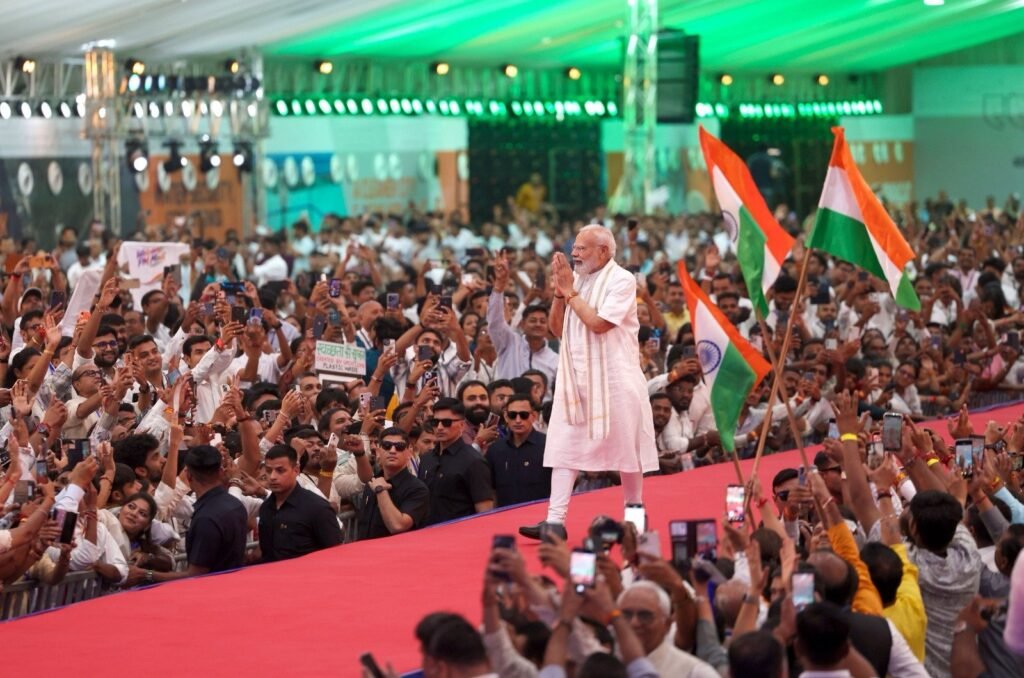
Prime Minister Narendra Modi arrived in Vadodara, Gujarat, on Tuesday, September 8th, to participate in the Namo for Vikasit Bharat program. Upon his arrival at the program, the youth present there warmly welcomed the Prime Minister. Following the welcome ceremony, Prime Minister Narendra Modi laid the foundation stone and inaugurated development projects worth Rs. 35,000 crore. Addressing the “Namo for Vikasit Bharat” program, Prime Minister Narendra Modi said, “Today, I have come among you to further accelerate the journey towards a developed India. Recently, the foundation stone and inauguration of projects worth thousands of crores of rupees related to the country’s development have been laid. I extend my heartfelt congratulations to the people of the country. On this Vikas Parv, I heartily congratulate every citizen of Vadodara and commend them for the spirit of service and service with which you have launched a cleanliness campaign throughout the city of Vadodara.” Prime Minister Narendra Modi flagged off the new MEMU passenger train service and other train services between Pratapnagar (Vadodara) and Tanda Road (Dhar) during the “Namo for Vikasit Bharat” program. At the “Namo for Vikasit Bharat” program, Prime Minister Narendra Modi said, “For a developed India, we need connectivity that is not only convenient but also fast enough to keep pace with the times.” Vadodara is home to the Gati Shakti University. Today, the final links of the Dedicated Freight Corridor have also been connected here. The more than 2,800-kilometer-long Dedicated Freight Corridor project has been completed today. This is truly a historic achievement for 21st-century India. This Dedicated Freight Corridor is a testament to the profound transformation that has taken place in the country’s work culture over the past 12 years.” This dedicated freight corridor was first conceived in 2004… A special company was formed in 2006 to complete the project. But until 2014, files were simply shuffled from one table to another. And ironically, even these files did not benefit from the dedicated corridor.”
Congress Workers March to CM Residence in Dehradun Amid Heavy Rain…
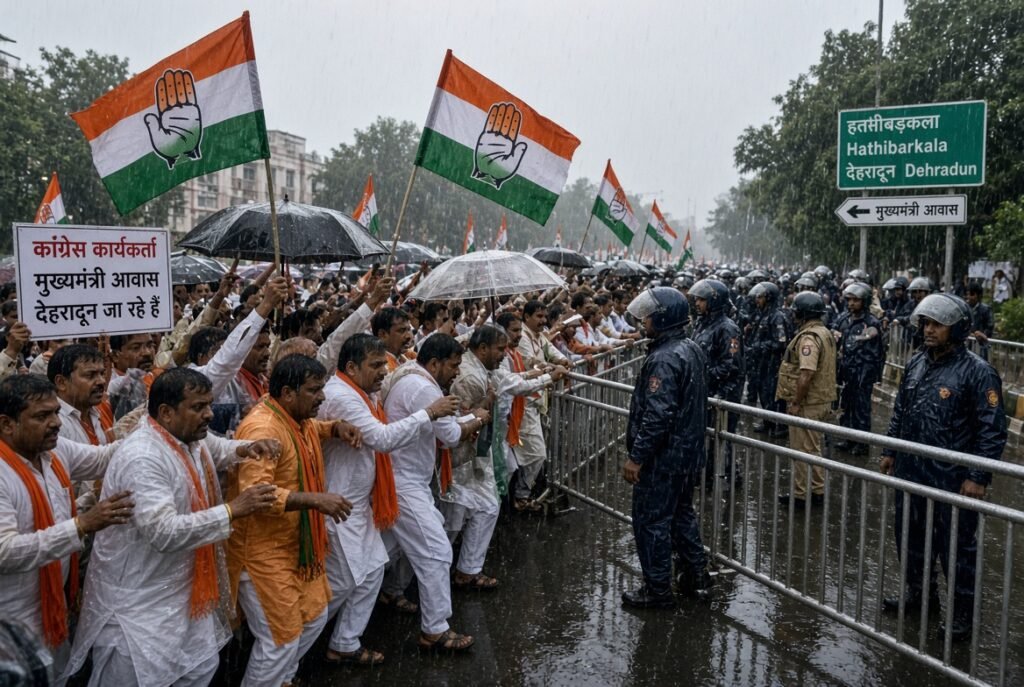
Congress workers marched to the CM’s residence in protest against purification drive in Haldwani on September 7th, amid heavy rain. A large number of Congress leaders and workers joined the march to the CM’s residence. Police erected barricades near Hathibarkala to stop the protesters. A scuffle broke out between Congress leaders and police. During the siege of the CM’s residence, in the presence of Uttarakhand in-charge Kumari Selja and other senior leaders, several people joined the Congress party. Those who joined the party included Yashpal Rana, former Mayor of Roorkee, Bhuvnesh Kharkwal, former Chief of Yamkeshwar, Kotdwar, Manoj Saini, former Principal and former Chairman of the Sugarcane Committee, Haridwar, Ramkumar Walia (former Minister of State), Ravindra Anand (former Chairman of the Mandi Committee, Dehradun), and Advocate Sachin Kumar of Purola. State in-charge Kumari Selja joined the March State in-charge Kumari Selja alleged that the BJP government betrayed the sentiments of the people of Uttarakhand. After National President Mallikarjun Kharge’s rally, they made their own people perform purification rituals. The BJP is resorting to all kinds of tactics for the upcoming elections. Meanwhile, senior Congress leader and former Chief Minister Harish Rawat observed a one-hour fast at his residence in New Delhi. Harish Rawat has been in New Delhi for the past few months for health reasons. He wrote on social media, “Some unforeseen reasons and invisible forces are repeatedly creating such a situation that I am unable to muster the courage to travel to Uttarakhand. A struggle is underway in Uttarakhand against the forces that patronize untouchability and degrading casteism. To register my participation in this struggle, I will observe a one-hour fast at my Delhi residence on September 7th and pray to God to defeat the forces that perpetuate untouchability and social discrimination.”
Haldwani ‘Purification’ Row Escalates: Congress to March to CM’s Residence on Sept 7..
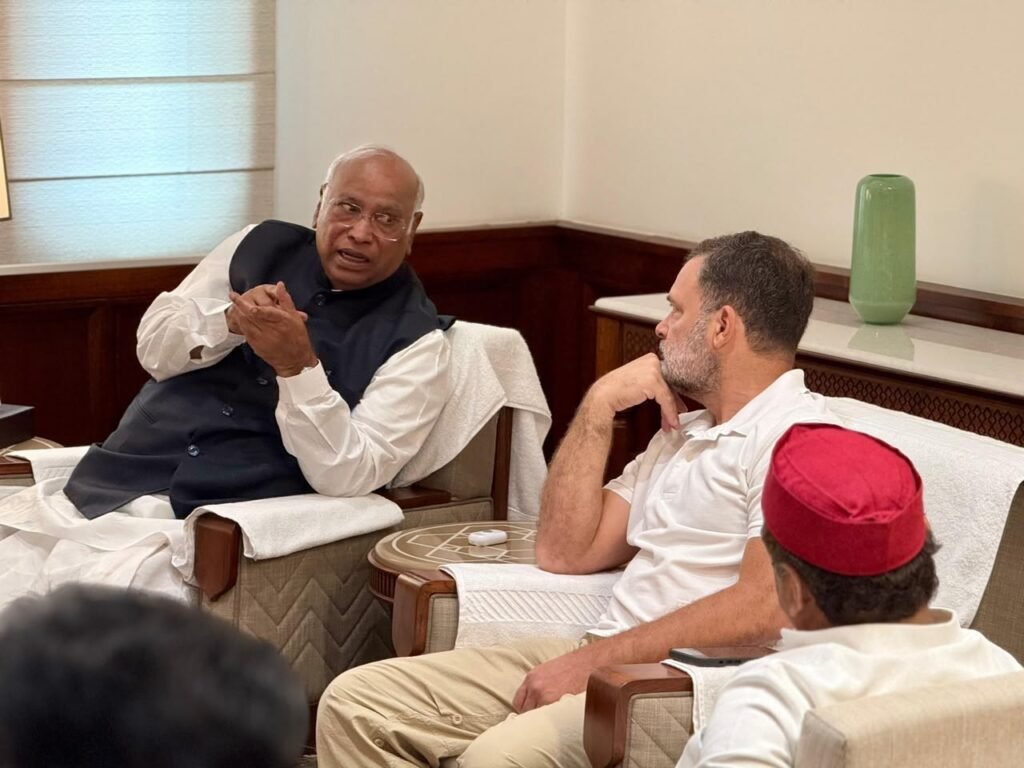
The controversy that erupted after Congress National President Mallikarjun Kharge’s rally in Haldwani has now escalated into a political movement. Congress has begun preparations to increase pressure on the government on this issue. As a result, the Congress Party is planning to march to the Chief Minister’s residence in the state capital, Dehradun, on September 7th, 2026. Lok Sabha Leader of the Opposition Rahul Gandhi and Congress General Secretary Priyanka Gandhi are also expected to participate in this major political protest. The primary reason for this controversy is a large Congress Party public meeting held on August 8th, 2026, at the Ramlila Maidan in Haldwani, Uttarakhand, addressed by Congress National President Mallikarjun Kharge. Two days after the rally, on August 10, 2026, individuals associated with some Hindu organizations (allegedly Shri Ram Sena) sprinkled Ganga water on the stage and grounds amid chanting of Vedic mantras and performed a “havan” (sacrifice). Photos and videos of this incident went viral on social media. The Congress party has taken this incident to be extremely serious and has directly labeled it an act of “caste discrimination and untouchability.” Mallikarjun Kharge belongs to the Scheduled Caste (Dalit) community. The Congress alleges that Kharge’s presence alone was the reason for the “purification” of the grounds, reflecting a feudal and casteist mindset. Mallikarjun Kharge himself raised the issue in the Rajya Sabha, calling it an act of untouchability and demanding the arrest of the perpetrators. Rahul Gandhi, the Leader of the Opposition in the Lok Sabha, also strongly criticized the incident, calling it against the Constitution and human values. Meanwhile, the Congress party alleges that the police have not yet filed an FIR against those responsible for the purification incident. Furthermore, the Congress party is demanding the cancellation of the cases filed against Rahul Gandhi. The Congress party will now march to the Chief Minister’s residence on September 7th to protest the purification incident. State Congress leaders have begun preparations to make the march a success. According to party sources, Rahul Gandhi and other national leaders may also participate in the rally. However, the Congress party has not yet formally announced this.State Congress President Ganesh Godiyal stated that party workers from across the state will march to the Chief Minister’s residence on September 7th. The Congress party will continue to fight the purification issue to the last minute. He added that no schedule for Rahul Gandhi’s arrival at the rally has been finalized.
PM Modi at 26th SCO Summit in Bishkek: Calls for Dismantling Terror Ecosystem, Stresses Dialogue & Connectivity…
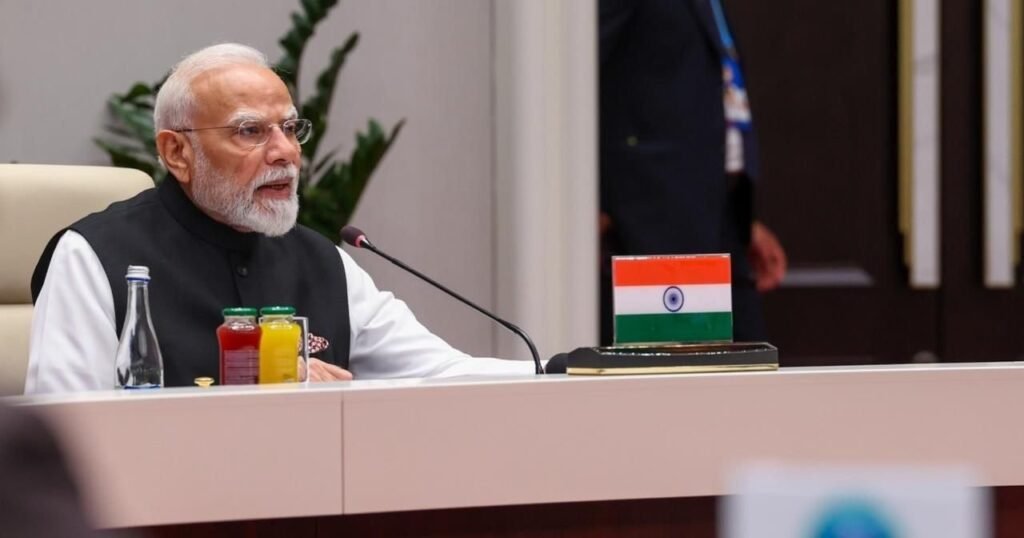
The 26th Shanghai Cooperation Organization (SCO) Summit was held in Bishkek, the capital of Kyrgyzstan, from August 31 to September 1, 2026. Prime Minister Narendra Modi arrived in Bishkek, the capital of Kyrgyzstan, on September 1 to participate in the 26th SCO Summit. Several leaders of the organization, including Chinese President Xi Jinping, Russian President Vladimir Putin, and Pakistani Prime Minister Shahbaz Sharif, attended the summit. On the sidelines of the summit, PM Modi held important bilateral meetings and discussions with Russian President Vladimir Putin, Chinese President Xi Jinping, and Iranian President Masoud Pezeshkian. During the meeting, PM Modi reiterated that India has always been a supporter of peace and that all issues and problems should be resolved through dialogue and diplomacy. The summit discussed key global issues such as regional security, counter-terrorism, enhancing trade, economic cooperation, and connectivity. India is enhancing cooperation with major Eurasian powers while maintaining its national priorities and strategic autonomy amid external pressures. During the summit, Prime Minister Narendra Modi stated that India supports all efforts that connect markets, facilitate trade, and open new avenues for development. However, it is also essential that such efforts respect the sovereignty and territorial integrity of all countries, which is the core spirit of the SCO Charter. He stated that connectivity will expand in the future, with emphasis on roads, railways, and air corridors, simplifying customs procedures, promoting digital documentation, and making logistics networks more efficient. Cracking down on terrorism, PM Modi appealed to member countries to dismantle the entire ecosystem of terrorism. He stated that terrorist funding, recruitment, radicalization, and their safe havens must be completely eliminated. Without naming Pakistan at the summit, PM Modi delivered a strong message regarding terrorism. He stated that there should be no room for double standards on this serious issue. The Prime Minister said that countries that use terrorism as a tool of their policy and provide shelter and support to terrorists should be given a clear message that terrorism cannot become a strategic weapon for anyone. Referring to Ukraine and other global crises, the Prime Minister said that wars and conflicts can never be resolved on the battlefield. The only way to resolve any dispute is through dialogue and diplomacy. He also appealed to the SCO countries to use their shared geography to transform it into shared opportunities instead of getting entangled in border disputes, thereby strengthening global trade, maritime trade and supply chains.