
J&K Assembly Session Opens Amid Uproar: Opposition Storms House Over Jobs, Reservation Policy & Power Tariffs…
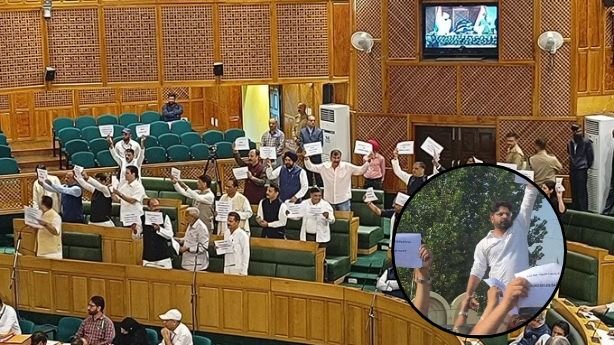
The autumn session of the Jammu and Kashmir Assembly began in Srinagar on Monday 21st September with amid widespread uproar and protests. The seven-day session, scheduled to run from September 21st to September 30th, 2026, is scheduled to consist of seven sittings. Opposition and local parties have launched a campaign against the Omar Abdullah government over issues such as the state’s reservation policy, job shortages, rising electricity bills, and the regularization of daily wage workers. As soon as the assembly session began, BJP MLAs stormed the well of the House and shouted slogans against the government, protesting against job outsourcing, the safety of National Health Mission (NHM) employees, and the increase in electricity tariffs, forcing Speaker Abdul Rahim Rather to adjourn the House. People’s Democratic Party organized a large march on the Srinagar streets Meanwhile, the People’s Democratic Party (PDP) also organized a large march on the streets of Srinagar. Led by PDP leader Iltija Mufti, youth and protesters denounced the current reservation policy as “unjust.” Protesters allege that due to the current quota, only 30% of seats are reserved for students from the general category (Open Merit), while 70% have been allocated to reserved categories. The PDP has demanded that the confidential report of the Cabinet sub-committee formed to review the reservation policy be immediately made public. Furthermore, the decision to reduce the age limit for government examinations from 38 to 32 years has also sparked widespread anger among the youth. People’s Conference chief Sajad Lone has also sharply criticized the current recruitment process. He accused the government of deliberately excluding youth from the Kashmir Valley from jobs, calling it “recruitment apartheid.” Opposition parties say the government is reneging on its election promises to provide employment to youth. They pointed out that the recent recruitments have seen very few selections compared to the Kashmir region, which constitutes 56% of the population, and they are raising this issue in the House. Meanwhile, amid widespread attacks, the Omar Abdullah government has issued its clarification. Government spokespersons and ministers say that the government has been in power for only a month. Chief Minister Omar Abdullah has issued strict instructions to all ministers to address unemployment. Additionally, the process of submitting vacant positions in various departments to the Public Service Commission (PSC) and Service Selection Board (SSB) has been expedited. The government has assured that significant changes and jobs will be seen on the ground within the next two months.
PM Modi Inaugurates NGT’s International Conference on Future of Environment and Climate Dynamics…
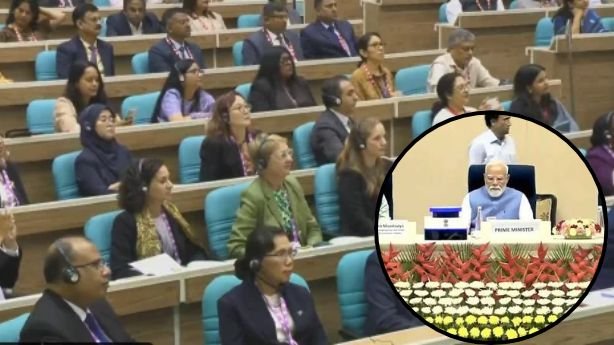
Prime Minister Narendra Modi inaugurated a two-day international conference on “The Future of Environment and Climate Dynamics,” organized by the National Green Tribunal (NGT) at Vigyan Bhawan in New Delhi on September 19, 2026. Chief Justice of India (CJI) Justice Surya Kant, Union Environment Minister Bhupendra Yadav, Attorney General R. Venkataramani, and NGT Chairperson Justice Prakash Srivastava also attended the inaugural session.Eminent judges and judicial representatives from 17 countries are participating in this conference. Its main objective is to discuss global environmental and climate challenges, identify shortcomings in policy formulation and implementation, and strengthen environmental governance. The two-day event (September 19 and 20) is also preparing a strategic roadmap on four specific themes: The main focus is on… Addressing the event, PM Modi said that for centuries, India has guided the world on matters related to nature and the environment. Drawing on this ideological commitment and cultural experiences, India is now offering solutions to modern climate challenges and calling for collective global action. I am pleased that this NGT conference is furthering that mission. The Prime Minister said that we have presented our traditions and their true strengths to the world. With this vision, we launched the book “Convenient Action: Continuity for Change” during the COP21 Summit in Paris. We are bringing the world together and setting new standards for environmental protection. Whether it’s the concept of “One Sun, One World, One Grid” or the International Solar Alliance, CDRI, Initiatives like the Global Biofuel Alliance, the International Big Cat Alliance, and Mission LiFE (Lifestyle for the Environment) all demonstrate India’s dedicated commitment to climate and the environment. PM Modi said that in the last 12 years, India has made extraordinary progress in every area related to the environment. We have placed great emphasis on renewable energy, which has played a vital role in environmental protection. India is the only G20 country that has fulfilled all the commitments made at the COP21 Summit in Paris ahead of time. This reflects India’s strength.
TMC and Its Election Symbol Put on Hold: Mamata Banerjee Faces a Major Hurdle..
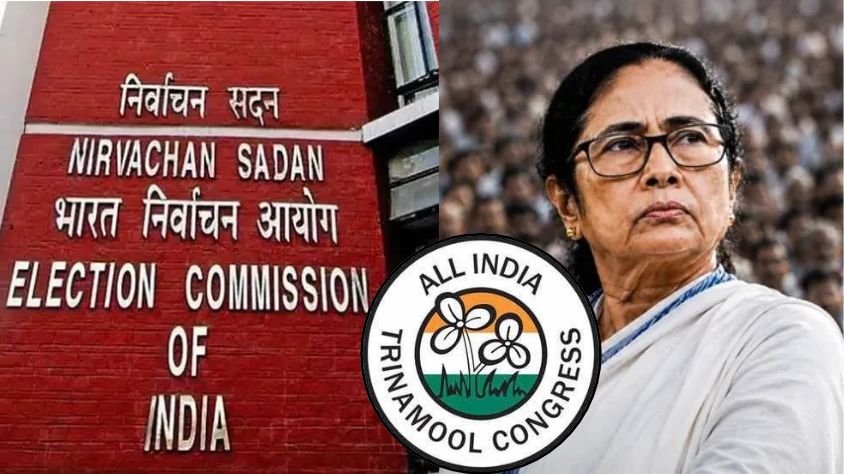
The Election Commission of India has put on hold the two-name All India Trinamool Congress (TMC) and its poll icon, “Flowers and Grass,” till the legal battle over the rival factions’ claim on the party’s name and poll symbol is fought out. In its interim order, the poll panel said it could not accept the claim of either Mamata Banerjee or the other faction over the name and symbol of the party for the forthcoming West Bengal Assembly by-elections. The Election Commission order comes ahead of the by-elections scheduled on October 6 in Nandigram and Rejinagar where candidates of both the rival factions are in the fray. The Election Commission has directed the Mamata Banerjee and Rejinagar camp to give three different names for the party and come up with three alternate election symbols from the free-symbol list for the by-elections. In the meantime, the two factions are barred from contesting the poll under the current party name and symbol. The poll panel has asked both the groups to come out with at least three names and symbols for the to decide upon one for the by-polls. The Election Commission has said the order will be deemed to be in force till the final award is given to either of the two camps. The Commission has said in its order that the issue of the dispute is “requiring an elaborate determination” under Para 15 of the Election Symbols (Reservation and Allotment) Order, 1968.
PM Modi inaugurates SEMICON India 2026, says India’s chip story has moved from files to factories…
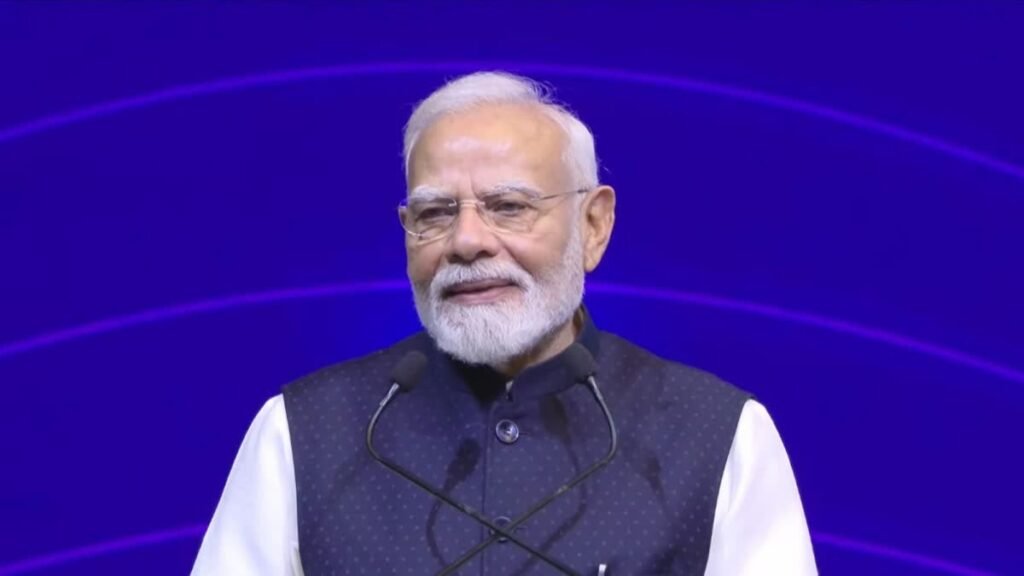
Prime Minister Narendra Modi inaugurated the fifth edition of the global semiconductor summit “SEMICON India 2026” on September 17th at the Yashobhoomi Convention Center in Dwarka, New Delhi. This three-day event, held from September 17th to 19th in the capital, New Delhi, focuses on industry participation, policy direction, and international partnerships. This mega-event brings together leading tech leaders, scientists, and investors from around the world to strengthen India’s semiconductor ecosystem. The theme of this year’s summit is “Silicon to Systems: Building the Ecosystem.” According to the Ministry of Electronics and Information Technology (MeitY), the conference is being jointly organized by the India Semiconductor Mission (ISM), MeitY, and the global industry body SEMI under the theme “Silicon to Systems: Building the Ecosystem.” Addressing the inaugural session, Prime Minister Modi said, “India’s chip story is no longer confined to files, but has reached the ground in factories. India will soon become an integral and reliable part of the global semiconductor supply chain.” Highlighting the progress made in the country’s electronics and chip manufacturing sector, the Prime Minister said that India is now fully prepared for the next phase of the semiconductor sector, ‘Semicon 2.0.’ The Indian government aims to not only meet the country’s domestic chip needs but also export chips globally for the mobile, automobile, and AI sectors. Prime Minister Narendra Modi said that amid these achievements, the Semicon India event has become even more important. The first edition was held in 2022, and since then, we have been meeting every year, but the topics of our discussions have changed each year. In the first edition, we discussed policy. The discussions progressed in subsequent editions. We began discussions on projects, including signing files and laying foundation stones. Last year, we began discussions on pilot lines and test chips, and talked about the first samples coming out of Indian units. This year, we are talking about commercial production. Our chips are now reaching customers across the country and the world from Indian plants. Two more plants are also starting commercial production. I congratulate them as well. The event will also feature an official review of key manufacturing achievements. Under the ‘Semicon India Program,’ the central government has approved 12 semiconductor projects, of which commercial production has already begun at three units approved under ‘Semicon 1.0.’ Furthermore, the Union Cabinet has approved the next phase, called ‘Semicon 2.0,’ which is based on six key pillars. Electronic design automation tools have been delivered to over 400 academic institutions and 105 startups, while 24 startups have received approval under the ‘Design Linked Incentive’ scheme. In this regard, the ministry said that SEMICON India 2026 will adopt a comprehensive value-chain approach, showcasing the journey from semiconductor materials and manufacturing to advanced packaging, design, electronics and systems.
CM Dhami Celebrates Birthday with Special Children at Dehradun Institute..
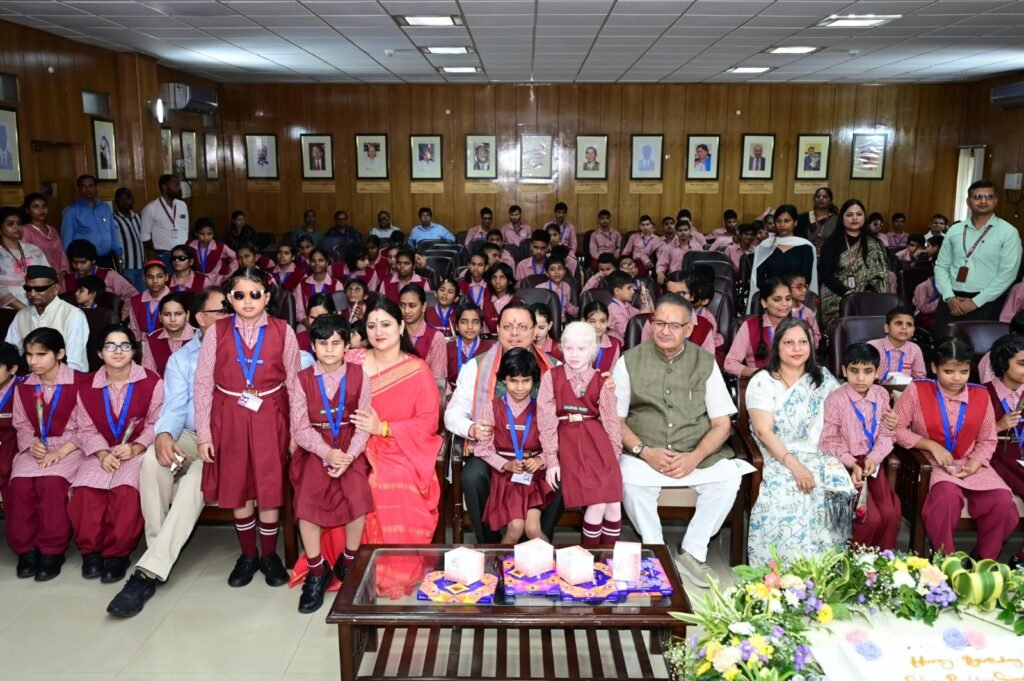
Chief Minister Pushkar Singh Dhami celebrated his birthday on Wednesday, September 16th, by visiting the National Institute for the Empowerment of Persons with Disabilities in Dehradun. During the ceremony, CM Dhami cut a cake with the children and spent time with them. The children sang a birthday song for CM Dhami, which CM Dhami appeared emotional. Afterward, CM Dhami interacted with the children and spent time with them. The children were also excited and happy to have the Chief Minister among them. On this occasion, Chief Minister Dhami said that spending time with children gives life new energy and inspiration. Every child has immense talent and potential. They should be given the opportunity, encouragement, and confidence to thrive. He emphasized that empowering persons with disabilities is not limited to government efforts alone, but is also a collective responsibility of society. With strong willpower, self-confidence, and persistent efforts, every challenge in life can be overcome. The Chief Minister encouraged the children to move forward towards their goals with full confidence and enthusiasm and wished them a bright future. CM Dhami said that every morning when a person wakes up after sleeping, it is like being born again because they enter a new day. Therefore, on this birth anniversary, he strives to visit the children and spend some time with them and interact with them. He also said that Prime Minister Narendra Modi has done a lot of work and made plans to advance the children of NIBH. He also said that efforts are being made to empower all these disabled children in every way.
CJI Highlights Public Trust as the Foundation of a Strong Judiciary…
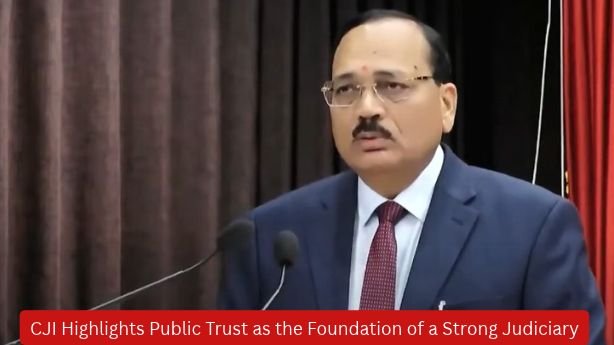
Chief Justice of India Surya Kant has said that public trust is the real strength of the judiciary and that courts cannot build confidence simply by delivering judgments that people like. Speaking at the 6th Ram Jethmalani Memorial Lecture in New Delhi on Monday, the CJI said trust comes from ensuring a fair and transparent judicial process, even when a decision goes against the expectations of those involved. Justice Kant made a clear distinction between public trust and public approval. He said a court does not earn people’s confidence by giving them the outcome they want, but by making sure that even those who lose a case feel that the process was fair. He also stressed that transparency goes beyond holding open hearings. According to him, people should be able to understand and examine the reasoning behind a court’s decision, not just its final outcome. The CJI also spoke about the need for the judiciary to remain open to scrutiny, questions and constructive criticism. Referring to the recent debate surrounding an NCERT textbook and references to judicial corruption, he said institutions do not remain credible by shielding themselves from criticism, but by facing scrutiny and demonstrating their integrity. He described public trust as something that has to be earned and renewed continuously through the everyday functioning of the justice system. Addressing concerns about judicial accountability and administrative reforms, Justice Kant said reform should be a continuing process and no institution can afford to remain static. He said the Supreme Court and High Courts already have mechanisms to deal with complaints against judges, describing them as robust and responsive, while also acknowledging that such systems can be improved. He cautioned, however, that putting every complaint against a judge into the public domain could itself raise concerns and argued for a strong internal mechanism capable of examining complaints objectively and responsibly.
BRICS Summit 2026: PM Modi expresses concern over weaponization of technology and critical minerals…
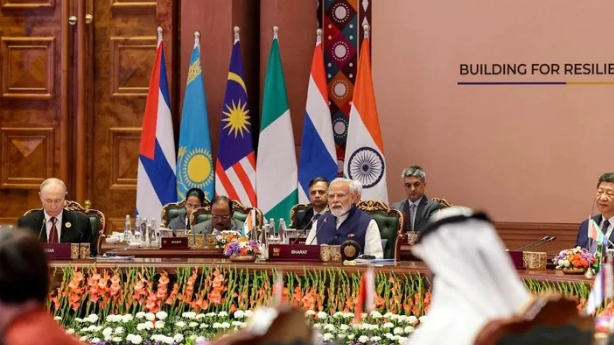
The 18th BRICS Summit, held in New Delhi, concluded on Sunday. In the concluding session, PM Narendra Modi expressed concern over rising global geopolitical tensions, supply chain disruptions, and the climate crisis. He stated that in today’s interconnected world, a crisis in one region does not remain confined to that region for long. PM Modi specifically criticized the weaponization of technology and critical minerals as a hindrance to shared global progress. The Prime Minister said that BRICS countries should focus on creating a system that ensures inclusive and equitable access to technology and a strong and reliable supply chain for critical minerals. Critical minerals are crucial for modern technology, electronics, clean energy, and several strategic industries. Therefore, using these resources or technological capabilities as a tool for geopolitical pressure could impact the global supply chain. PM Modi instead emphasized cooperation, resilient supply chains, and shared development. Technology, innovation, supply chain resilience, and sustainable development were among India’s priorities at the BRICS Summit. PM Modi also mentioned initiatives such as the BRICS Startup Innovation Fund, the Logistics Supply Chain Collaboration Framework, and the Digital Agriculture Network. Digital agriculture emphasized developing solutions tailored to farmers’ needs through the use of artificial intelligence, geospatial technology, and digital infrastructure. Furthermore, consensus was reached on a BRICS Integrated Early Warning System to combat infectious diseases and guidelines for disaster management. In his closing address, PM Modi stated that BRICS cooperation should not be limited to meetings and declarations, but should ensure that its real benefits reach the common people. He emphasized the need to make technological and development solutions accessible to the needs of the Global South. During the Summit, member countries also emphasized increased cooperation in areas such as improving global governance, strengthening supply chains, food and energy security, and artificial intelligence. After India’s presidency, the next BRICS presidency was handed over to China.
ED Raids Former Aide’s Premises, Harish Rawat Resigns From All Congress Posts…
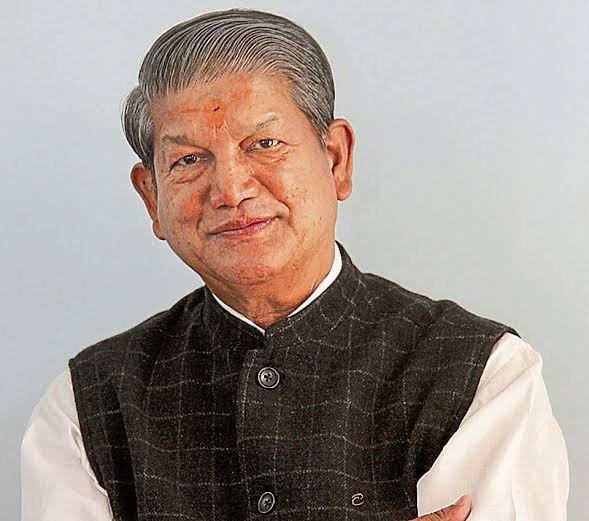
Former Uttarakhand Chief Minister and senior Congress leader Harish Rawat has resigned from all party positions. This decision comes after the Enforcement Directorate (ED) raided the premises of his former colleague and personal assistant, Chandan Singh Jeena. Rawat expressed his views on social media, stating that his actions should not weaken the Congress party’s fight. The ED conducted searches at several locations, including Dehradun, in connection with alleged irregularities in the Uttarakhand Subordinate Services Selection Commission (UKSSSC) 2016 Gram Panchayat Development Officer examination. According to the agency, approximately ₹32 lakh in unaccounted cash, approximately 200.5 grams of gold, and 12 expensive watches were recovered from Chandan Singh Jeena’s residence. Additionally, approximately ₹52.16 lakh in bank accounts belonging to Jeena and his family has also been frozen. Following this action, Harish Rawat clarified his position, stating that the truth behind the allegations regarding the seizures from his associate’s home will be revealed after an investigation. Rawat also questioned the allegations against Chandan Jina, stating that he does not believe them. He also stated that if any lapses are proven on his part, he should be held accountable. Harish Rawat’s decision has created a stir in Uttarakhand Congress politics. However, the investigation into the ED’s action and the seized assets is still ongoing, and the seizures cannot be interpreted as a conviction of any individual. Further action by the investigating agencies and the emerging facts in the entire matter will be closely monitored.
BRICS Summit 2026: Putin arrives in Delhi, Set to Hold Key Talks with PM Modi…
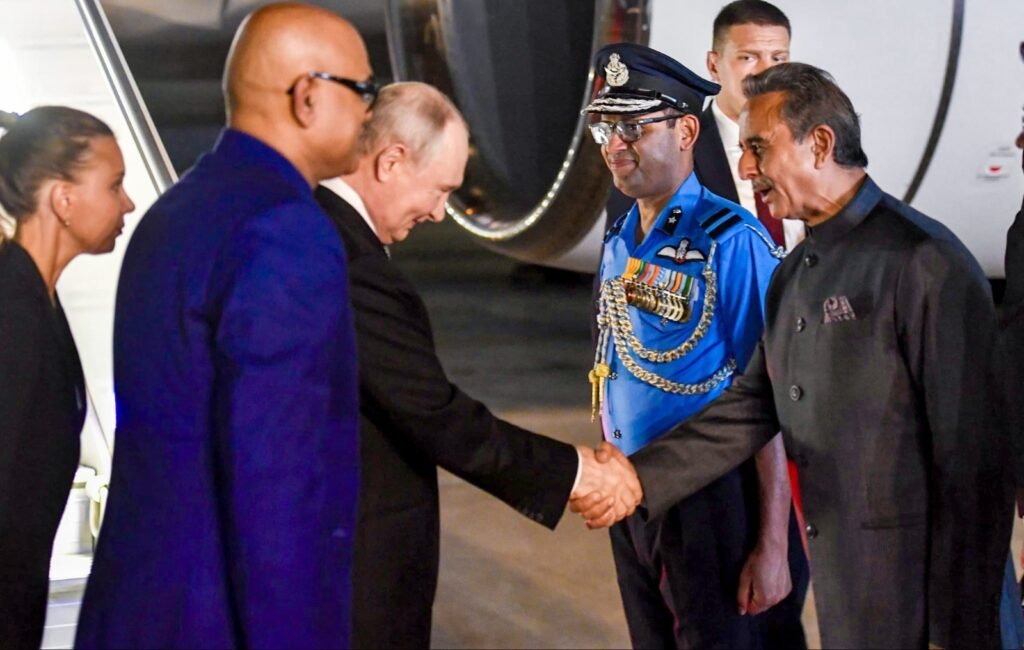
BRICS Summit 2026: Putin arrives in Delhi: Russian President Vladimir Putin arrived in New Delhi early Friday morning to attend the BRICS Summit 2026. He was welcomed at Palam Airport by Union Minister of State for External Affairs Kirti Vardhan Singh. Following Putin’s arrival in India, all eyes are now on his crucial bilateral meeting with Prime Minister Narendra Modi. The two leaders are expected to discuss a number of important issues, including defense cooperation, trade, economic relations, and energy. The Ministry of External Affairs has underscored the long-standing and strong relationship between India and Russia. Foreign Ministry spokesperson Randhir Jaiswal welcomed Putin in a social media post, describing the partnership between the two countries as multifaceted and long-term. Issues such as strategic trade, cross-border payment systems, and energy security are expected to be central to Putin’s visit. The two sides are also expected to discuss ongoing geopolitical tensions in Eastern Europe and West Asia. According to the Kremlin, Putin will address the plenary session of the BRICS Business Forum on September 11. This forum brings together leading business representatives from BRICS countries. He will then hold a bilateral meeting with Prime Minister Modi. Putin’s program also includes a visit to the “Innoprom India” industrial trade fair, organized by the Ministries of Industry and Trade of Russia and India. The BRICS summit, chaired by India, is expected to discuss issues such as trade, digital technology, finance, energy security, and reforms in global governance. Topics such as robust global supply chains, trade in national currencies, cross-border payment systems, MSME development, and artificial intelligence will also be high on the agenda. Climate change, development finance, and the expansion of the New Development Bank are also likely to be discussed among member countries.
ECI Announces By-Polls for 5 Assembly Seats and 1 Lok Sabha Seat; Voting on October 6…
The Election Commission of India (ECI) has officially announced the dates for by-elections to five assembly seats and one Lok Sabha seat in four states and union territories. The Election Commission (ECI) has announced the election schedule for vacant assembly seats in Tamil Nadu, Puducherry, and West Bengal, and one parliamentary seat in Assam. Voting will take place in the Madurantakam and Dharapuram assembly seats in Tamil Nadu, Thattanchavady in Puducherry, and Rejinagar and Nandigram assembly seats in West Bengal. Voting will also take place in the Nagaon Lok Sabha seat in Assam. According to a notification issued by the Election Commission, voting for all these seats will take place on October 6, 2026, with counting of votes taking place on October 9, 2026. These by-elections are being held following the resignation of MLAs and MPs. According to the official schedule released by the Commission, the formal gazette notification for the elections issued on September 9, 2026. The deadline for filing nomination papers is September 16, after which scrutiny of nominations will take place on September 17. Candidates can withdraw their nominations until September 19. Election schedule is as follows: Prior to the elections, the Election Commission also notified the schedule for the final publication of voter rolls in the respective constituencies. It should be noted that the final voter list for the Nagaon parliamentary seat in Assam was released on February 10, while for the Thattanchavady assembly seat in Puducherry, it was released on February 14. In Tamil Nadu, the final voter list for the Madurantakam (SC) and Dharapuram (SC) assembly seats was released on February 23. CM Suvendu Adhikari resigned from Nandigram in West Bengal. MP Pradyut Bordoloi resigned from the Nagaon Lok Sabha seat in Assam, necessitating a by-election. Representatives from five other assembly seats have also resigned. Chief Minister Suvendu Adhikari resigned from Nandigram in West Bengal.Humayun Kabir resigned from the Rejinagar seat in Murshidabad district. MLA Maragatham Kumaravel resigned from the Madurantakam seat in Tamil Nadu, and P. Satyabhama from Dharapuram. MLA N. Rangasamy resigned from the Thattanchavady seat in Puducherry. The Election Commission has directed the Chief Electoral Officers of the respective states to ensure free, fair, and peaceful elections. Adequate availability of Electronic Voting Machines (EVMs) and VVPATs (VVPATs) has been ensured. Orders have also been issued to ensure strict security arrangements in sensitive areas.