
ECI Announces By-Polls for 5 Assembly Seats and 1 Lok Sabha Seat; Voting on October 6…
The Election Commission of India (ECI) has officially announced the dates for by-elections to five assembly seats and one Lok Sabha seat in four states and union territories. The Election Commission (ECI) has announced the election schedule for vacant assembly seats in Tamil Nadu, Puducherry, and West Bengal, and one parliamentary seat in Assam. Voting will take place in the Madurantakam and Dharapuram assembly seats in Tamil Nadu, Thattanchavady in Puducherry, and Rejinagar and Nandigram assembly seats in West Bengal. Voting will also take place in the Nagaon Lok Sabha seat in Assam. According to a notification issued by the Election Commission, voting for all these seats will take place on October 6, 2026, with counting of votes taking place on October 9, 2026. These by-elections are being held following the resignation of MLAs and MPs. According to the official schedule released by the Commission, the formal gazette notification for the elections issued on September 9, 2026. The deadline for filing nomination papers is September 16, after which scrutiny of nominations will take place on September 17. Candidates can withdraw their nominations until September 19. Election schedule is as follows: Prior to the elections, the Election Commission also notified the schedule for the final publication of voter rolls in the respective constituencies. It should be noted that the final voter list for the Nagaon parliamentary seat in Assam was released on February 10, while for the Thattanchavady assembly seat in Puducherry, it was released on February 14. In Tamil Nadu, the final voter list for the Madurantakam (SC) and Dharapuram (SC) assembly seats was released on February 23. CM Suvendu Adhikari resigned from Nandigram in West Bengal. MP Pradyut Bordoloi resigned from the Nagaon Lok Sabha seat in Assam, necessitating a by-election. Representatives from five other assembly seats have also resigned. Chief Minister Suvendu Adhikari resigned from Nandigram in West Bengal.Humayun Kabir resigned from the Rejinagar seat in Murshidabad district. MLA Maragatham Kumaravel resigned from the Madurantakam seat in Tamil Nadu, and P. Satyabhama from Dharapuram. MLA N. Rangasamy resigned from the Thattanchavady seat in Puducherry. The Election Commission has directed the Chief Electoral Officers of the respective states to ensure free, fair, and peaceful elections. Adequate availability of Electronic Voting Machines (EVMs) and VVPATs (VVPATs) has been ensured. Orders have also been issued to ensure strict security arrangements in sensitive areas.
Rishikesh : Bapugram Locals Threaten Assembly Election Boycott Over Forest Land Dispute…
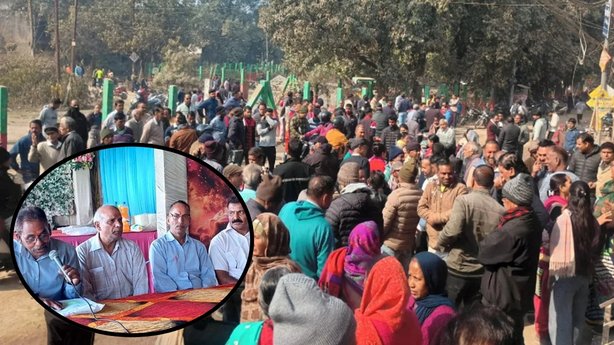
The anger of local residents over the forest land dispute in Bapugram (Rishikesh) has once again intensified. Those who have long been fighting for their land rights and future are now demanding decisive action from the government. Expressing displeasure with the government’s attitude, the Bapugram Bachao Sangharsh Samiti has warned of further intensifying the agitation. The committee stated categorically that if the state government does not make a strong and effective representation in court on behalf of the local residents, thousands of people in the area will be forced to completely boycott the upcoming assembly elections. Claim of a populated area before 1908 At a press conference held at a wedding point in 20 Bigha, committee convener Ramesh Jugalan, while recounting the history of Bapugram, stated that it is not a newly settled area. According to him, Bapugram has been a populated area since before 1908. In 1950, due to the efforts of Meera Behen, the area was given the status of an ideal village. Subsequently, Bapugram was declared a revenue village and later included within the municipal corporation limits. The committee states that despite being involved in the development and administrative system of the region, forest land disputes have posed a serious threat to the homes, livelihoods, and futures of thousands of families living there. 15,000 Families and Approximately 70,000 People Affected According to the committee, land disputes related to Bapugram, Bindukhatta, and Bagga-54 are having a widespread impact. The committee claims that these cases affect approximately 15,000 families and approximately 70,000 people. Local residents say that despite living in the area for a long time and establishing their own homes, the lack of resolution of the land dispute has left them in a state of constant confusion. The committee has demanded that the government strongly present the case in court, considering the plight of the affected families, so that they can find relief regarding their future. Questions also raised about the functioning of the high-level committee During the press conference, committee officials also raised questions about the functioning of the high-level government committee formed during the state government’s cabinet meeting. The committee stated that while the government has formed a committee chaired by the Chief Secretary, the affected people have not yet been adequately involved in the process. The committee demanded that the government make public the number of meetings held by the Chief Secretary and the decisions taken in these meetings in the interest of the affected families. It also demanded that committee representatives be included in the committee to establish direct communication with the local people. Demand for a concrete solution, not assurances The Bapugram Bachao Sangharsh Samiti states that the local people are no longer satisfied with mere assurances. They demand a concrete and just solution that will alleviate the crisis looming over their homes, livelihoods, and future. The committee demanded that the government resolve the matter quickly and ensure effective advocacy on behalf of the local residents in court. The committee warned that if the government does not take the matter seriously and make a strong case, the movement will be escalated to a larger scale. A decision to boycott the upcoming assembly elections may also be taken. Following this stance of the committee, the forest land dispute of Bapugram is once again in the headlines and now the eyes of the local people are fixed on the next action of the government.
PM Modi in Vadodara: Inaugurates ₹35,000 Crore Projects, Flags Off New Trains Under ‘Namo for Vikasit Bharat’…
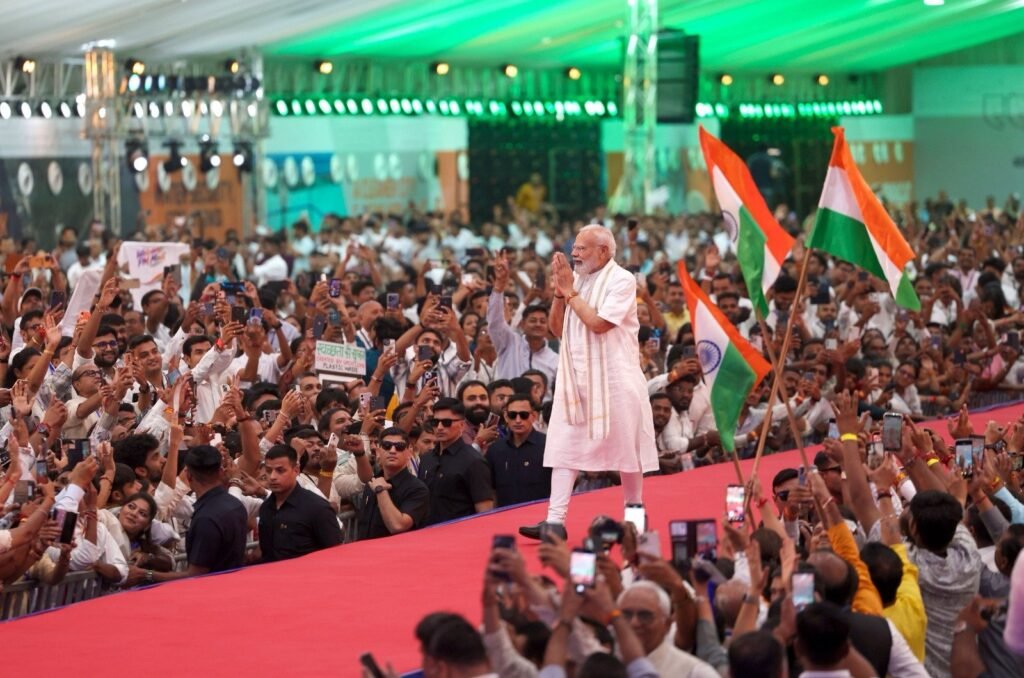
Prime Minister Narendra Modi arrived in Vadodara, Gujarat, on Tuesday, September 8th, to participate in the Namo for Vikasit Bharat program. Upon his arrival at the program, the youth present there warmly welcomed the Prime Minister. Following the welcome ceremony, Prime Minister Narendra Modi laid the foundation stone and inaugurated development projects worth Rs. 35,000 crore. Addressing the “Namo for Vikasit Bharat” program, Prime Minister Narendra Modi said, “Today, I have come among you to further accelerate the journey towards a developed India. Recently, the foundation stone and inauguration of projects worth thousands of crores of rupees related to the country’s development have been laid. I extend my heartfelt congratulations to the people of the country. On this Vikas Parv, I heartily congratulate every citizen of Vadodara and commend them for the spirit of service and service with which you have launched a cleanliness campaign throughout the city of Vadodara.” Prime Minister Narendra Modi flagged off the new MEMU passenger train service and other train services between Pratapnagar (Vadodara) and Tanda Road (Dhar) during the “Namo for Vikasit Bharat” program. At the “Namo for Vikasit Bharat” program, Prime Minister Narendra Modi said, “For a developed India, we need connectivity that is not only convenient but also fast enough to keep pace with the times.” Vadodara is home to the Gati Shakti University. Today, the final links of the Dedicated Freight Corridor have also been connected here. The more than 2,800-kilometer-long Dedicated Freight Corridor project has been completed today. This is truly a historic achievement for 21st-century India. This Dedicated Freight Corridor is a testament to the profound transformation that has taken place in the country’s work culture over the past 12 years.” This dedicated freight corridor was first conceived in 2004… A special company was formed in 2006 to complete the project. But until 2014, files were simply shuffled from one table to another. And ironically, even these files did not benefit from the dedicated corridor.”
Congress Workers March to CM Residence in Dehradun Amid Heavy Rain…
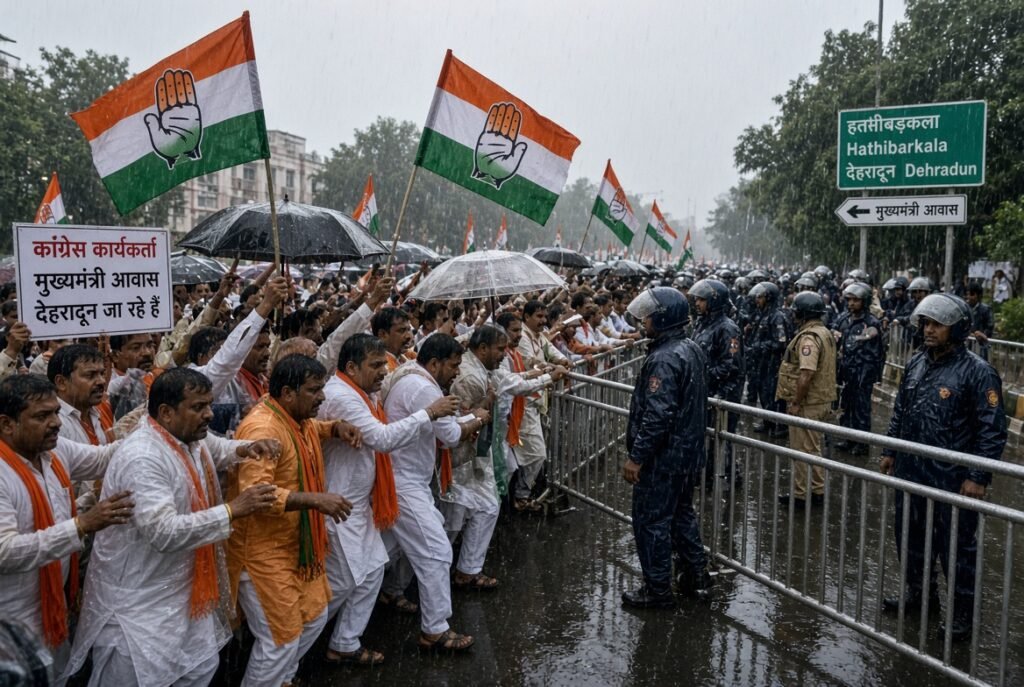
Congress workers marched to the CM’s residence in protest against purification drive in Haldwani on September 7th, amid heavy rain. A large number of Congress leaders and workers joined the march to the CM’s residence. Police erected barricades near Hathibarkala to stop the protesters. A scuffle broke out between Congress leaders and police. During the siege of the CM’s residence, in the presence of Uttarakhand in-charge Kumari Selja and other senior leaders, several people joined the Congress party. Those who joined the party included Yashpal Rana, former Mayor of Roorkee, Bhuvnesh Kharkwal, former Chief of Yamkeshwar, Kotdwar, Manoj Saini, former Principal and former Chairman of the Sugarcane Committee, Haridwar, Ramkumar Walia (former Minister of State), Ravindra Anand (former Chairman of the Mandi Committee, Dehradun), and Advocate Sachin Kumar of Purola. State in-charge Kumari Selja joined the March State in-charge Kumari Selja alleged that the BJP government betrayed the sentiments of the people of Uttarakhand. After National President Mallikarjun Kharge’s rally, they made their own people perform purification rituals. The BJP is resorting to all kinds of tactics for the upcoming elections. Meanwhile, senior Congress leader and former Chief Minister Harish Rawat observed a one-hour fast at his residence in New Delhi. Harish Rawat has been in New Delhi for the past few months for health reasons. He wrote on social media, “Some unforeseen reasons and invisible forces are repeatedly creating such a situation that I am unable to muster the courage to travel to Uttarakhand. A struggle is underway in Uttarakhand against the forces that patronize untouchability and degrading casteism. To register my participation in this struggle, I will observe a one-hour fast at my Delhi residence on September 7th and pray to God to defeat the forces that perpetuate untouchability and social discrimination.”
Haldwani ‘Purification’ Row Escalates: Congress to March to CM’s Residence on Sept 7..
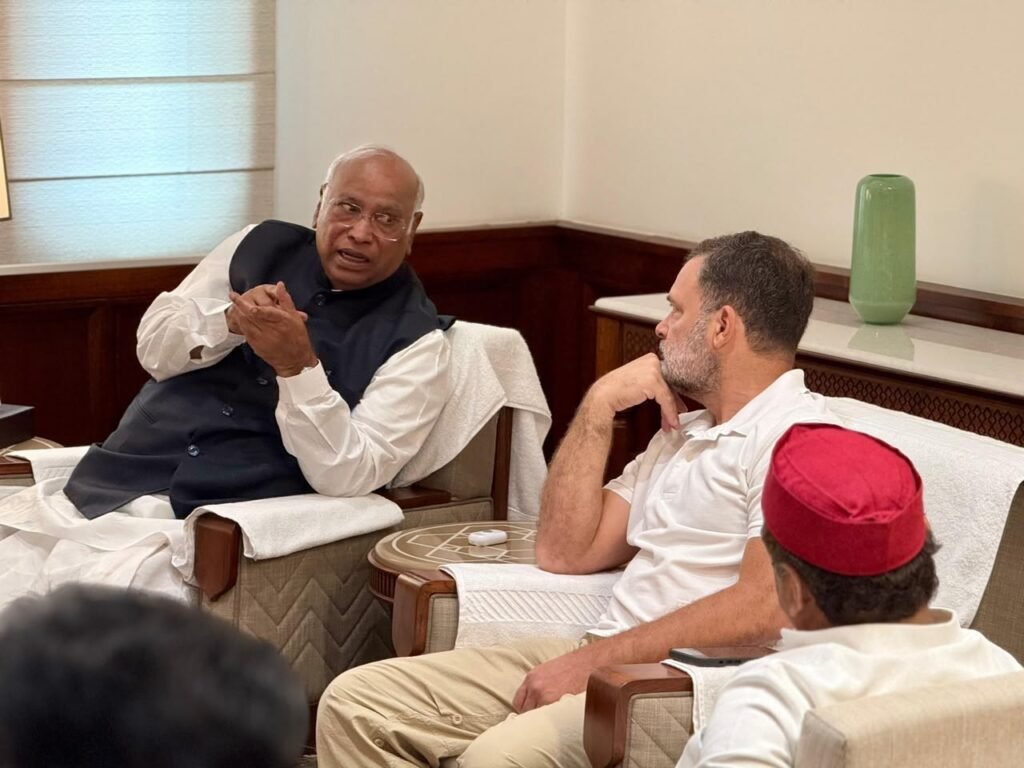
The controversy that erupted after Congress National President Mallikarjun Kharge’s rally in Haldwani has now escalated into a political movement. Congress has begun preparations to increase pressure on the government on this issue. As a result, the Congress Party is planning to march to the Chief Minister’s residence in the state capital, Dehradun, on September 7th, 2026. Lok Sabha Leader of the Opposition Rahul Gandhi and Congress General Secretary Priyanka Gandhi are also expected to participate in this major political protest. The primary reason for this controversy is a large Congress Party public meeting held on August 8th, 2026, at the Ramlila Maidan in Haldwani, Uttarakhand, addressed by Congress National President Mallikarjun Kharge. Two days after the rally, on August 10, 2026, individuals associated with some Hindu organizations (allegedly Shri Ram Sena) sprinkled Ganga water on the stage and grounds amid chanting of Vedic mantras and performed a “havan” (sacrifice). Photos and videos of this incident went viral on social media. The Congress party has taken this incident to be extremely serious and has directly labeled it an act of “caste discrimination and untouchability.” Mallikarjun Kharge belongs to the Scheduled Caste (Dalit) community. The Congress alleges that Kharge’s presence alone was the reason for the “purification” of the grounds, reflecting a feudal and casteist mindset. Mallikarjun Kharge himself raised the issue in the Rajya Sabha, calling it an act of untouchability and demanding the arrest of the perpetrators. Rahul Gandhi, the Leader of the Opposition in the Lok Sabha, also strongly criticized the incident, calling it against the Constitution and human values. Meanwhile, the Congress party alleges that the police have not yet filed an FIR against those responsible for the purification incident. Furthermore, the Congress party is demanding the cancellation of the cases filed against Rahul Gandhi. The Congress party will now march to the Chief Minister’s residence on September 7th to protest the purification incident. State Congress leaders have begun preparations to make the march a success. According to party sources, Rahul Gandhi and other national leaders may also participate in the rally. However, the Congress party has not yet formally announced this.State Congress President Ganesh Godiyal stated that party workers from across the state will march to the Chief Minister’s residence on September 7th. The Congress party will continue to fight the purification issue to the last minute. He added that no schedule for Rahul Gandhi’s arrival at the rally has been finalized.
Jammu and Kashmir Statehood, Governance Discussed in Omar-Amit Shah Meeting
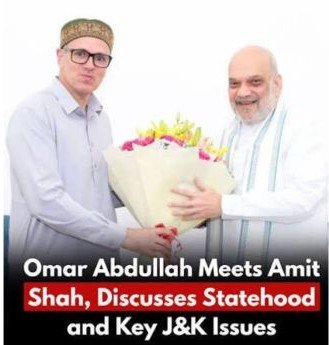
Jammu and Kashmir Chief Minister Omar Abdullah met Union Home Minister Amit Shah in New Delhi on Friday to discuss several key issues concerning the Union Territory. The restoration of full statehood to Jammu and Kashmir at the earliest was among the major issues discussed during the meeting. The two leaders also discussed finalising rules related to governance to ensure smoother administration. According to the Chief Minister’s Office, Abdullah also raised issues concerning the rationalisation of the reservation system, public welfare and development. The Chief Minister stressed the need to improve administrative efficiency and ensure that welfare schemes and development initiatives reach people more effectively. The meeting assumes significance as it came after Abdullah staged a protest in Delhi on July 20, the opening day of the Monsoon Session of Parliament, demanding the restoration of Jammu and Kashmir’s statehood. It was the first meeting between Abdullah and Shah since the protest. On August 5, 2019, the Centre scrapped most provisions of Article 370 and divided the erstwhile state of Jammu and Kashmir into two Union Territories—Jammu and Kashmir, and Ladakh. Restoration of statehood has remained a key political issue in Jammu and Kashmir since 2019. While the Centre has maintained that statehood will be restored at an appropriate time, the elected government in the Union Territory has repeatedly highlighted administrative challenges under the existing arrangement. Against this backdrop, the meeting between Omar Abdullah and Amit Shah is being viewed as significant for the future political and administrative framework of Jammu and Kashmir.
Centre Reviews GLOF and Avalanche Preparedness in Himalayan States After Nepal Disaster…
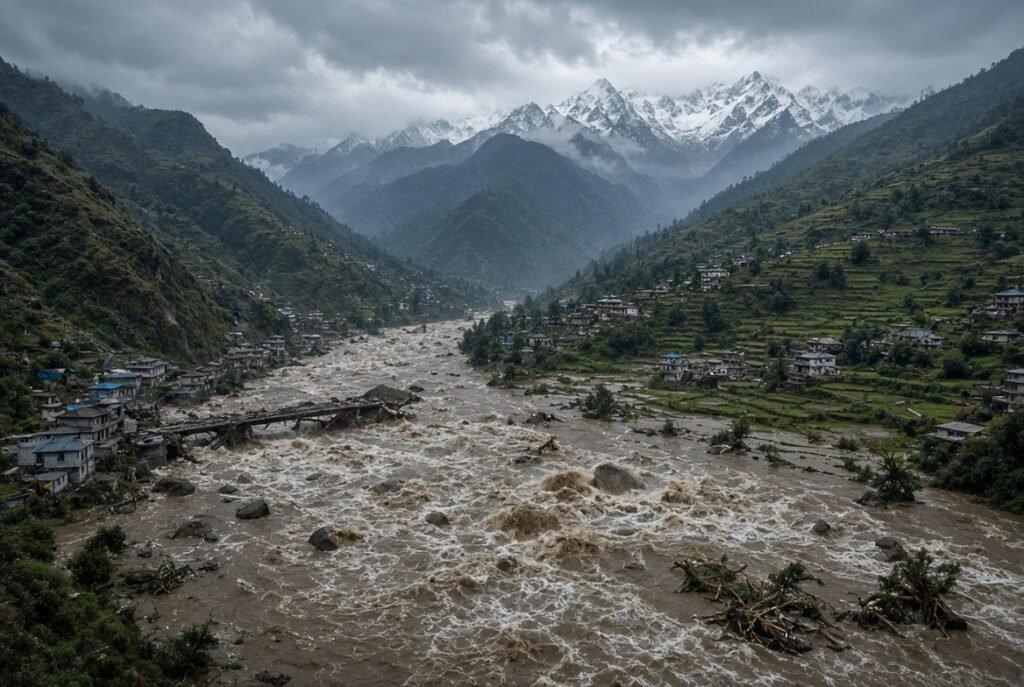
The recent floods in the Himalayan regions of Nepal and the natural disaster near the China-Nepal border have once again raised concerns about glacier and avalanche-related hazards in the Himalayan states. In light of this, the central government has intensified the review of disaster preparedness in Uttarakhand, Himachal Pradesh, Sikkim, Arunachal Pradesh, and Jammu and Kashmir. A high-level meeting chaired by Union Home Secretary Govind Mohan in New Delhi on Thursday discussed in detail potential hazards such as glacial lake outburst floods (GLOFs) and avalanches. The meeting was attended by the Chief Secretaries of the respective states and officials from the State Disaster Management Authorities, along with senior officials from the Ministry of Home Affairs, NDMA, Central Water Commission, Meteorological Department, and DGRE. The officials particularly emphasized the need to increase surveillance of glacial lakes and snow-covered areas where the risk of flash floods or avalanches is high. In addition, preparations were reviewed to identify vulnerable areas, strengthen early warning systems, disseminate local alerts, and evacuate people to safer locations in a timely manner if necessary. The sudden surge in the Bhote Koshi River in Nepal on August 26th highlighted the severity of this threat. A landslide of ice and rocks in the upper reaches near the Nepal-China border temporarily blocked the river’s flow, and the water then rapidly surged downstream. This event caused widespread devastation in the Himalayan valleys. According to Nepali officials, more than 1,100 people were killed and thousands were reported missing in the disaster. This incident also raised the question of how quickly hazard information can be disseminated to people in inaccessible mountainous areas. The central government has urged states to focus on risk reduction and not just post-event relief and rescue, but also on pre-emptive risk reduction. The Home Secretary directed the acceleration of GLOF mitigation projects approved in 2024 and ensure better coordination between state agencies, district administrations, and scientific institutions. States were asked to regularly review their disaster management plans, address deficiencies in warning and evacuation systems, and ensure that necessary resources are already available in vulnerable areas. The meeting also emphasized that in a sensitive region like the Himalayas, the response time to any natural hazard is very short, so strong monitoring and timely warnings can play a crucial role in preventing major damage.
From Air Force to Ayodhya: Retired Air Marshal Jeetendra Mishra Takes Charge as Ram Temple Trust’s First CEO
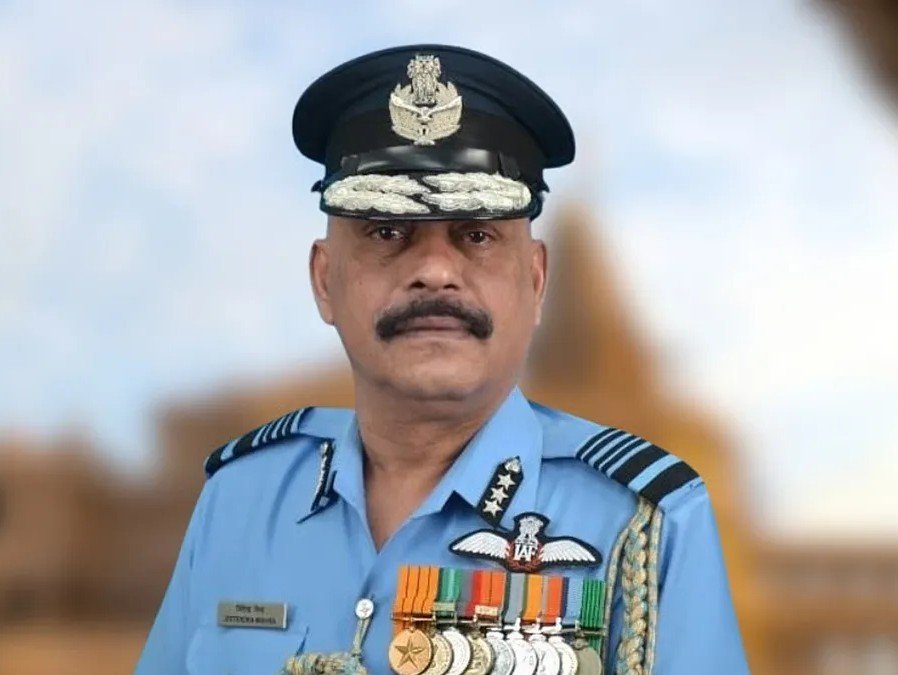
Retired Air Marshal Jeetendra Mishra has been appointed the first Chief Executive Officer (CEO) of the Shri Ram Janmabhoomi Teerth Kshetra Trust, which manages the Ram Temple in Ayodhya. The decision was taken at a Trust meeting in Ayodhya on September 2, 2026. Mishra retired from the Indian Air Force in April 2026 after nearly 39 years of service. At the time, he was the Air Officer Commanding-in-Chief of the Western Air Command. He is originally from Deoria district in Uttar Pradesh. Selection After a Detailed Process Mishra was selected after a formal search process. A three-member committee was formed on July 6 to find a suitable candidate for the newly created post. The committee reportedly received 5,585 applications. Of these, 1,580 candidates were found eligible, while 108 took part in online interactions. Sixteen candidates were later interviewed in Ayodhya before three names were placed before the Trust. A Veteran Military Leader Mishra brings nearly four decades of military experience to his new role. He served as the head of the IAF’s Western Air Command during Operation Sindoor and held several senior responsibilities during his career. His experience in leadership, administration and large-scale coordination is expected to help the Trust strengthen the temple’s day-to-day management and organizational systems. Trust Undergoing Administrative Changes Mishra’s appointment comes amid wider changes within the Ram Temple Trust following allegations concerning the theft or misappropriation of temple donations. Reports have said that eight people were arrested in connection with the case. The Trust also appointed Govind Dev Giri as full-time general secretary and Mahesh Bhagchandka as treasurer. Three new trustees were named as well, including Nirmala Yadav, the Trust’s first woman member. Mishra’s appointment is being seen as an important step towards strengthening professional administration at the Ram Temple.
PM Modi at 26th SCO Summit in Bishkek: Calls for Dismantling Terror Ecosystem, Stresses Dialogue & Connectivity…
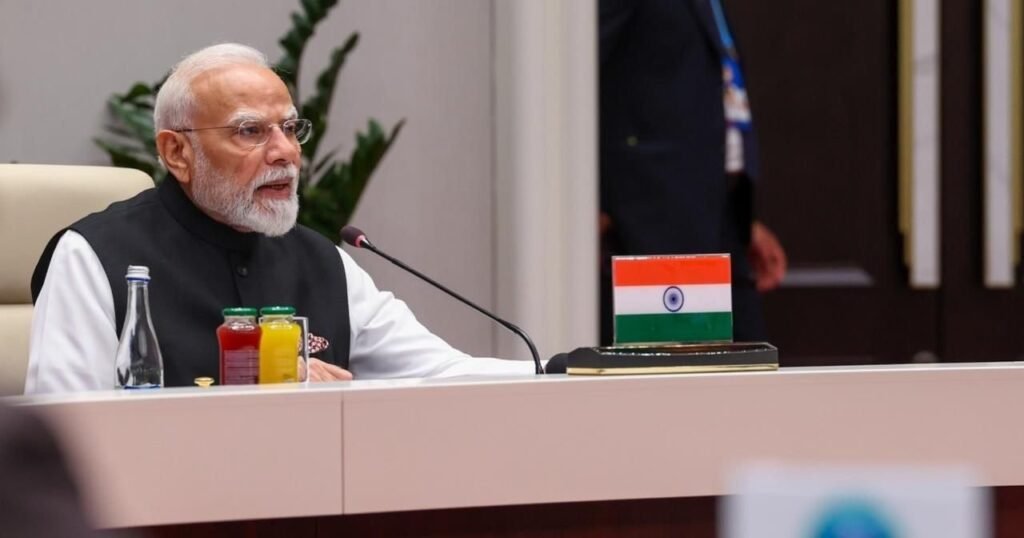
The 26th Shanghai Cooperation Organization (SCO) Summit was held in Bishkek, the capital of Kyrgyzstan, from August 31 to September 1, 2026. Prime Minister Narendra Modi arrived in Bishkek, the capital of Kyrgyzstan, on September 1 to participate in the 26th SCO Summit. Several leaders of the organization, including Chinese President Xi Jinping, Russian President Vladimir Putin, and Pakistani Prime Minister Shahbaz Sharif, attended the summit. On the sidelines of the summit, PM Modi held important bilateral meetings and discussions with Russian President Vladimir Putin, Chinese President Xi Jinping, and Iranian President Masoud Pezeshkian. During the meeting, PM Modi reiterated that India has always been a supporter of peace and that all issues and problems should be resolved through dialogue and diplomacy. The summit discussed key global issues such as regional security, counter-terrorism, enhancing trade, economic cooperation, and connectivity. India is enhancing cooperation with major Eurasian powers while maintaining its national priorities and strategic autonomy amid external pressures. During the summit, Prime Minister Narendra Modi stated that India supports all efforts that connect markets, facilitate trade, and open new avenues for development. However, it is also essential that such efforts respect the sovereignty and territorial integrity of all countries, which is the core spirit of the SCO Charter. He stated that connectivity will expand in the future, with emphasis on roads, railways, and air corridors, simplifying customs procedures, promoting digital documentation, and making logistics networks more efficient. Cracking down on terrorism, PM Modi appealed to member countries to dismantle the entire ecosystem of terrorism. He stated that terrorist funding, recruitment, radicalization, and their safe havens must be completely eliminated. Without naming Pakistan at the summit, PM Modi delivered a strong message regarding terrorism. He stated that there should be no room for double standards on this serious issue. The Prime Minister said that countries that use terrorism as a tool of their policy and provide shelter and support to terrorists should be given a clear message that terrorism cannot become a strategic weapon for anyone. Referring to Ukraine and other global crises, the Prime Minister said that wars and conflicts can never be resolved on the battlefield. The only way to resolve any dispute is through dialogue and diplomacy. He also appealed to the SCO countries to use their shared geography to transform it into shared opportunities instead of getting entangled in border disputes, thereby strengthening global trade, maritime trade and supply chains.
Mobile Phones Completely Banned in Major Tamil Nadu Temples from September 1, 2026
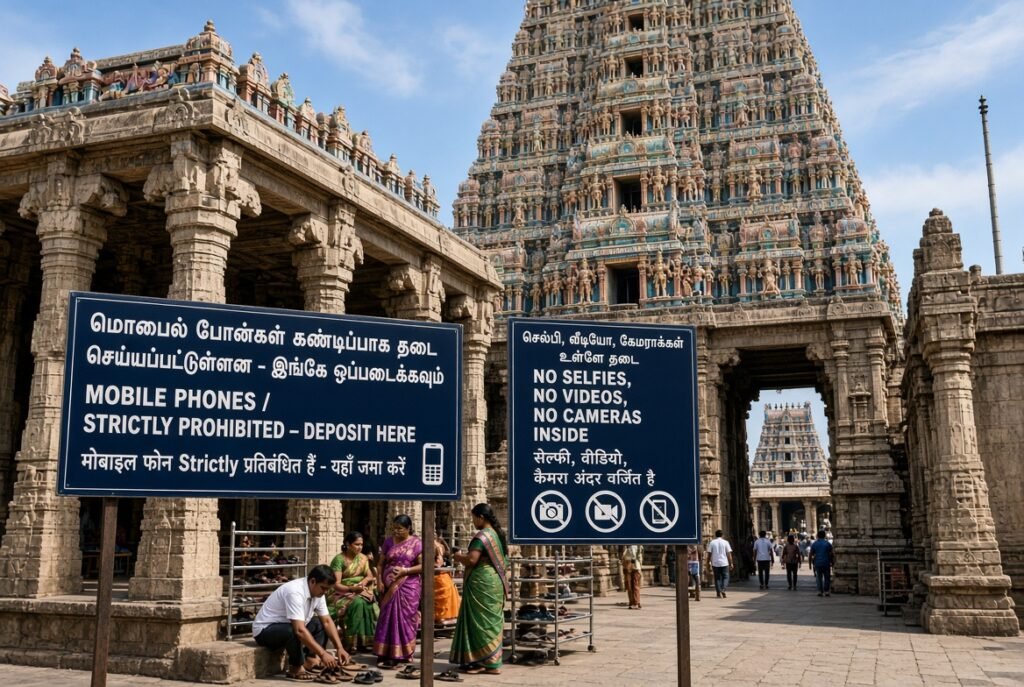
Mobile phones have been completely banned in major temples in Tamil Nadu, effective September 1, 2026. To maintain the spiritual atmosphere and sanctity of temples, the use of cell phones and cameras is already prohibited inside temples. However, complaints surfaced regarding devotees taking photos, videos, selfies, and reels at some temples. Following this, the state’s Hindu Religious and Endowments Department, in compliance with previous orders of the Madras High Court, has decided to strictly enforce this rule. Consequently, mobile phones have been completely banned in all temples. Temple administrations have warned that anyone found violating this order and secretly carrying a mobile phone into the temple will be immediately confiscated and appropriate police action will be taken against the individual. Main Reasons for the Ban This arrangement will be in place for devotees This rule will apply equally to everyone, including VIPs, film personalities, and the general public. This arrangement has been implemented in more than 52 major temples in the state, including the Srirangam Temple in Trichy and the major temples in Kanchipuram. A circular issued by the Commissioner of the Hindu Religious and Charitable Endowments Department, “When celebrities and important figures visit temples, they should not be allowed to take photographs or record videos inside the temple premises.” It also states that if celebrities and important figures from the art world, including the film industry, are visiting the temple, they must inform the Commissioner’s office of their visit at least one day in advance or as soon as they receive information. This includes which temple they are visiting, when they are going, and how many people they will be accompanying them.