
Subhash Chandra’s ₹6.5 Crore Payout Gets NCLT Nod, Congress Calls It a ‘Mundan’
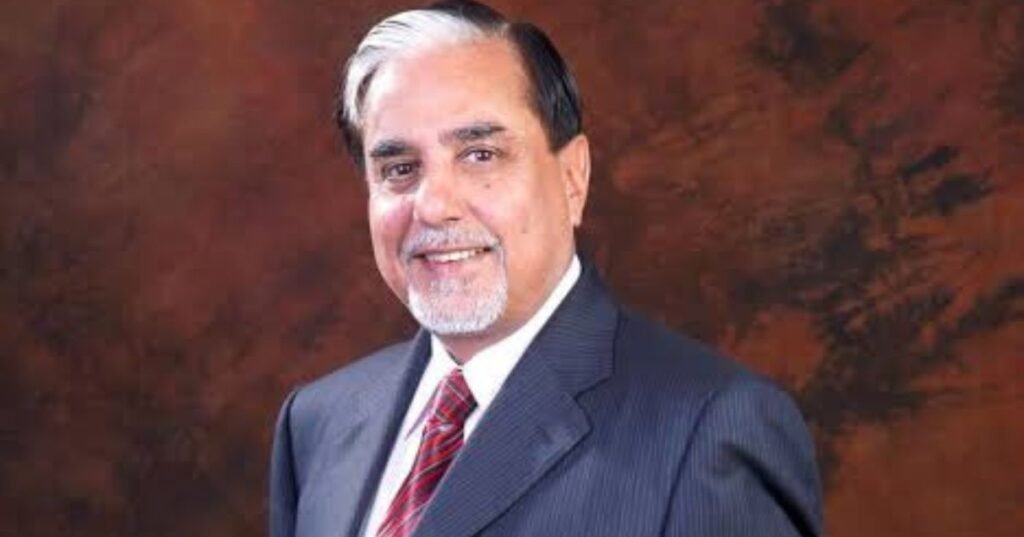
The National Company Law Tribunal (NCLT) has approved a repayment plan under which businessman and Zee Group founder Subhash Chandra will pay ₹6.5 crore against admitted creditor claims of around ₹22,006.57 crore. The decision has triggered a political reaction, with the Congress questioning the extremely low recovery for lenders. The approved amount works out to a recovery of only around 0.03% of the admitted claims, meaning lenders face a reduction of nearly 99.97%. Congress Takes a Sharp Dig Reacting to the NCLT decision, Congress leader Jairam Ramesh took a sharp swipe at the repayment plan. Referring to the financial term ‘haircut’, used when creditors agree to recover less than the amount owed, Ramesh said this was not merely a haircut but a “mundan”. He alleged that the decision makes a “complete mockery” of the Insolvency and Bankruptcy Code, 2016. There was no immediate public reaction from Subhash Chandra or his group to the Congress criticism. Why the Payout Became Controversial The repayment plan had faced objections from some creditors, including LIC Housing Finance, which argued that the proposed recovery was too small and that the plan was not viable or lawful. According to reports, the objections were rejected after the tribunal considered the voting pattern among creditors. The plan had received approval from creditors holding 80.81% of the voting share, while the dissenting creditors represented less than 20% NCLT Gives Its Approval The tribunal’s decision came after an earlier split verdict between two NCLT members, following which a third member was appointed to resolve the difference of opinion. NCLT Member (Judicial) Nilesh Sharma, acting as the third member, approved the repayment plan under Section 114 of the IBC. The tribunal held that the commercial decision taken by the required majority of creditors had to be respected, despite objections over the size of the recovery. A Huge Gap Between Debt and Recovery The case highlights the striking difference between the amount claimed by creditors and the amount ultimately approved for repayment. Against admitted claims of about ₹22,006.57 crore, the plan provides for only ₹6.5 crore, resulting in a recovery of roughly ₹0.03 for every ₹100 of admitted claims. The decision is now drawing attention to how insolvency proceedings balance creditor recovery with the commercial decisions of lenders under the IBC framework.
From Moscow to Beijing, Washington to Tokyo: India’s Top Officials on Coordinated Diplomatic Push…
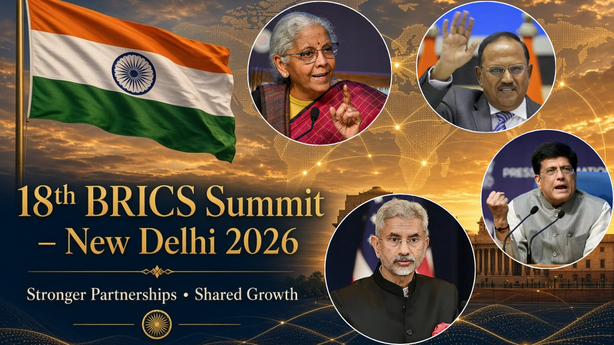
India has intensified diplomatic engagements and bilateral meetings with major global powers to strengthen its position on the global stage ahead of the BRICS Summit. The primary objective is to safeguard its national interests in multilateral forums and maintain balance in the global order. Ahead of the 18th BRICS Summit, scheduled to be held in New Delhi in September 2026, the Indian government has launched a major diplomatic push. Four of India’s most prominent officials and ministers are visiting five key countries to strengthen India’s national interests ahead of the summit. Prime Minister Narendra Modi, along with his three ministers—Nirmala Sitharaman, S. Jaishankar, Piyush Goyal, and National Security Advisor (NSA) Ajit Doval—is leading a major diplomatic campaign. These diplomatic meetings will last for three weeks, concluding in the second week of September, immediately following the BRICS Summit in New Delhi. Finance Minister Nirmala Sitharaman is on a highly important official visit to Canada and the United States from August 25 to September 2, 2026. This visit, taking place just before the BRICS Summit, is considered strategically important for India’s economic diplomacy. Finance Minister Nirmala Sitharaman’s visit to Canada and the United States prioritizes four key agendas: investor meetings, interactions with corporate leaders, strengthening economic ties, and G20 financial discussions. As part of this diplomatic mission, External Affairs Minister Dr. S. Jaishankar recently held a crucial meeting with Russian President Vladimir Putin and Foreign Minister Sergey Lavrov in Moscow. Key areas of economic cooperation, energy and fertilizers, technology and defense were discussed amid preparations for the upcoming Modi-Putin meeting. Commerce Minister Piyush Goyal is also visiting Japan with a large delegation of 200 Indian business leaders and veterans. The main objective of this visit is to enhance India-Japan bilateral trade and attract significant Japanese investment in India’s infrastructure, high-tech manufacturing, semiconductor, and next-generation industries. National Security Advisor Ajit Doval is in Beijing, the capital of China, for the 25th round of India-China Special Representatives’ Dialogue. The main objective of this high-level strategic meeting is to find a lasting solution to the long-standing border issues between the two countries and effectively manage the current tensions along the Line of Actual Control (LAC).
Dhami Approves Financial Sanctions Worth Around ₹135 Crore for Development and Welfare Projects
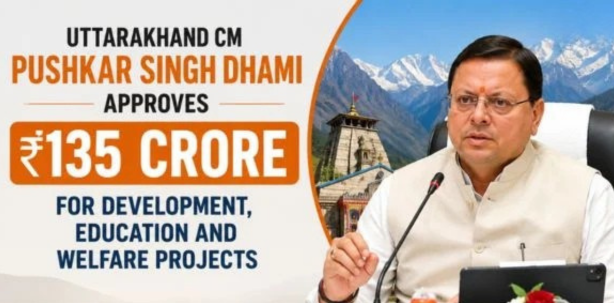
Dhami Approves Financial Sanctions: Uttarakhand Chief Minister Pushkar Singh Dhami has approved financial sanctions of around ₹135 crore for a range of development, education, infrastructure and welfare-related works across the state. The approvals cover projects aimed at strengthening public infrastructure, supporting education and improving administrative facilities. A major allocation of ₹84.89 crore has been approved as the second instalment for the 2025-26 financial year under the Right to Education (RTE) Act. The amount will be used to reimburse tuition fees for eligible students studying in private schools under the RTE provisions. Officials have been directed to ensure timely and transparent utilisation of the funds. Several smaller infrastructure and development works have also received financial approval. These include funds for completing the Mountain Development Building in Sitarganj, construction of a shed at the Martyrs’ Memorial in Khatima and other district-level projects. The government has also sanctioned funds for heritage conservation and beautification works, including projects at temples and historic buildings in different parts of the state. In addition, financial assistance has been approved for strengthening administrative and security institutions, including the Uttarakhand Academy of Administration, Uttarakhand Subordinate Services Selection Commission, police establishments and the Home Guards Department. As part of the approvals, the state government has also decided to name the Moln-Khandah-Bhintai motor road in Pauri Garhwal after martyr Kamala Singh Negi, honouring his contribution and sacrifice. The latest sanctions are aimed at accelerating development works, strengthening public services and supporting education and welfare initiatives across Uttarakhand.
People Will Never Forgive Congress”: Amit Shah Targets Sonia Gandhi Over Vande Mataram Row
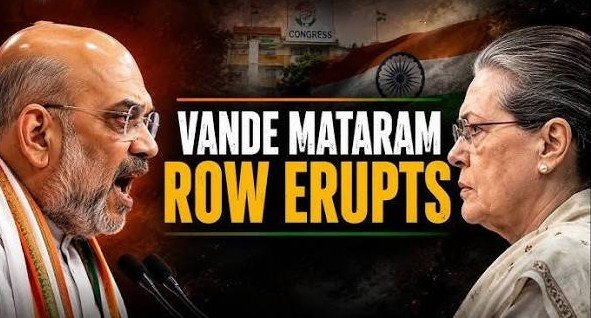
Union Home Minister Amit Shah has intensified the political debate over Vande Mataram, accusing the Congress leadership of disrespecting the national song. Addressing a gathering in Rajasthan, Shah alleged that Sonia Gandhi had asked Congress president Mallikarjun Kharge to stop the rendition of Vande Mataram during the party’s Independence Day programme. He said the people of the country would not forgive Congress for such an act. Amit Shah Demands an Apology Shah criticised the Congress over its position on the national song and demanded that the party apologise to the people of India as well as to the memory of Bankim Chandra Chattopadhyay, who wrote Vande Mataram. The BJP has argued that limiting the rendition of the song amounts to disrespecting a symbol associated with India’s freedom struggle. Congress Rejects the Allegations Congress has rejected Shah’s allegations and defended its position on Vande Mataram. The party has maintained that the song was sung at its Independence Day programme and argued that the BJP is unnecessarily politicising the issue. Congress leaders have also pointed to the party’s historical position on which portions of the song should be performed at official party programmes. 1937 Resolution at the Centre of the Debate The controversy gained further momentum after the Congress Working Committee reaffirmed its historical 1937 position concerning Vande Mataram. The party said the first two stanzas have traditionally been used in national and Congress programmes. The BJP, however, has strongly criticised this decision, turning the issue into another major political confrontation between the two parties. Political Row Continues The dispute over Vande Mataram has now expanded beyond the question of how much of the song should be sung, with both the BJP and Congress using the issue to challenge each other’s positions on nationalism and India’s freedom movement. Importantly, Shah’s claim about Sonia Gandhi directing that the song be stopped remains an allegation disputed by Congress and should not be presented as an independently proven fact. The controversy is expected to remain a politically sensitive issue as both parties continue to trade accusations.
No FIR, So We Sit’: Rahul Gandhi Protests With Pellet-Injured Student in Delhi
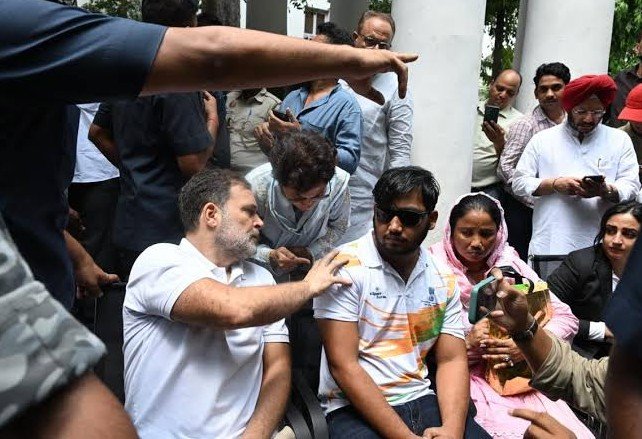
Leader of Opposition Rahul Gandhi on Friday staged a sit-in outside the Parliament Street Police Station with student protester Sahil Lochab, demanding an FIR over alleged pellet-gun firing during the July 20 student protest in Delhi. Gandhi accompanied Lochab to the police station after the student sought to file a complaint over his alleged pellet injuries. After the FIR was not registered, Gandhi sat on a dharna outside the DCP’s office and demanded action. The controversy stems from the July 20 ‘Chalo Sansad’ protest, during which students marched towards Parliament over demands including action on alleged NEET irregularities. While Delhi Police has denied using pellet guns, a CRPF internal inquiry reportedly found that an RAF personnel fired seven pellet rounds, with five hitting protesters. Gandhi has demanded accountability and a formal investigation into who authorised the firing and the injuries suffered by protesters. The issue has also reached the Supreme Court, where a petition has challenged the use of pellet guns for crowd control. The police and authorities have disputed aspects of the allegations, making the registration and investigation of an FIR the immediate point of contention.
Bangladesh to Hold Presidential Election Today After 35 Years, Two Candidates in Race
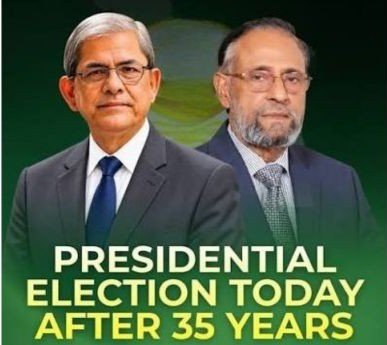
Bangladesh is set to hold its presidential election today, August 20, with two candidates in the race for the country’s 23rd president. Voting will take place in the session chamber of the National Parliament, from 2 pm to 5 pm. The president will not be elected directly by the public; instead, eligible members of Parliament will cast their votes. A total of 349 MPs are eligible to vote in the election. The ruling Bangladesh Nationalist Party (BNP) has nominated its former Secretary General Mirza Fakhrul Islam Alamgir for the presidency. The opposition 11-party alliance led by Bangladesh Jamaat-e-Islami has fielded Colonel (Retd.) Oli Ahmad, chairman of the Liberal Democratic Party (LDP). The Election Commission declared the nominations of both candidates valid on August 16, clearing the way for the contest. The election is significant because it will be the first contested presidential election in Bangladesh in 35 years. The last presidential election involving more than one candidate was held in 1991, when BNP’s Abdur Rahman Biswas defeated Awami League candidate Badruddoza Chowdhury. Since then, presidents have generally been elected without a contest. Mirza Fakhrul is widely expected to win because the ruling BNP has a clear majority in Parliament. Reports indicate that BNP holds 250 seats, giving the party enough support to secure the presidency. The 11-party alliance has decided to contest the election despite not having a parliamentary majority, saying that an election without competition would not reflect the spirit of democracy. Under Bangladesh’s constitutional system, the president is elected indirectly by members of Parliament. The current election was scheduled after Mohammed Shahabuddin resigned as president on July 24, following which Speaker Hafiz Uddin Ahmad took charge as acting president. The Constitution requires an election to fill a vacant presidential post within 90 days of the vacancy. The voting process will be conducted through an open ballot in Parliament. With two candidates remaining in the race, MPs will cast their votes during the scheduled three-hour period. The outcome is widely anticipated to favour Mirza Fakhrul, but the contest marks an important development in Bangladesh’s parliamentary politics as the country holds its first competitive presidential election since 1991.
Big Relief for Tamil Nadu: CM Vijay Raises Health Insurance Cover to ₹25 Lakh, Hikes Milk Price
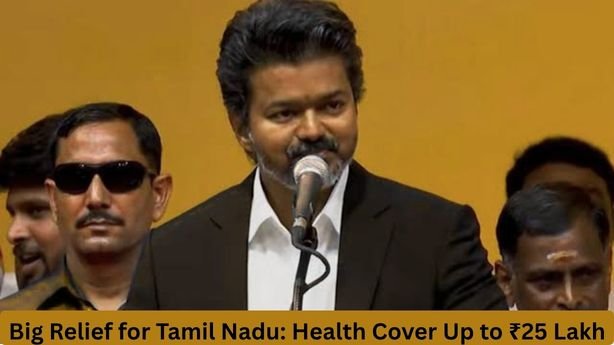
Good News for Tamil Nadu: ₹25 Lakh Health Cover, Higher Milk Procurement Price Announced The Tamil Nadu government has announced major measures to boost healthcare, medical education and support milk producers. Key decisions include raising health insurance coverage, increasing milk procurement prices and investing in medical infrastructure. Health Insurance Cover Proposed to Rise from ₹5 Lakh to ₹25 Lakh One of the key announcements concerns the Chief Minister’s Comprehensive Health Insurance Scheme, under which the annual treatment coverage limit is proposed to increase from ₹5 lakh to ₹25 lakh, providing greater financial support to families facing serious illnesses and costly treatments. The government has also announced additional medical and surgical services for transgender people, which will be available at selected government hospitals in Chennai, Tirunelveli, Thoothukudi and Chengalpattu. Milk Procurement Price Increased to ₹41 Per Litre The government has also announced relief for milk producers by increasing the procurement price from ₹38 to ₹41 per litre. Around 3.16 lakh milk producers are expected to benefit from the decision. In addition, the government incentive provided to milk producers has been increased from ₹3 to ₹5 per litre. The increase in the procurement price is expected to put an additional burden of around ₹30 crore per month, or approximately ₹360 crore annually, on the government. ₹351 Crore for Medical and Nursing Education The Tamil Nadu government has sanctioned ₹351 crore for medical and nursing education. The plan includes the creation of 6,098 additional seats across government medical and allied institutions. These include 660 B.Sc Nursing seats, 1,925 seats in nursing colleges and schools, 2,778 seats across 12 paramedical courses and 735 seats in medical courses. The government will also establish seven new government nursing colleges in the state. 400-Bed Multispeciality Hospital to Come Up in Preambular As part of efforts to improve healthcare infrastructure, a 400-bed multispecialty hospital will be established in Preambular at an estimated cost of ₹300 crore. The proposed hospital is expected to provide modern and specialized healthcare facilities to people in the district and surrounding areas. Government Vehicles for All MLAs In another Assembly announcement, Chief Minister Vijay said government vehicles would be provided to all Members of the Legislative Assembly to help them travel within their constituencies and carry out public-service and development activities more efficiently. Overall, the government’s measures focus on expanding healthcare coverage, strengthening medical and nursing education, improving hospital infrastructure and supporting milk producers, with the aim of benefiting people across Tamil Nadu.
24-Day Protest Yields Results: Jharkhand Cancels JSSC-CGL, All TDPL Exams and Orders Comprehensive Probe…
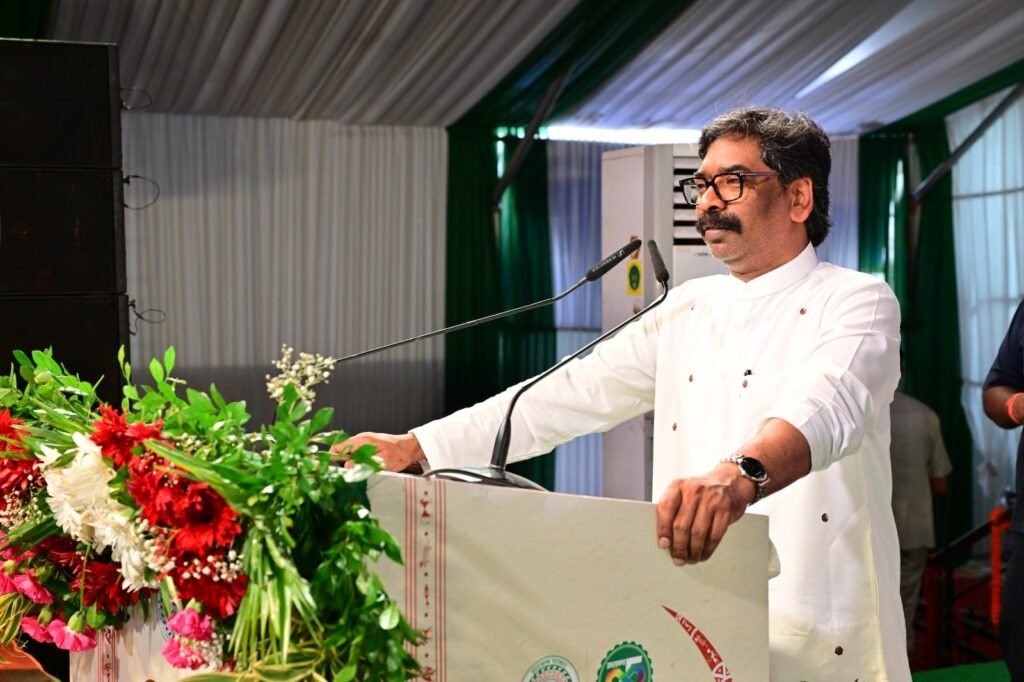
Amidst the ongoing 24-day student protest in Jharkhand, the Jharkhand government has accepted the protesting students’ biggest demands and has decided to cancel the JSSC-CGL exam scheduled for 2024. This decision was made on Monday, August 17th, after nearly four and a half hours of discussion in a special cabinet meeting chaired by Jharkhand Chief Minister Hemant Soren. Chief Minister Hemant Soren addressed the media after this information. He stated that the decision to cancel the 14th JPSC PT and backlog civil service exams had already been made during talks with the protesting students. He added that the government has now decided to conduct a comprehensive investigation into the recruitment exams conducted by the GPSC and JSSC from 2014 to the present. All major and minor errors since 2014 will be investigated. Jharkhand Chief Minister Hemant Soren stated that the results published by the TDPL and all TDPL activities are cancelled. The Chief Minister stated that a decision has been made to form a committee headed by IAS officer Amitabh Kaushal to implement examination reforms. The committee will study the necessary reforms in the examination system and provide necessary suggestions. Furthermore, the government has also sought suggestions from the people of the state regarding examination reforms, and a system for submitting suggestions has been established on an online portal. He stated that the government wants the new examination system to be one that leaves no room for malpractice at any level. The entire process, from exam administration to question paper security, the role of agencies, evaluation, and results, will be made more transparent. The Chief Minister stated that the government has enacted strong laws in student interests and has the capacity to implement them. He stated that the government does not want to allow the interests of the youth, their future, and their confidence to be compromised under any circumstances. The Chief Minister stated that several issues related to examination reforms were agreed upon in previous meetings between students and ministers during the agitation. The government will implement those agreed points to bring transparency in the examination system.
NTA Cancels UGC-NET Papers for Three Subjects After Audit Finds Factual Errors, Typos & Repeated Questions; Rahul Gandhi Questions Paper Leaks..
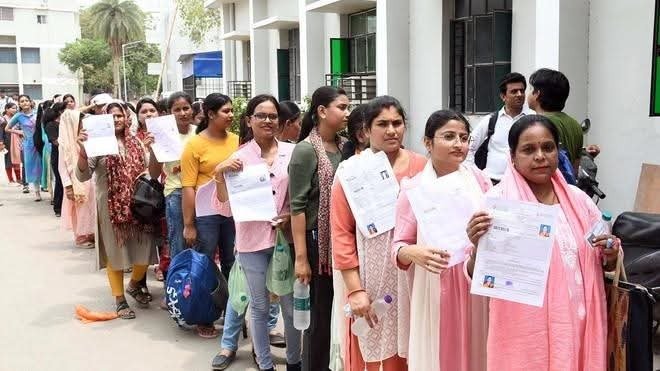
The National Testing Agency (NTA) has admitted to significant irregularities in the UGC-NET June 2026 exam question paper. Serious allegations surfaced, including numerous spelling mistakes, strange names of thinkers, and blatant copying of old questions from previous years. Following this, the NTA has cancelled the English, Commerce, and Sociology exam papers. This decision was made by the NTA based on the report of an audit committee formed after complaints from candidates and experts regarding serious irregularities in the question papers. The NTA will conduct re-exams for these three affected subjects in September 2026. The NTA has released a new exam schedule for the re-exams. Candidates will not be charged any additional examination fees for re-exams. Here is the re-exam schedule: According to a report in the Indian Express, on Sunday, August 16, the NTA released the provisional answer keys for 84 subjects for the UGC-NET June 2026. However, the answer keys for some papers were withheld. Following this, the NTA issued a separate notice in the evening. It stated that a major decision had been made regarding English, Commerce, and Sociology. According to the NTA, the committee formed to review these three papers found several errors. These included factual errors, typos, and translation errors. The committee found the names of several prominent scholars misspelled in the question paper. The names of some books were also incorrect. Furthermore, some questions contained language errors. Grammar errors were also found in several places. Gender and number mismatches were also found. There were also punctuation errors. Moreover, non-standard terms were used for concepts for which pre-established and commonly used terms exist. It was also discovered that many questions had already been asked in previous exams. Following these discrepancies, the committee recommended that the NTA re-examine the three subjects. Rahul Gandhi Targets PM Modi After NTA Cancels Three UGC-NET Papers Meanwhile, Congress MP Rahul Gandhi launched a scathing attack on PM Modi and the National Testing Agency (NTA) over the decision to re-examine the UGC-NET exam in three subjects due to errors in the question papers. Congress leader Rahul Gandhi wrote on the social media platform X, “Modi ji, look what your NTA has done again.” The UGC-NET exams for Sociology, English, and Commerce were held between June 22 and 30. After nearly two months, the NTA canceled all three exams because they had prepared incorrect question papers and re-asked old questions. Rahul Gandhi said, “Thousands of candidates who prepared diligently for years, filled out forms, paid fees, and traveled to far-flung exam centers will now have to do it all again in September. The NTA makes mistakes, but the students of the country suffer the consequences. I said this in Kota, Dehradun, and Prayagraj, and I will continue to say it. This is no longer an education system. It has become just a money-and-labor-sucking machine. It takes away your money, your years, your mental health, and your self-confidence, and gives you nothing in return, not even a job. The NTA is still not answering the real question. Were these papers leaked before the exams?”
‘Dimagi Naxal Party’ Explodes on Social Media, Crosses 1.7 Lakh Followers in 24 Hours..
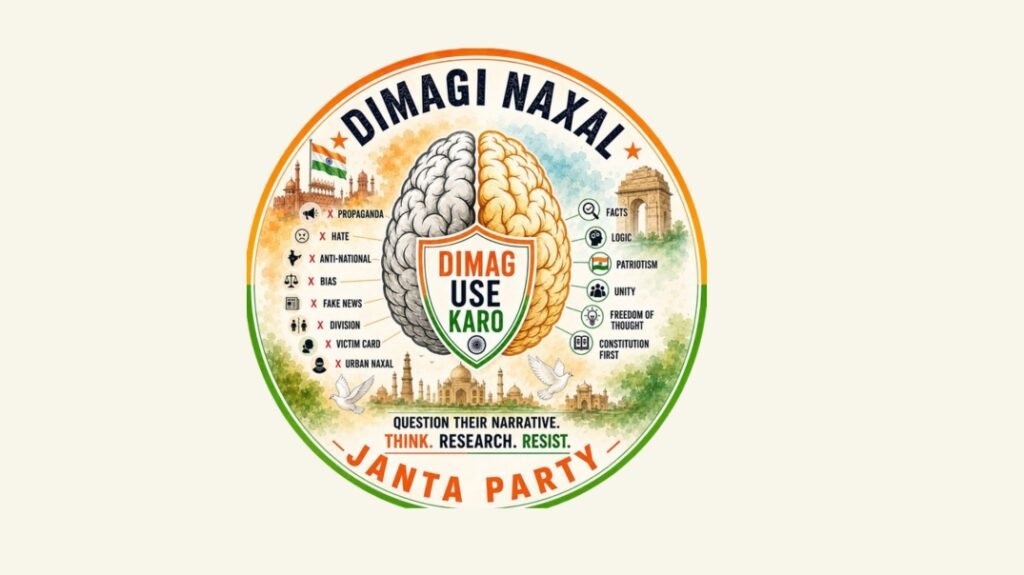
Following the Cockroach Janata Party (CJP), another new party has emerged in the headlines. The party is being called the ‘Dimagi Naxal Party’. Similar to the Cockroach Janata Party, a new social media account called the ‘Dimagi Naxal Janata Party’ has emerged. The party is gaining popularity on social media. This account has gained more than 1.7 lakh followers in just 24 hours. On the other hand, this account, named @DNJP_India, currently follows more than 15 accounts, including Congress leader Rahul Gandhi, Samajwadi Party chief Akhilesh Yadav, AAP leader Arvind Kejriwal, YouTuber Dhruv Rathee, comedian Kunal Kamra, actor Prakash Raj, and many other popular names on social media.This account emerged on social media after Prime Minister Narendra Modi’s Independence Day speech on August 15th. In that speech, he referred to the elimination of armed Naxalites and urged the nation to be vigilant against “mindful Naxalites” lurking in ambushes. In his speech, PM Modi targeted those with Naxalite ideologies who seek to spread unrest despite the weakening of armed Naxalism. Although PM Modi did not name any specific group during his speech, his comment sparked a significant political controversy. Opposition leaders retaliated. Some leaders, including Congress leader P. Chidambaram, said they were proud to be called “mindful Naxalites.” In his Independence Day speech, PM Modi said, “Even though the Naxalites who took up arms in the jungles have been eliminated, the mindless Naxalites are still looking for opportunities. They are seeking ways to resort to violence and trying to lead the country down the wrong path. Such people must be identified and isolated.” Following his speech, the “Dimagi Naxal Party” has come into the spotlight. Several accounts with this name are visible on Instagram. Pages created by the “Dimaggi Naxal Party” on various social media sites are rapidly gaining popularity. Within a day of its launch, it gained more than 50,000 followers. Currently, its Instagram page has more than 150,000 followers. The party’s slogan is “Think, Research, Protest.”