
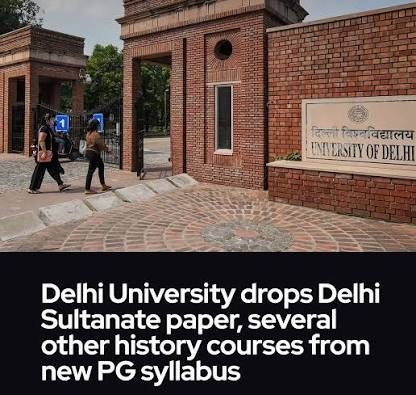
Delhi University has revised its MA History syllabus for the 2026-27 academic session, removing a paper on the Delhi Sultanate from the third semester. The decision has drawn attention because the course had focused specifically on medieval North India and the structures of political authority during the Delhi Sultanate period.
The paper, titled “The Delhi Sultanate: Structures of Authority in Medieval North India (13th–14th Century)”, dealt with state formation, governance and political, religious and cultural developments during the period.
Why Was the Paper Removed?
According to the latest reports, the change is part of a larger restructuring of the postgraduate History curriculum. Delhi University has aligned the revised syllabus with the Postgraduate Curriculum Framework 2024 and the National Education Policy (NEP) 2020. The university notified the revised syllabus on August 7.
Importantly, the Delhi Sultanate period has not been removed completely from the university’s History curriculum. The university continues to teach the subject in other courses, including at the undergraduate level.
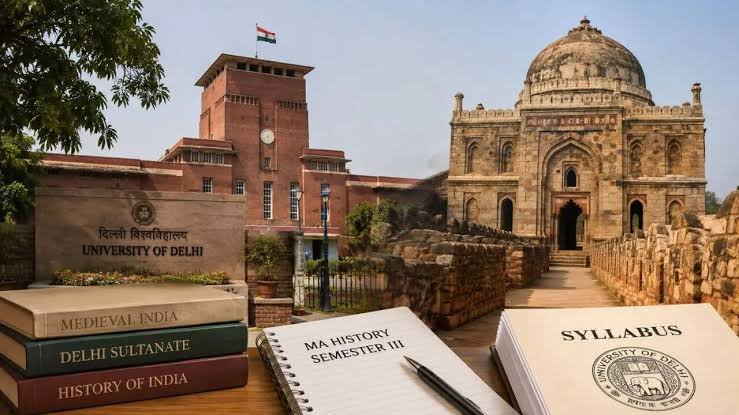
Several Other Papers Also Dropped
The Delhi Sultanate paper is not the only proposed course missing from the final third-semester list. A paper titled “History of North India, c. 1400–1550” has also been left out.
Several other proposed courses, including papers on gender and women in early India, political processes in ancient India, and religion and society in ancient Indian literature, were also not included in the final list. Reports indicate that only a portion of the electives initially proposed by the History Department made it into the notified curriculum.
What Does This Mean for Students?
For students joining the MA History programme from July 2026, the revised syllabus will determine the courses available in the third semester.
The latest changes reflect Delhi University’s broader effort to restructure postgraduate programmes under the new national academic framework, with greater emphasis on revised course structures, learning outcomes and research-oriented study.